
Chem 162 (2).pdf~~~)@(&(*&#)))))))))))))))))))))))))))))))))#&*(*&(#*^@!!!!!#~@~##
Chem 162 (2).pdf~~~)@(&(*&#)))))))))))))))))))))))))))))))))#&*(*&(#*^@!!!!!#~@~##
Chem 162 (2).pdf~~~)@(&(*&#)))))))))))))))))))))))))))))))))#&*(*&(#*^@!!!!!#~@~##
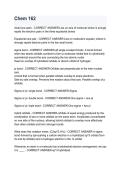
Chem 162
Axial lone pairs - CORRECT ANSWER-Lies on axis of molecule where is srongly
repels the electron pairs in the three equatorial bones
Equatorial lone pair - CORRECT ANSWER-Lies on molecule's equator, where is
strongly repels electron pairs in the two axial bonds
sigma bond - CORRECT ANSWER-all single covalent bonds. A bond formed
when two atomic orbitals combine to form a molecular orbital that is cylindrically
symmetrical around the axis connecting the two atomic nuclei
Head on overlap of hybridized orbitals or atomic orbital of hydrogen
pi bond - CORRECT ANSWER-Orbitals are perpendicular to the inter nuclear
axis.
a bond that is formed when parallel orbitals overlap to share electrons.
Side by side overlap. Prevents free rotation about that axis. Parallel overlap of p
orbitals.
Sigma or pi: single bond - CORRECT ANSWER-Sigma
Sigma or pi: double bond - CORRECT ANSWER-One sigma + one pi
Sigma or pi: triple bond - CORRECT ANSWER-One sigma + two pi
hybrid orbitals - CORRECT ANSWER-orbitals of equal energy produced by the
combination of two or more orbitals on the same atom. Amplitudes concentrated
on one side of the nucleus, allowing hybrid orbitals to overlap more effectively
than other orbitals and form stronger bonds
What does this notation mean: (C2sp^3,H1s) - CORRECT ANSWER-A sigma
bond formed by spin-pairing a carbon electron in a hybridized sp^3 orbital (from
2s and 2p orbitals) and a hydrogen electron in the 1s orbital
Whenever an atom in a molecule has a tetrahedral electron arrangement, we say
it is ____ - CORRECT ANSWER-sp^3 hybridized
Chem 162 (2).pdf~~~)@(&(*&#)))))))))))))))))))))))))))))))))#&*(*&(#*^@!!!!!#~@~##
Chem 162 (2).pdf~~~)@(&(*&#)))))))))))))))))))))))))))))))))#&*(*&(#*^@!!!!!#~@~##
Chem 162 (2).pdf~~~)@(&(*&#)))))))))))))))))))))))))))))))))#&*(*&(#*^@!!!!!#~@~##
, Chem 162 (2).pdf~~~)@(&(*&#)))))))))))))))))))))))))))))))))#&*(*&(#*^@!!!!!#~@~##
Chem 162 (2).pdf~~~)@(&(*&#)))))))))))))))))))))))))))))))))#&*(*&(#*^@!!!!!#~@~##
Chem 162 (2).pdf~~~)@(&(*&#)))))))))))))))))))))))))))))))))#&*(*&(#*^@!!!!!#~@~##
sp^3 hybrids - CORRECT ANSWER-Formed from one s-orbital and three
p-orbitals
The promotion of electrons will occur if, overall, it leads to ____ - CORRECT
ANSWER-The lowering of energy by permitting formation of more bonds. Ex:
possible in carbon and boron to form more bonds but not possible in nitrogen,
oxygen, or fluorine.
What about methane makes us need the hybridization of orbitals concept? -
CORRECT ANSWER-Carbon has configuration [He] 2s2 2px1 2py1 with four
valence electrons, but with 2s2 we would assume two of the valence electrons
are already paired, leaving only 2 for bonding. One electron is this promoted to
an empty 2p-orbital, making [He] 2s1 2px1 2py1 2pz1. Thereby, it can form 4
bonds after promotion of an electron.
What kind of hybrid orbitals are needed to make BF3 - CORRECT ANSWER-3
Sp^2 hybrid orbitals (mixing one s orbital with two p orbitals
Steric number of central atom - CORRECT ANSWER-# sigma bonds + # lone
pairs on central atom
Ideal bond angle: AX2 - CORRECT ANSWER-180
Ideal bond angle: AX3 - CORRECT ANSWER-120
Ideal bond angle: AX2E - CORRECT ANSWER-Less than 120 (trig planar is 120)
Molecular orbital notation - CORRECT ANSWER-(Sigma1s)^2(O*)^2(pi2p)^4
Ideal bond angle: AX4 - CORRECT ANSWER-109.5
Ideal bond angle: AX3E - CORRECT ANSWER-108
Ideal bond angle: AX2E2 - CORRECT ANSWER-105
AX4E2 molecular geometry - CORRECT ANSWER-Square planar
Chem 162 (2).pdf~~~)@(&(*&#)))))))))))))))))))))))))))))))))#&*(*&(#*^@!!!!!#~@~##
Chem 162 (2).pdf~~~)@(&(*&#)))))))))))))))))))))))))))))))))#&*(*&(#*^@!!!!!#~@~##
Chem 162 (2).pdf~~~)@(&(*&#)))))))))))))))))))))))))))))))))#&*(*&(#*^@!!!!!#~@~##
Chem 162 (2).pdf~~~)@(&(*&#)))))))))))))))))))))))))))))))))#&*(*&(#*^@!!!!!#~@~##
Chem 162 (2).pdf~~~)@(&(*&#)))))))))))))))))))))))))))))))))#&*(*&(#*^@!!!!!#~@~##
Chem 162
Axial lone pairs - CORRECT ANSWER-Lies on axis of molecule where is srongly
repels the electron pairs in the three equatorial bones
Equatorial lone pair - CORRECT ANSWER-Lies on molecule's equator, where is
strongly repels electron pairs in the two axial bonds
sigma bond - CORRECT ANSWER-all single covalent bonds. A bond formed
when two atomic orbitals combine to form a molecular orbital that is cylindrically
symmetrical around the axis connecting the two atomic nuclei
Head on overlap of hybridized orbitals or atomic orbital of hydrogen
pi bond - CORRECT ANSWER-Orbitals are perpendicular to the inter nuclear
axis.
a bond that is formed when parallel orbitals overlap to share electrons.
Side by side overlap. Prevents free rotation about that axis. Parallel overlap of p
orbitals.
Sigma or pi: single bond - CORRECT ANSWER-Sigma
Sigma or pi: double bond - CORRECT ANSWER-One sigma + one pi
Sigma or pi: triple bond - CORRECT ANSWER-One sigma + two pi
hybrid orbitals - CORRECT ANSWER-orbitals of equal energy produced by the
combination of two or more orbitals on the same atom. Amplitudes concentrated
on one side of the nucleus, allowing hybrid orbitals to overlap more effectively
than other orbitals and form stronger bonds
What does this notation mean: (C2sp^3,H1s) - CORRECT ANSWER-A sigma
bond formed by spin-pairing a carbon electron in a hybridized sp^3 orbital (from
2s and 2p orbitals) and a hydrogen electron in the 1s orbital
Whenever an atom in a molecule has a tetrahedral electron arrangement, we say
it is ____ - CORRECT ANSWER-sp^3 hybridized
Chem 162 (2).pdf~~~)@(&(*&#)))))))))))))))))))))))))))))))))#&*(*&(#*^@!!!!!#~@~##
Chem 162 (2).pdf~~~)@(&(*&#)))))))))))))))))))))))))))))))))#&*(*&(#*^@!!!!!#~@~##
Chem 162 (2).pdf~~~)@(&(*&#)))))))))))))))))))))))))))))))))#&*(*&(#*^@!!!!!#~@~##
, Chem 162 (2).pdf~~~)@(&(*&#)))))))))))))))))))))))))))))))))#&*(*&(#*^@!!!!!#~@~##
Chem 162 (2).pdf~~~)@(&(*&#)))))))))))))))))))))))))))))))))#&*(*&(#*^@!!!!!#~@~##
Chem 162 (2).pdf~~~)@(&(*&#)))))))))))))))))))))))))))))))))#&*(*&(#*^@!!!!!#~@~##
sp^3 hybrids - CORRECT ANSWER-Formed from one s-orbital and three
p-orbitals
The promotion of electrons will occur if, overall, it leads to ____ - CORRECT
ANSWER-The lowering of energy by permitting formation of more bonds. Ex:
possible in carbon and boron to form more bonds but not possible in nitrogen,
oxygen, or fluorine.
What about methane makes us need the hybridization of orbitals concept? -
CORRECT ANSWER-Carbon has configuration [He] 2s2 2px1 2py1 with four
valence electrons, but with 2s2 we would assume two of the valence electrons
are already paired, leaving only 2 for bonding. One electron is this promoted to
an empty 2p-orbital, making [He] 2s1 2px1 2py1 2pz1. Thereby, it can form 4
bonds after promotion of an electron.
What kind of hybrid orbitals are needed to make BF3 - CORRECT ANSWER-3
Sp^2 hybrid orbitals (mixing one s orbital with two p orbitals
Steric number of central atom - CORRECT ANSWER-# sigma bonds + # lone
pairs on central atom
Ideal bond angle: AX2 - CORRECT ANSWER-180
Ideal bond angle: AX3 - CORRECT ANSWER-120
Ideal bond angle: AX2E - CORRECT ANSWER-Less than 120 (trig planar is 120)
Molecular orbital notation - CORRECT ANSWER-(Sigma1s)^2(O*)^2(pi2p)^4
Ideal bond angle: AX4 - CORRECT ANSWER-109.5
Ideal bond angle: AX3E - CORRECT ANSWER-108
Ideal bond angle: AX2E2 - CORRECT ANSWER-105
AX4E2 molecular geometry - CORRECT ANSWER-Square planar
Chem 162 (2).pdf~~~)@(&(*&#)))))))))))))))))))))))))))))))))#&*(*&(#*^@!!!!!#~@~##
Chem 162 (2).pdf~~~)@(&(*&#)))))))))))))))))))))))))))))))))#&*(*&(#*^@!!!!!#~@~##
Chem 162 (2).pdf~~~)@(&(*&#)))))))))))))))))))))))))))))))))#&*(*&(#*^@!!!!!#~@~##


