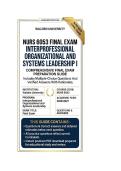
,NURS 6053 Final exam Interprofessional Organizational and Systems
Leadership I Questions And Answers 2026/2027 Walden University
Course: NURS 6053
University: Walden University
Assessment: Final Exam
Area: Interprofessional Organizational and Systems Leadership
1.
Which behavior best demonstrates workplace civility?
A) Respectfully addressing disagreements
B) Publicly criticizing coworkers
C) Ignoring colleagues' concerns
D) Using sarcasm during disagreements
Answer: A) Respectfully addressing disagreements
Rationale: Civility involves respectful interpersonal behavior, constructive
communication, and appropriate management of disagreements.
2.
Which behavior is an example of workplace incivility?
A) Interrupting a colleague repeatedly and dismissing their ideas
B) Asking for clarification
C) Providing constructive feedback privately
D) Expressing disagreement respectfully
Answer: A) Interrupting a colleague repeatedly and dismissing their
ideas
Rationale: Incivility includes disrespectful behaviors that violate workplace
norms of mutual respect.
3.
A nurse leader notices that staff increasingly avoid speaking during meetings
because coworkers mock their suggestions. What is the most likely
consequence?
A) Reduced psychological safety
B) Increased innovation
C) Improved collaboration
D) Greater employee empowerment
,Answer: A) Reduced psychological safety
Rationale: Employees who fear embarrassment or retaliation may stop
speaking up, which reduces psychological safety and can threaten patient
safety.
4.
What is a major risk associated with persistent workplace incivility?
A) Reduced morale and increased turnover
B) Improved teamwork
C) Increased employee engagement
D) Reduced communication errors
Answer: A) Reduced morale and increased turnover
Rationale: Persistent incivility can damage morale, increase stress, reduce
engagement, and contribute to turnover.
5.
Which leadership response is most appropriate when an employee reports
repeated incivility?
A) Listen objectively, assess the situation, document appropriately, and
follow organizational procedures
B) Tell the employee to ignore it
C) Immediately accuse the alleged offender
D) Publicize the complaint
Answer: A) Listen objectively, assess the situation, document
appropriately, and follow organizational procedures
Rationale: Leaders should respond promptly, fairly, and consistently while
maintaining confidentiality and following established processes.
6.
Which behavior most directly contributes to psychological safety?
A) Encouraging questions and respectful disagreement
B) Punishing employees who report mistakes
C) Discouraging dissent
D) Publicly identifying staff who make errors
Answer: A) Encouraging questions and respectful disagreement
, Rationale: Psychological safety exists when team members can speak up,
ask questions, and report concerns without fear of humiliation or retaliation.
7.
A staff nurse identifies a medication-safety concern during a team meeting.
Which leader response best supports a healthy work environment?
A) Thank the nurse and investigate the concern
B) Tell the nurse to raise concerns only privately
C) Dismiss the concern because no harm occurred
D) Criticize the nurse for creating anxiety
Answer: A) Thank the nurse and investigate the concern
Rationale: Encouraging speaking up supports psychological safety and a
culture of patient safety.
8.
Which factor is most important in maintaining workplace civility?
A) Clear expectations for respectful behavior
B) Avoiding feedback
C) Allowing disruptive behavior from high performers
D) Ignoring interpersonal problems
Answer: A) Clear expectations for respectful behavior
Rationale: Explicit standards and consistent accountability help establish a
respectful workplace culture.
9.
A nurse leader observes a high-performing employee repeatedly belittling
new staff. What should the leader do?
A) Address the behavior despite the employee's strong performance
B) Ignore it because the employee is productive
C) Transfer all new staff
D) Reward the employee for productivity
Answer: A) Address the behavior despite the employee's strong
performance
Rationale: High performance does not justify harmful interpersonal
behavior. Leaders are responsible for maintaining a respectful and safe
environment.
Leadership I Questions And Answers 2026/2027 Walden University
Course: NURS 6053
University: Walden University
Assessment: Final Exam
Area: Interprofessional Organizational and Systems Leadership
1.
Which behavior best demonstrates workplace civility?
A) Respectfully addressing disagreements
B) Publicly criticizing coworkers
C) Ignoring colleagues' concerns
D) Using sarcasm during disagreements
Answer: A) Respectfully addressing disagreements
Rationale: Civility involves respectful interpersonal behavior, constructive
communication, and appropriate management of disagreements.
2.
Which behavior is an example of workplace incivility?
A) Interrupting a colleague repeatedly and dismissing their ideas
B) Asking for clarification
C) Providing constructive feedback privately
D) Expressing disagreement respectfully
Answer: A) Interrupting a colleague repeatedly and dismissing their
ideas
Rationale: Incivility includes disrespectful behaviors that violate workplace
norms of mutual respect.
3.
A nurse leader notices that staff increasingly avoid speaking during meetings
because coworkers mock their suggestions. What is the most likely
consequence?
A) Reduced psychological safety
B) Increased innovation
C) Improved collaboration
D) Greater employee empowerment
,Answer: A) Reduced psychological safety
Rationale: Employees who fear embarrassment or retaliation may stop
speaking up, which reduces psychological safety and can threaten patient
safety.
4.
What is a major risk associated with persistent workplace incivility?
A) Reduced morale and increased turnover
B) Improved teamwork
C) Increased employee engagement
D) Reduced communication errors
Answer: A) Reduced morale and increased turnover
Rationale: Persistent incivility can damage morale, increase stress, reduce
engagement, and contribute to turnover.
5.
Which leadership response is most appropriate when an employee reports
repeated incivility?
A) Listen objectively, assess the situation, document appropriately, and
follow organizational procedures
B) Tell the employee to ignore it
C) Immediately accuse the alleged offender
D) Publicize the complaint
Answer: A) Listen objectively, assess the situation, document
appropriately, and follow organizational procedures
Rationale: Leaders should respond promptly, fairly, and consistently while
maintaining confidentiality and following established processes.
6.
Which behavior most directly contributes to psychological safety?
A) Encouraging questions and respectful disagreement
B) Punishing employees who report mistakes
C) Discouraging dissent
D) Publicly identifying staff who make errors
Answer: A) Encouraging questions and respectful disagreement
, Rationale: Psychological safety exists when team members can speak up,
ask questions, and report concerns without fear of humiliation or retaliation.
7.
A staff nurse identifies a medication-safety concern during a team meeting.
Which leader response best supports a healthy work environment?
A) Thank the nurse and investigate the concern
B) Tell the nurse to raise concerns only privately
C) Dismiss the concern because no harm occurred
D) Criticize the nurse for creating anxiety
Answer: A) Thank the nurse and investigate the concern
Rationale: Encouraging speaking up supports psychological safety and a
culture of patient safety.
8.
Which factor is most important in maintaining workplace civility?
A) Clear expectations for respectful behavior
B) Avoiding feedback
C) Allowing disruptive behavior from high performers
D) Ignoring interpersonal problems
Answer: A) Clear expectations for respectful behavior
Rationale: Explicit standards and consistent accountability help establish a
respectful workplace culture.
9.
A nurse leader observes a high-performing employee repeatedly belittling
new staff. What should the leader do?
A) Address the behavior despite the employee's strong performance
B) Ignore it because the employee is productive
C) Transfer all new staff
D) Reward the employee for productivity
Answer: A) Address the behavior despite the employee's strong
performance
Rationale: High performance does not justify harmful interpersonal
behavior. Leaders are responsible for maintaining a respectful and safe
environment.