

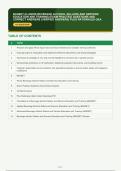
BASSET (ILLINOIS BEVERAGE ALCOHOL SELLERS AND SERVERS
EDUCATION AND TRAINING) EXAM PRACTICE QUESTIONS AND
CORRECT ANSWERS (VERIFIED ANSWERS) PLUS RATIONALES Q&A
120 QUESTIONS
TABLE OF CONTENTS
# TOPIC
1 Analyze and apply Illinois liquor laws and local ordinances to complex serving scenarios
2 Evaluate signs of intoxication and implement effective intervention and refusal strategies
3 Synthesize knowledge of civil and criminal liabilities to minimize risk in alcohol service
4 Demonstrate proficiency in ID verification, detecting fraudulent documents, and handling minors
5 Integrate responsible service practices into operational policies to ensure public safety and regulatory
compliance
6 BASSET
7 Illinois Beverage Alcohol Sellers and Servers Education and Training
8 Exam Practice Questions And Correct Answers
9 Verified Answers
10 Plus Rationales Q&A Instant Download Pdf
11 Foundations of Beverage Alcohol Sellers and Servers Education and Training (BASSET)
12 Applied Beverage Alcohol Sellers and Servers Education and Training (BASSET)
13 Advanced Beverage Alcohol Sellers and Servers Education and Training (BASSET)
14 Beverage Alcohol Sellers and Servers Education and Training (BASSET) Review
Page 1
,Q1 ANALYZE AND APPLY ILLINOIS LIQUOR LAWS AND LOCAL ORDINANCES TO COMPLEX
SERVING SCENARIOS
A server notices a patron showing subtle signs of intoxication-slurred speech and
over-friendliness-but the patron insists they are fine and orders another drink.
Under Illinois BASSET guidelines, which action best balances legal compliance
and customer service?
A. Serve the drink but reduce the alcohol content without informing the patron.
B. Refuse service immediately and call security to escort the patron out.
C. Delay the order, engage the patron in conversation, and offer water or food while assessing
further. CORRECT
D. Serve the drink and notify the manager after delivery to avoid confrontation.
RATIONALE: BASSET emphasizes proactive intervention: slowing service, offering alternatives,
and monitoring behavior to prevent over-service. Immediate refusal (B) may be necessary but is
not the first step if signs are subtle; reducing alcohol without consent (A) is deceptive and legally
risky; serving and then reporting (D) fails to prevent intoxication.
Q2 ANALYZE AND APPLY ILLINOIS LIQUOR LAWS AND LOCAL ORDINANCES TO COMPLEX
SERVING SCENARIOS
A patron presents a foreign passport as ID. The server is unfamiliar with the
document. Under Illinois law and BASSET training, what is the most appropriate
course of action?
A. Accept the passport if it appears valid and the patron looks of legal age.
B. Refuse service because only US-issued IDs are acceptable in Illinois.
C. Accept the passport but record its number in the incident log.
D. Refuse service if the server cannot verify the document's authenticity or validity. CORRECT
RATIONALE: BASSET training instructs servers to accept only valid, unexpired IDs they can
verify. If unfamiliar with a foreign passport, the server cannot confirm its authenticity; refusing
service is the safe and legal choice. Illinois law does not specifically list foreign passports as
acceptable, and accepting an unverifiable ID risks serving a minor.
Page 2
,Q3 ANALYZE AND APPLY ILLINOIS LIQUOR LAWS AND LOCAL ORDINANCES TO COMPLEX
SERVING SCENARIOS
A bar manager wants to implement a policy to reduce overservice incidents.
Which combination of strategies is most aligned with BASSET best practices and
Illinois liability laws?
A. Encourage servers to pour standard measures and rely on patron self-reporting of
consumption.
B. Train staff to recognize intoxication signs, offer food and water, and use a designated driver
program. CORRECT
C. Limit service to two drinks per patron per hour and require cash payment to track
consumption.
D. Install surveillance cameras and require patrons to sign a liability waiver before drinking.
RATIONALE: BASSET emphasizes staff training in recognizing intoxication, offering
non-alcoholic alternatives, and promoting safe transportation. Standard pours and self-reporting
(A) are insufficient; arbitrary drink limits (C) are not legally mandated and may be impractical;
waivers (D) do not shield establishments from liability under Illinois Dram Shop law.
Q4 ANALYZE AND APPLY ILLINOIS LIQUOR LAWS AND LOCAL ORDINANCES TO COMPLEX
SERVING SCENARIOS
Under the Illinois Dram Shop Act, which party can be held liable for injuries
caused by an intoxicated patron?
A. Only the patron who consumed the alcohol.
B. The server and the establishment, if they served alcohol to a visibly intoxicated person.
CORRECT
C. The manufacturer of the alcoholic beverage, if it was served in its original container.
D. The establishment only if the patron was a minor at the time of service.
RATIONALE: The Illinois Dram Shop Act imposes liability on establishments and servers who sell
or give alcohol to a person who is intoxicated or a minor, if that person's intoxication causes
injury. The patron (A) may also be liable, but not exclusively; manufacturers (C) are generally not
liable under Dram Shop; liability is not limited to minors (D).
Page 3
, Q5 ANALYZE AND APPLY ILLINOIS LIQUOR LAWS AND LOCAL ORDINANCES TO COMPLEX
SERVING SCENARIOS
A server is uncertain whether a patron is 21 because the ID photo resembles the
person but the birth date is questionable. What is the best course of action under
BASSET guidelines?
A. Ask for a second form of ID and compare both carefully. CORRECT
B. Serve the patron because the photo matches and the ID is not obviously fake.
C. Refuse service to be safe, as the consequences of serving a minor are severe.
D. Call the police to verify the ID's authenticity.
RATIONALE: BASSET training advises requesting additional identification if there is any doubt.
Refusal (C) is an option but may be premature if a second ID can resolve the uncertainty; serving
(B) is risky; calling police (D) is excessive for a routine ID check.
Q6 ANALYZE AND APPLY ILLINOIS LIQUOR LAWS AND LOCAL ORDINANCES TO COMPLEX
SERVING SCENARIOS
In Illinois, a server may be criminally prosecuted for serving alcohol to a minor.
Which of the following is a potential consequence?
A. Civil fine only, with no possibility of jail time.
B. Class A misdemeanor with fines and possible jail time. CORRECT
C. Felony charge if the minor later causes an accident.
D. License suspension for the server, but no personal liability.
RATIONALE: Serving alcohol to a minor in Illinois is a Class A misdemeanor, punishable by fines
and up to one year in jail. Civil fines (A) are separate; felony charges (C) are not automatic;
personal criminal liability (D) exists in addition to license actions.
Page 4
EDUCATION AND TRAINING) EXAM PRACTICE QUESTIONS AND
CORRECT ANSWERS (VERIFIED ANSWERS) PLUS RATIONALES Q&A
120 QUESTIONS
TABLE OF CONTENTS
# TOPIC
1 Analyze and apply Illinois liquor laws and local ordinances to complex serving scenarios
2 Evaluate signs of intoxication and implement effective intervention and refusal strategies
3 Synthesize knowledge of civil and criminal liabilities to minimize risk in alcohol service
4 Demonstrate proficiency in ID verification, detecting fraudulent documents, and handling minors
5 Integrate responsible service practices into operational policies to ensure public safety and regulatory
compliance
6 BASSET
7 Illinois Beverage Alcohol Sellers and Servers Education and Training
8 Exam Practice Questions And Correct Answers
9 Verified Answers
10 Plus Rationales Q&A Instant Download Pdf
11 Foundations of Beverage Alcohol Sellers and Servers Education and Training (BASSET)
12 Applied Beverage Alcohol Sellers and Servers Education and Training (BASSET)
13 Advanced Beverage Alcohol Sellers and Servers Education and Training (BASSET)
14 Beverage Alcohol Sellers and Servers Education and Training (BASSET) Review
Page 1
,Q1 ANALYZE AND APPLY ILLINOIS LIQUOR LAWS AND LOCAL ORDINANCES TO COMPLEX
SERVING SCENARIOS
A server notices a patron showing subtle signs of intoxication-slurred speech and
over-friendliness-but the patron insists they are fine and orders another drink.
Under Illinois BASSET guidelines, which action best balances legal compliance
and customer service?
A. Serve the drink but reduce the alcohol content without informing the patron.
B. Refuse service immediately and call security to escort the patron out.
C. Delay the order, engage the patron in conversation, and offer water or food while assessing
further. CORRECT
D. Serve the drink and notify the manager after delivery to avoid confrontation.
RATIONALE: BASSET emphasizes proactive intervention: slowing service, offering alternatives,
and monitoring behavior to prevent over-service. Immediate refusal (B) may be necessary but is
not the first step if signs are subtle; reducing alcohol without consent (A) is deceptive and legally
risky; serving and then reporting (D) fails to prevent intoxication.
Q2 ANALYZE AND APPLY ILLINOIS LIQUOR LAWS AND LOCAL ORDINANCES TO COMPLEX
SERVING SCENARIOS
A patron presents a foreign passport as ID. The server is unfamiliar with the
document. Under Illinois law and BASSET training, what is the most appropriate
course of action?
A. Accept the passport if it appears valid and the patron looks of legal age.
B. Refuse service because only US-issued IDs are acceptable in Illinois.
C. Accept the passport but record its number in the incident log.
D. Refuse service if the server cannot verify the document's authenticity or validity. CORRECT
RATIONALE: BASSET training instructs servers to accept only valid, unexpired IDs they can
verify. If unfamiliar with a foreign passport, the server cannot confirm its authenticity; refusing
service is the safe and legal choice. Illinois law does not specifically list foreign passports as
acceptable, and accepting an unverifiable ID risks serving a minor.
Page 2
,Q3 ANALYZE AND APPLY ILLINOIS LIQUOR LAWS AND LOCAL ORDINANCES TO COMPLEX
SERVING SCENARIOS
A bar manager wants to implement a policy to reduce overservice incidents.
Which combination of strategies is most aligned with BASSET best practices and
Illinois liability laws?
A. Encourage servers to pour standard measures and rely on patron self-reporting of
consumption.
B. Train staff to recognize intoxication signs, offer food and water, and use a designated driver
program. CORRECT
C. Limit service to two drinks per patron per hour and require cash payment to track
consumption.
D. Install surveillance cameras and require patrons to sign a liability waiver before drinking.
RATIONALE: BASSET emphasizes staff training in recognizing intoxication, offering
non-alcoholic alternatives, and promoting safe transportation. Standard pours and self-reporting
(A) are insufficient; arbitrary drink limits (C) are not legally mandated and may be impractical;
waivers (D) do not shield establishments from liability under Illinois Dram Shop law.
Q4 ANALYZE AND APPLY ILLINOIS LIQUOR LAWS AND LOCAL ORDINANCES TO COMPLEX
SERVING SCENARIOS
Under the Illinois Dram Shop Act, which party can be held liable for injuries
caused by an intoxicated patron?
A. Only the patron who consumed the alcohol.
B. The server and the establishment, if they served alcohol to a visibly intoxicated person.
CORRECT
C. The manufacturer of the alcoholic beverage, if it was served in its original container.
D. The establishment only if the patron was a minor at the time of service.
RATIONALE: The Illinois Dram Shop Act imposes liability on establishments and servers who sell
or give alcohol to a person who is intoxicated or a minor, if that person's intoxication causes
injury. The patron (A) may also be liable, but not exclusively; manufacturers (C) are generally not
liable under Dram Shop; liability is not limited to minors (D).
Page 3
, Q5 ANALYZE AND APPLY ILLINOIS LIQUOR LAWS AND LOCAL ORDINANCES TO COMPLEX
SERVING SCENARIOS
A server is uncertain whether a patron is 21 because the ID photo resembles the
person but the birth date is questionable. What is the best course of action under
BASSET guidelines?
A. Ask for a second form of ID and compare both carefully. CORRECT
B. Serve the patron because the photo matches and the ID is not obviously fake.
C. Refuse service to be safe, as the consequences of serving a minor are severe.
D. Call the police to verify the ID's authenticity.
RATIONALE: BASSET training advises requesting additional identification if there is any doubt.
Refusal (C) is an option but may be premature if a second ID can resolve the uncertainty; serving
(B) is risky; calling police (D) is excessive for a routine ID check.
Q6 ANALYZE AND APPLY ILLINOIS LIQUOR LAWS AND LOCAL ORDINANCES TO COMPLEX
SERVING SCENARIOS
In Illinois, a server may be criminally prosecuted for serving alcohol to a minor.
Which of the following is a potential consequence?
A. Civil fine only, with no possibility of jail time.
B. Class A misdemeanor with fines and possible jail time. CORRECT
C. Felony charge if the minor later causes an accident.
D. License suspension for the server, but no personal liability.
RATIONALE: Serving alcohol to a minor in Illinois is a Class A misdemeanor, punishable by fines
and up to one year in jail. Civil fines (A) are separate; felony charges (C) are not automatic;
personal criminal liability (D) exists in addition to license actions.
Page 4


