Glycolysis
-
:
Stage 1 :
phosphorylation
-
-
000000 glucose
-
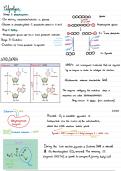
Our starting substrate/molecule glucose
&T
is
DP
Glucose is
phosphorylated 2 phosphates added to C1 & CG
⑧000000 G Phosphorylated glucose
-
-
-
Stage 2 :
Sitting
-
⑧000 OOO-G2x Triose phosphate
Phosphorylated glucose split into 2 triose phosphate molecules
-
(
2ADD
(
* Second
Stage 3 Oxidation
:
Phosphate is NAD
Oxidation of triose phosphate
a n ion from
NADH
↳
to
pyruvate cytoplasm
-
2ATP
000 800 2x Pyruvate
NAD/NADH
Oxidising agent Reducing agent NAD/H are
coenzymes molecules that
: are
required
by an
enzyme in order to catalyse its reaction .
Nicotinamide
Nicotinamide adenine dinusleutide (NAD)
·
The catalysing the oxidation steps in
enzymes
-
adenine
respiration are called DEHYDROGENASES
(they remove H atoms from substances)
D
Substrate WAD 22/09
Provided Q available
pyruvate
O
_
is is
dehydrogenase transported into the matrix of the mitochondria,
enzyme
where the LINK reaction takes place.
Products)
oxidised
Oxidised substrate NAD
Divate + NAD +
Coenzyme
A
Acetyl Coenzyme
A + NADH +
C
reduced
Pyruvate
During the Link reaction pyruvate is Oxidised (NAD is reduced
c
, ,
& it's decarboxylated (CO2 removed) The remaining .
2C
↳ fragment (ACETYL) ,
is joined to coenzyme A forming Acetyl
,
Co A
.
↓
↑
ACETYL Coz
(2C)
, Kribs Cycle :
Oxaloacetate 24 Citrate
4[ + CoA 6C
ATP acetyl coenzyme
A
NAD
NADH
NADH
NAD
5C
ADP + Pi
CO2
4
46 NAD
FADH
NADH
FAD CO2
CoHiOs +
60 -6COz +
GHz0 .
The 2C acetyl is combined with a 4G molecule
oxaloacetate ,
to form a GC molecule
,
citrate
glucose
·
Citrate is then decarboxylated producing ,
CO & a 5C compound
glycolysis it's oxidised
reducing NAD -
>- NADH
·
Then the 5C compound
,
is
further oxidised & decarboxylated
CO2 CO2 producing a 4) compound CO2 & ,
another NADH
Link
·
The 4C compound is
further oxidised
, producing FADH &
another NADH & a single molecule
of ATP , regenerating
CO2
o Kreb's Cycle CO2
oxaloacetate
For
1
glucose
ATP NADH
molecule
FADH
glycolysis 2 20
-
link reaction ⑧ 2 O
-Prebscycle
26 2
-
Total 10
-
:
Stage 1 :
phosphorylation
-
-
000000 glucose
-
Our starting substrate/molecule glucose
&T
is
DP
Glucose is
phosphorylated 2 phosphates added to C1 & CG
⑧000000 G Phosphorylated glucose
-
-
-
Stage 2 :
Sitting
-
⑧000 OOO-G2x Triose phosphate
Phosphorylated glucose split into 2 triose phosphate molecules
-
(
2ADD
(
* Second
Stage 3 Oxidation
:
Phosphate is NAD
Oxidation of triose phosphate
a n ion from
NADH
↳
to
pyruvate cytoplasm
-
2ATP
000 800 2x Pyruvate
NAD/NADH
Oxidising agent Reducing agent NAD/H are
coenzymes molecules that
: are
required
by an
enzyme in order to catalyse its reaction .
Nicotinamide
Nicotinamide adenine dinusleutide (NAD)
·
The catalysing the oxidation steps in
enzymes
-
adenine
respiration are called DEHYDROGENASES
(they remove H atoms from substances)
D
Substrate WAD 22/09
Provided Q available
pyruvate
O
_
is is
dehydrogenase transported into the matrix of the mitochondria,
enzyme
where the LINK reaction takes place.
Products)
oxidised
Oxidised substrate NAD
Divate + NAD +
Coenzyme
A
Acetyl Coenzyme
A + NADH +
C
reduced
Pyruvate
During the Link reaction pyruvate is Oxidised (NAD is reduced
c
, ,
& it's decarboxylated (CO2 removed) The remaining .
2C
↳ fragment (ACETYL) ,
is joined to coenzyme A forming Acetyl
,
Co A
.
↓
↑
ACETYL Coz
(2C)
, Kribs Cycle :
Oxaloacetate 24 Citrate
4[ + CoA 6C
ATP acetyl coenzyme
A
NAD
NADH
NADH
NAD
5C
ADP + Pi
CO2
4
46 NAD
FADH
NADH
FAD CO2
CoHiOs +
60 -6COz +
GHz0 .
The 2C acetyl is combined with a 4G molecule
oxaloacetate ,
to form a GC molecule
,
citrate
glucose
·
Citrate is then decarboxylated producing ,
CO & a 5C compound
glycolysis it's oxidised
reducing NAD -
>- NADH
·
Then the 5C compound
,
is
further oxidised & decarboxylated
CO2 CO2 producing a 4) compound CO2 & ,
another NADH
Link
·
The 4C compound is
further oxidised
, producing FADH &
another NADH & a single molecule
of ATP , regenerating
CO2
o Kreb's Cycle CO2
oxaloacetate
For
1
glucose
ATP NADH
molecule
FADH
glycolysis 2 20
-
link reaction ⑧ 2 O
-Prebscycle
26 2
-
Total 10