

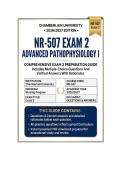
,NR 507 Exam 2 Advanced Pathophysiology I Questions And Answers
2026/2027 Chamberlain
1. A patient with chronic kidney disease (CKD) develops anemia. The most
likely underlying mechanism is:
A) Iron deficiency due to poor dietary intake
B) Decreased erythropoietin production by the damaged kidneys
C) Folate deficiency from poor absorption
D) Hemolysis of red blood cells
**Correct Answer:** B) Decreased erythropoietin production by the damaged
kidneys
**Rationale:** The kidneys produce erythropoietin (EPO), which stimulates
red blood cell production in the bone marrow. In CKD, the renal parenchyma
is destroyed, leading to decreased EPO production and anemia. Iron and
folate deficiencies and hemolysis are not the primary mechanisms in CKD.
2. A patient is diagnosed with hypercalcemia. Which of the following is a
common cause of hypercalcemia?
A) Hypoparathyroidism
B) Vitamin D deficiency
C) Primary hyperparathyroidism
D) Malabsorption syndrome
**Correct Answer:** C) Primary hyperparathyroidism
**Rationale:** Primary hyperparathyroidism is the most common cause of
hypercalcemia in the outpatient setting. Excessive PTH secretion increases
calcium reabsorption in the kidneys, increases intestinal calcium absorption
,(via active vitamin D), and increases bone resorption. Hypoparathyroidism
and Vitamin D deficiency cause hypocalcemia.
3. A 55-year-old male presents with fatigue, weight gain, cold intolerance,
and constipation. Laboratory tests reveal elevated TSH and low free T4. This
condition is most consistent with:
A) Hyperthyroidism
B) Hypothyroidism
C) Cushing's syndrome
D) Addison's disease
**Correct Answer:** B) Hypothyroidism
**Rationale:** Primary hypothyroidism is characterized by elevated TSH (due
to lack of negative feedback) and low free T4. Symptoms include fatigue,
weight gain, cold intolerance, and constipation—all due to a decreased
metabolic rate. Hyperthyroidism causes opposite symptoms, while Cushing's
and Addison's are adrenal disorders.
4. A patient with type 1 diabetes mellitus is at risk for diabetic ketoacidosis
(DKA) due to:
A) Increased insulin sensitivity
B) Absolute insulin deficiency leading to increased lipolysis and ketone body
production
C) Excessive carbohydrate intake
D) Increased glucose uptake by cells
**Correct Answer:** B) Absolute insulin deficiency leading to increased
lipolysis and ketone body production
, **Rationale:** Type 1 diabetes is characterized by an absolute deficiency of
insulin. Without insulin, cells cannot utilize glucose, and the body shifts to fat
metabolism (lipolysis), producing ketone bodies. The accumulation of
ketones leads to metabolic acidosis (DKA). Insulin resistance is characteristic
of type 2 diabetes.
5. A 65-year-old woman with type 2 diabetes is prescribed metformin. The
primary mechanism of action of metformin is to:
A) Stimulate insulin secretion from pancreatic beta cells
B) Decrease hepatic glucose production and increase peripheral insulin
sensitivity
C) Slow carbohydrate absorption in the intestine
D) Increase glucagon secretion
**Correct Answer:** B) Decrease hepatic glucose production and increase
peripheral insulin sensitivity
**Rationale:** Metformin is a biguanide that reduces hepatic glucose
production (gluconeogenesis) and increases peripheral insulin sensitivity in
muscle and adipose tissue. It does not stimulate insulin secretion (like
sulfonylureas) or slow carbohydrate absorption (like alpha-glucosidase
inhibitors).
6. A patient with a history of peptic ulcer disease is diagnosed with Zollinger-
Ellison syndrome. This condition is caused by:
A) Helicobacter pylori infection
B) A gastrin-secreting tumor (gastrinoma)
C) Chronic NSAID use
D) Excessive alcohol consumption
**Correct Answer:** B) A gastrin-secreting tumor (gastrinoma)
2026/2027 Chamberlain
1. A patient with chronic kidney disease (CKD) develops anemia. The most
likely underlying mechanism is:
A) Iron deficiency due to poor dietary intake
B) Decreased erythropoietin production by the damaged kidneys
C) Folate deficiency from poor absorption
D) Hemolysis of red blood cells
**Correct Answer:** B) Decreased erythropoietin production by the damaged
kidneys
**Rationale:** The kidneys produce erythropoietin (EPO), which stimulates
red blood cell production in the bone marrow. In CKD, the renal parenchyma
is destroyed, leading to decreased EPO production and anemia. Iron and
folate deficiencies and hemolysis are not the primary mechanisms in CKD.
2. A patient is diagnosed with hypercalcemia. Which of the following is a
common cause of hypercalcemia?
A) Hypoparathyroidism
B) Vitamin D deficiency
C) Primary hyperparathyroidism
D) Malabsorption syndrome
**Correct Answer:** C) Primary hyperparathyroidism
**Rationale:** Primary hyperparathyroidism is the most common cause of
hypercalcemia in the outpatient setting. Excessive PTH secretion increases
calcium reabsorption in the kidneys, increases intestinal calcium absorption
,(via active vitamin D), and increases bone resorption. Hypoparathyroidism
and Vitamin D deficiency cause hypocalcemia.
3. A 55-year-old male presents with fatigue, weight gain, cold intolerance,
and constipation. Laboratory tests reveal elevated TSH and low free T4. This
condition is most consistent with:
A) Hyperthyroidism
B) Hypothyroidism
C) Cushing's syndrome
D) Addison's disease
**Correct Answer:** B) Hypothyroidism
**Rationale:** Primary hypothyroidism is characterized by elevated TSH (due
to lack of negative feedback) and low free T4. Symptoms include fatigue,
weight gain, cold intolerance, and constipation—all due to a decreased
metabolic rate. Hyperthyroidism causes opposite symptoms, while Cushing's
and Addison's are adrenal disorders.
4. A patient with type 1 diabetes mellitus is at risk for diabetic ketoacidosis
(DKA) due to:
A) Increased insulin sensitivity
B) Absolute insulin deficiency leading to increased lipolysis and ketone body
production
C) Excessive carbohydrate intake
D) Increased glucose uptake by cells
**Correct Answer:** B) Absolute insulin deficiency leading to increased
lipolysis and ketone body production
, **Rationale:** Type 1 diabetes is characterized by an absolute deficiency of
insulin. Without insulin, cells cannot utilize glucose, and the body shifts to fat
metabolism (lipolysis), producing ketone bodies. The accumulation of
ketones leads to metabolic acidosis (DKA). Insulin resistance is characteristic
of type 2 diabetes.
5. A 65-year-old woman with type 2 diabetes is prescribed metformin. The
primary mechanism of action of metformin is to:
A) Stimulate insulin secretion from pancreatic beta cells
B) Decrease hepatic glucose production and increase peripheral insulin
sensitivity
C) Slow carbohydrate absorption in the intestine
D) Increase glucagon secretion
**Correct Answer:** B) Decrease hepatic glucose production and increase
peripheral insulin sensitivity
**Rationale:** Metformin is a biguanide that reduces hepatic glucose
production (gluconeogenesis) and increases peripheral insulin sensitivity in
muscle and adipose tissue. It does not stimulate insulin secretion (like
sulfonylureas) or slow carbohydrate absorption (like alpha-glucosidase
inhibitors).
6. A patient with a history of peptic ulcer disease is diagnosed with Zollinger-
Ellison syndrome. This condition is caused by:
A) Helicobacter pylori infection
B) A gastrin-secreting tumor (gastrinoma)
C) Chronic NSAID use
D) Excessive alcohol consumption
**Correct Answer:** B) A gastrin-secreting tumor (gastrinoma)


