

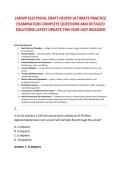
LADWP ELECTRICAL CRAFT HELPER ULTIMATE PRACTICE
EXAMINATION COMPLETE QUESTIONS AND DETAILED
SOLUTIONS LATEST UPDATE THIS YEAR JUST RELEASED
Exam Coverage Areas
1. Basic Electrical Principles — voltage, current, resistance, power, energy, conductors, insulators, and
circuit behavior.
2. Electrical Safety — shock prevention, PPE, grounding, lockout/tagout, hazardous conditions, and
emergency response.
3. Hand and Power Tools — proper selection, inspection, operation, storage, and maintenance.
4. Electrical Materials and Components — conductors, conduit, boxes, switches, fuses, breakers,
transformers, relays, and fittings.
5. Circuit Installation — wiring methods, connections, terminations, conduit installation, fixtures, and
panels.
6. Testing and Measurement — safe use of voltmeters, ammeters, ohmmeters, continuity testing, and
interpreting readings.
7. Motors and Control Equipment — motors, starters, relays, controls, overload protection, and
troubleshooting basics.
8. Distribution Systems — overhead and underground electrical systems, transformers, cables, switchgear,
and related equipment.
9. Construction and Maintenance Practices — drilling, fastening, cable handling, equipment assembly,
inspection, repair support, and housekeeping.
10. Work Practices and Job Performance — following instructions, communication, physical work, emergency
response, tool care, and working safely under supervision. These areas reflect the published duties and
competency/task descriptions for Electrical Craft Helper. (
1.
A circuit contains a 120-volt source and a resistance of 20 ohms.
Approximately how much current will normally flow through the circuit?
A. 2 amperes
B. 4 amperes
C. 6 amperes
D. 10 amperes
Answer: C. 6 amperes
,Rationale: Ohm's law states that current equals voltage divided by
resistance. Therefore, 120 ÷ 20 = 6 amperes.
2.
Which electrical quantity represents the electrical pressure that causes
current to move through a conductor within a completed circuit?
A. Resistance
B. Voltage
C. Power
D. Capacitance
Answer: B. Voltage
Rationale: Voltage is electrical potential difference, commonly described as
the pressure that drives current through a circuit.
3.
What is the primary purpose of electrical resistance within a circuit when
current passes through a component?
A. To increase available voltage automatically
B. To oppose the flow of electrical current
C. To create mechanical rotation directly
D. To eliminate the need for grounding
Answer: B. To oppose the flow of electrical current
Rationale: Resistance opposes current flow. The amount of current depends
on voltage and total circuit resistance.
,4.
A helper is asked to determine electrical power for a load operating at 120
volts and drawing 5 amperes. What is the approximate power?
A. 24 watts
B. 125 watts
C. 600 watts
D. 1,200 watts
Answer: C. 600 watts
Rationale: Electrical power can be calculated as P = V × I. Therefore, 120 × 5
= 600 watts.
5.
Which material would generally be considered the best electrical conductor
among the following commonly used materials?
A. Copper
B. Rubber
C. Glass
D. Dry wood
Answer: A. Copper
Rationale: Copper has excellent electrical conductivity and is widely used for
electrical conductors and wiring.
6.
, Why is rubber commonly used as an insulating material around electrical
conductors and equipment?
A. It increases electrical current
B. It provides a path for fault current
C. It resists electrical current flow
D. It increases conductor resistance to mechanical stress only
Answer: C. It resists electrical current flow
Rationale: Insulating materials resist current flow and help prevent
unintended electrical contact with energized conductors.
7.
Two resistors are connected in series in a circuit. How does the total
resistance compare with either individual resistor?
A. It is less than both resistors
B. It equals only the smallest resistor
C. It is the sum of the individual resistances
D. It is always zero
Answer: C. It is the sum of the individual resistances
Rationale: Series resistances add together. For example, 10 ohms and 20
ohms in series produce 30 ohms total resistance.
8.
In a parallel circuit, what generally happens to current when another branch
is added while source voltage remains unchanged?
EXAMINATION COMPLETE QUESTIONS AND DETAILED
SOLUTIONS LATEST UPDATE THIS YEAR JUST RELEASED
Exam Coverage Areas
1. Basic Electrical Principles — voltage, current, resistance, power, energy, conductors, insulators, and
circuit behavior.
2. Electrical Safety — shock prevention, PPE, grounding, lockout/tagout, hazardous conditions, and
emergency response.
3. Hand and Power Tools — proper selection, inspection, operation, storage, and maintenance.
4. Electrical Materials and Components — conductors, conduit, boxes, switches, fuses, breakers,
transformers, relays, and fittings.
5. Circuit Installation — wiring methods, connections, terminations, conduit installation, fixtures, and
panels.
6. Testing and Measurement — safe use of voltmeters, ammeters, ohmmeters, continuity testing, and
interpreting readings.
7. Motors and Control Equipment — motors, starters, relays, controls, overload protection, and
troubleshooting basics.
8. Distribution Systems — overhead and underground electrical systems, transformers, cables, switchgear,
and related equipment.
9. Construction and Maintenance Practices — drilling, fastening, cable handling, equipment assembly,
inspection, repair support, and housekeeping.
10. Work Practices and Job Performance — following instructions, communication, physical work, emergency
response, tool care, and working safely under supervision. These areas reflect the published duties and
competency/task descriptions for Electrical Craft Helper. (
1.
A circuit contains a 120-volt source and a resistance of 20 ohms.
Approximately how much current will normally flow through the circuit?
A. 2 amperes
B. 4 amperes
C. 6 amperes
D. 10 amperes
Answer: C. 6 amperes
,Rationale: Ohm's law states that current equals voltage divided by
resistance. Therefore, 120 ÷ 20 = 6 amperes.
2.
Which electrical quantity represents the electrical pressure that causes
current to move through a conductor within a completed circuit?
A. Resistance
B. Voltage
C. Power
D. Capacitance
Answer: B. Voltage
Rationale: Voltage is electrical potential difference, commonly described as
the pressure that drives current through a circuit.
3.
What is the primary purpose of electrical resistance within a circuit when
current passes through a component?
A. To increase available voltage automatically
B. To oppose the flow of electrical current
C. To create mechanical rotation directly
D. To eliminate the need for grounding
Answer: B. To oppose the flow of electrical current
Rationale: Resistance opposes current flow. The amount of current depends
on voltage and total circuit resistance.
,4.
A helper is asked to determine electrical power for a load operating at 120
volts and drawing 5 amperes. What is the approximate power?
A. 24 watts
B. 125 watts
C. 600 watts
D. 1,200 watts
Answer: C. 600 watts
Rationale: Electrical power can be calculated as P = V × I. Therefore, 120 × 5
= 600 watts.
5.
Which material would generally be considered the best electrical conductor
among the following commonly used materials?
A. Copper
B. Rubber
C. Glass
D. Dry wood
Answer: A. Copper
Rationale: Copper has excellent electrical conductivity and is widely used for
electrical conductors and wiring.
6.
, Why is rubber commonly used as an insulating material around electrical
conductors and equipment?
A. It increases electrical current
B. It provides a path for fault current
C. It resists electrical current flow
D. It increases conductor resistance to mechanical stress only
Answer: C. It resists electrical current flow
Rationale: Insulating materials resist current flow and help prevent
unintended electrical contact with energized conductors.
7.
Two resistors are connected in series in a circuit. How does the total
resistance compare with either individual resistor?
A. It is less than both resistors
B. It equals only the smallest resistor
C. It is the sum of the individual resistances
D. It is always zero
Answer: C. It is the sum of the individual resistances
Rationale: Series resistances add together. For example, 10 ohms and 20
ohms in series produce 30 ohms total resistance.
8.
In a parallel circuit, what generally happens to current when another branch
is added while source voltage remains unchanged?


