NUR 209 Exam 2 Study Guide: Wound Care, Pneumonia, & COPD
Exam 2 Study Guide
Wound Care
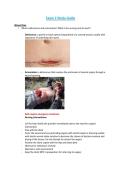
• What is dehiscence and evisceration? What is the nursing care for each?
- Dehiscence: a partial or total rupture (separation) of a sutured wound, usually with
separation of underlying skin layers.
- Evisceration: a dehiscence that involves the protrusion of visceral organs through a
wound opening.
Both require emergency treatment.
Nursing interventions:
- Call for help. Notify the provider immediately due to the need for surgical
intervention.
- Stay with the client
- Cover the wound and any protruding organs with sterile towels or dressing soaked
with sterile normal saline solution to decrease the chance of bacteria invasion and
drying of the tissues. Do not attempt to reinsert the organs.
- Position the client supine with the hips and knees bent
- Observe for indications of shock
- Maintain a calm environment
- Keep the client NPO in preparation for returning to surgery
NUR 209 Exam 2 Study Guide: Wound Care, Pneumonia, & COPD
,NUR 209 Exam 2 Study Guide: Wound Care, Pneumonia, & COPD
• Nutritional requirements for wound healing
- Encourage proper nutrition
- Provide adequate hydration (at least 2,500 mL/day) and meet protein and calorie
needs
- Note if blood albumin levels are low (less than 3.5 g/dl), because a lack of protein
puts the client at greater risk for skin breakdown, slowed healing and infection
- Provide nutritional support as indicated (Vitamin and mineral supplements specially
A, C, zinc, copper), nutritional supplements, and enteral and parenteral nutrition.
- Monitor lymphocyte count
• Serous, sanguineous, and serosanguinous drainage
- Serous drainage: the portion of the blood (serum) that is watery and clear or slightly
yellow in appearance (fluid in blisters).
- Sanguineous drainage: contains serum and red blood cells. It is thick and appears
reddish. Brighter drainage indicates active bleeding; darker drainage indicates older
bleeding/drainage.
- Serosanguineous drainage: contains both serum and blood. It is watery and looks
pale and pink due to a mixture of red and clear fluid.
• Healing by primary, secondary, and tertiary intention
NUR 209 Exam 2 Study Guide: Wound Care, Pneumonia, & COPD
, NUR 209 Exam 2 Study Guide: Wound Care, Pneumonia, & COPD
- Primary intention:
1. Little or no tissue loss
2. Edges approximated, as with a surgical incision
3. Heals rapidly
4. Low risk of infection
5. No or minimal scarring
Example: closed surgical incision with staples, sutures, or liquid glue to seal
laceration.
- Secondary intention:
1. Loss of tissue
2. Wound edges widely separated, unapproximated (pressure injury, open burn
areas)
3. Longer healing time
4. Increase for risk of infection
5. Scarring
6. Heals by granulation
Example: pressure injury left open to heal
- Tertiary intention:
NUR 209 Exam 2 Study Guide: Wound Care, Pneumonia, & COPD
Exam 2 Study Guide
Wound Care
• What is dehiscence and evisceration? What is the nursing care for each?
- Dehiscence: a partial or total rupture (separation) of a sutured wound, usually with
separation of underlying skin layers.
- Evisceration: a dehiscence that involves the protrusion of visceral organs through a
wound opening.
Both require emergency treatment.
Nursing interventions:
- Call for help. Notify the provider immediately due to the need for surgical
intervention.
- Stay with the client
- Cover the wound and any protruding organs with sterile towels or dressing soaked
with sterile normal saline solution to decrease the chance of bacteria invasion and
drying of the tissues. Do not attempt to reinsert the organs.
- Position the client supine with the hips and knees bent
- Observe for indications of shock
- Maintain a calm environment
- Keep the client NPO in preparation for returning to surgery
NUR 209 Exam 2 Study Guide: Wound Care, Pneumonia, & COPD
,NUR 209 Exam 2 Study Guide: Wound Care, Pneumonia, & COPD
• Nutritional requirements for wound healing
- Encourage proper nutrition
- Provide adequate hydration (at least 2,500 mL/day) and meet protein and calorie
needs
- Note if blood albumin levels are low (less than 3.5 g/dl), because a lack of protein
puts the client at greater risk for skin breakdown, slowed healing and infection
- Provide nutritional support as indicated (Vitamin and mineral supplements specially
A, C, zinc, copper), nutritional supplements, and enteral and parenteral nutrition.
- Monitor lymphocyte count
• Serous, sanguineous, and serosanguinous drainage
- Serous drainage: the portion of the blood (serum) that is watery and clear or slightly
yellow in appearance (fluid in blisters).
- Sanguineous drainage: contains serum and red blood cells. It is thick and appears
reddish. Brighter drainage indicates active bleeding; darker drainage indicates older
bleeding/drainage.
- Serosanguineous drainage: contains both serum and blood. It is watery and looks
pale and pink due to a mixture of red and clear fluid.
• Healing by primary, secondary, and tertiary intention
NUR 209 Exam 2 Study Guide: Wound Care, Pneumonia, & COPD
, NUR 209 Exam 2 Study Guide: Wound Care, Pneumonia, & COPD
- Primary intention:
1. Little or no tissue loss
2. Edges approximated, as with a surgical incision
3. Heals rapidly
4. Low risk of infection
5. No or minimal scarring
Example: closed surgical incision with staples, sutures, or liquid glue to seal
laceration.
- Secondary intention:
1. Loss of tissue
2. Wound edges widely separated, unapproximated (pressure injury, open burn
areas)
3. Longer healing time
4. Increase for risk of infection
5. Scarring
6. Heals by granulation
Example: pressure injury left open to heal
- Tertiary intention:
NUR 209 Exam 2 Study Guide: Wound Care, Pneumonia, & COPD