NR509 WEEK 6 EG IHUMAN CASE STUDY TEST
BANK
EMILY GREEN: CLINICAL HEADACHE ASSESSMENT — 2026-2027 UPDATE EXAM
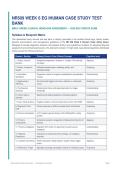
Syllabus & Blueprint Matrix
This specialized study manual and test bank is directly grounded in the verified clinical logs, history sheets,
physical examinations, and management guidelines of the NR 509 Week 6 iHuman Case: Emily Green.
Designed to elevate diagnostic precision and prepare family nurse practitioner students for advanced physical
assessment and clinical board exams, this test bank contains 14 high-yield, case-derived questions distributed
evenly across the clinical continuum.
Domain / Section Primary Focus & Core Clinical Concept Cognitive level
1. History: Onset & Headache progression: Gradual vs. Sudden (Thunderclap Applying
Duration red flags)
2. History: Location & Unilateral temporal pain, throbbing quality, and Analyzing
Quality pathophysiology
3. Associated Diagnostic criteria for migraine: photophobia, phonophobia, Remembering
Symptoms nausea
4. Aggravating & Environmental triggers (red wine, caffeine) vs. dark/quiet Analyzing
Relieving rooms
5. Psychosocial Interpersonal stress and sleep deprivation on trigger Understanding
Stressors thresholds
6. Family History / Maternal and sibling headache inheritance patterns Understanding
Genetics
7. Exam: Vitals & Neuro Pupillary reaction, normal cranial nerves II-XII, neck ROM Applying
8. Diagnostic Tests: Clinical rationale for ESR to exclude Giant Cell Arteritis Evaluating
ESR
9. Pharma: Sumatriptan 5-HT receptor agonist dosing, limits (200mg/24h), safety Analyzing
profiles
10. Pharma: Antiemetic serotonin antagonists (Ondansetron 8mg) for GI Applying
Ondansetron distress
11. Pharma: Analgesics Ibuprofen OTC limits (12 days/mo) to avoid overuse Understanding
headache
12. Migraine Indications to initiate preventive therapy (>6 headache Remembering
Prophylaxis days/mo)
13. Lifestyle Counseling Patient education: Sleep hygiene, regular meals, trigger Applying
charts
14. Referrals & Triage Specialty neurology consultation criteria for refractory cases Evaluating
Advanced Physical Assessment — Chamberlain University Page 1
, NR 509 WEEK 6: EMILY GREEN IHUMAN CASE STUDY 2026-2027 CLINICAL UPDATE & TEST BANK
SECTION 1: HISTORY — ONSET & DURATION
Learning Objective: Examine the onset, progression, and duration of a presenting headache to differentiate
safe patterns from secondary red flags.
Question 1: A 22-year-old college student (Emily Green) presents with a severe headache. Which of the
following chronological descriptions regarding her headache onset and duration is accurate and consistent with
her case logs?
A. The headache had a thunderclap onset, peaking instantly at 10/10 severity.
B. The headache began gradually yesterday morning and has lasted over 30 hours.
C. The pain was localized strictly to the occiput and resolved after 2 hours.
D. The headache began abruptly following a history of severe head trauma.
ANSWER ■: B — The headache began gradually yesterday morning and has lasted over 30 hours.
Explanation: According to Emily Green's history and case records, her headache had a gradual onset, beginning
yesterday morning, and has persisted for over 30 hours, progressively getting worse. This gradual, prolonged
pattern is characteristic of an acute migraine exacerbation. Option A describes a 'thunderclap' headache (such as a
subarachnoid hemorrhage), which is a clinical emergency and inconsistent with her gradual onset. Option C is
incorrect because her pain started in her left temple, not the occiput, and lasted far longer than 2 hours. Option D is
incorrect because she denies any history of head trauma.
Key Concept: A gradual onset and prolonged duration (30+ hours) is a classic presentation of a primary migraine,
distinct from sudden, catastrophic 'thunderclap' headaches that suggest subarachnoid bleeding.
Common Mistake:
Students sometimes misclassify Emily's headache as a thunderclap headache because she rates the pain as 8/10 or 'the
worst headache like today'. However, a thunderclap headache must peak within 60 seconds of onset.
DIFFICULTY: Cognitive Level: Applying (Application) | MSC: Client Needs: Health Promotion and Maintenance
Advanced Physical Assessment — Chamberlain University Page 2
BANK
EMILY GREEN: CLINICAL HEADACHE ASSESSMENT — 2026-2027 UPDATE EXAM
Syllabus & Blueprint Matrix
This specialized study manual and test bank is directly grounded in the verified clinical logs, history sheets,
physical examinations, and management guidelines of the NR 509 Week 6 iHuman Case: Emily Green.
Designed to elevate diagnostic precision and prepare family nurse practitioner students for advanced physical
assessment and clinical board exams, this test bank contains 14 high-yield, case-derived questions distributed
evenly across the clinical continuum.
Domain / Section Primary Focus & Core Clinical Concept Cognitive level
1. History: Onset & Headache progression: Gradual vs. Sudden (Thunderclap Applying
Duration red flags)
2. History: Location & Unilateral temporal pain, throbbing quality, and Analyzing
Quality pathophysiology
3. Associated Diagnostic criteria for migraine: photophobia, phonophobia, Remembering
Symptoms nausea
4. Aggravating & Environmental triggers (red wine, caffeine) vs. dark/quiet Analyzing
Relieving rooms
5. Psychosocial Interpersonal stress and sleep deprivation on trigger Understanding
Stressors thresholds
6. Family History / Maternal and sibling headache inheritance patterns Understanding
Genetics
7. Exam: Vitals & Neuro Pupillary reaction, normal cranial nerves II-XII, neck ROM Applying
8. Diagnostic Tests: Clinical rationale for ESR to exclude Giant Cell Arteritis Evaluating
ESR
9. Pharma: Sumatriptan 5-HT receptor agonist dosing, limits (200mg/24h), safety Analyzing
profiles
10. Pharma: Antiemetic serotonin antagonists (Ondansetron 8mg) for GI Applying
Ondansetron distress
11. Pharma: Analgesics Ibuprofen OTC limits (12 days/mo) to avoid overuse Understanding
headache
12. Migraine Indications to initiate preventive therapy (>6 headache Remembering
Prophylaxis days/mo)
13. Lifestyle Counseling Patient education: Sleep hygiene, regular meals, trigger Applying
charts
14. Referrals & Triage Specialty neurology consultation criteria for refractory cases Evaluating
Advanced Physical Assessment — Chamberlain University Page 1
, NR 509 WEEK 6: EMILY GREEN IHUMAN CASE STUDY 2026-2027 CLINICAL UPDATE & TEST BANK
SECTION 1: HISTORY — ONSET & DURATION
Learning Objective: Examine the onset, progression, and duration of a presenting headache to differentiate
safe patterns from secondary red flags.
Question 1: A 22-year-old college student (Emily Green) presents with a severe headache. Which of the
following chronological descriptions regarding her headache onset and duration is accurate and consistent with
her case logs?
A. The headache had a thunderclap onset, peaking instantly at 10/10 severity.
B. The headache began gradually yesterday morning and has lasted over 30 hours.
C. The pain was localized strictly to the occiput and resolved after 2 hours.
D. The headache began abruptly following a history of severe head trauma.
ANSWER ■: B — The headache began gradually yesterday morning and has lasted over 30 hours.
Explanation: According to Emily Green's history and case records, her headache had a gradual onset, beginning
yesterday morning, and has persisted for over 30 hours, progressively getting worse. This gradual, prolonged
pattern is characteristic of an acute migraine exacerbation. Option A describes a 'thunderclap' headache (such as a
subarachnoid hemorrhage), which is a clinical emergency and inconsistent with her gradual onset. Option C is
incorrect because her pain started in her left temple, not the occiput, and lasted far longer than 2 hours. Option D is
incorrect because she denies any history of head trauma.
Key Concept: A gradual onset and prolonged duration (30+ hours) is a classic presentation of a primary migraine,
distinct from sudden, catastrophic 'thunderclap' headaches that suggest subarachnoid bleeding.
Common Mistake:
Students sometimes misclassify Emily's headache as a thunderclap headache because she rates the pain as 8/10 or 'the
worst headache like today'. However, a thunderclap headache must peak within 60 seconds of onset.
DIFFICULTY: Cognitive Level: Applying (Application) | MSC: Client Needs: Health Promotion and Maintenance
Advanced Physical Assessment — Chamberlain University Page 2