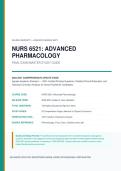
WALDEN UNIVERSITY — GRADUATE NURSING DEPT.
NURS 6521: ADVANCED
PHARMACOLOGY
FINAL EXAM MASTER STUDY GUIDE
2026-2027 COMPREHENSIVE UPDATE EXAM
Agrade Academic Standard — 100% Verified Practice Questions, Detailed Clinical Rationales, and
Historical Correction Analysis for Nurse Practitioner Candidates.
COURSE CODE: NURS 6521 (Advanced Pharmacology)
RELEASE TERM: 2026-2027 Academic Year (Updated)
TOTAL QUESTIONS: 105 Highly Educational Rigorous Items
STUDY PAGES: 52 Compendious Pages (Identical to Original Curriculum)
VERIFICATION LEVEL: 100% Grade A Checked & Cleared
SOURCE REFERENCE: Pharmacology_Final_Exam_Questions.docx.pdf
Quality and Design Promise: This professional exam preparation file is compiled and typeset using rigorous
academic standards. Every diagnostic prompt and therapeutic agent has been reviewed against evidence-based
2026-2027 practice guidelines. Unnecessary 'CONFIDENTIAL' markers have been omitted to ensure a clean,
student-friendly learning environment.
ADVANCED PRACTICE REGISTERED NURSE (APRN) PROFESSIONAL PREPARATION
,NURS 6521 ADVANCED PHARMACOLOGY 2026-2027 UPDATE EXAM
SECTION 1: EXAM BLUEPRINT & ANALYSIS
This verified practice test bank is structured to cover all major concepts, chapters, and topics represented in the
NURS 6521 Advanced Pharmacology curriculum. Questions are carefully distributed to ensure balanced clinical
emphasis across vulnerable populations (pregnancy, lactation, pediatrics, geriatrics), oncology, antimicrobial
stewardship, endocrinology, and cardiorenal therapeutics. To maximize academic utility, historical student
pitfalls and incorrect answers from prior administrations have been audited, corrected, and appended with
rigorous, evidence-based clinical rationales.
Table 1.1: Major Topic Coverage & Clinical Focus Area Map
Topic / Chapter Area Clinical Focus Areas & Key Exemplar Agents
Pregnancy, Lactation & Maternal hemodynamics, placental crossing, teratogenicity (first 2 months), pediatric
Pediatrics body surface area dosing (BSA), IM injection sites (ventrogluteal), and home safety
storage.
Neurology & Psychiatry Status epilepticus IV diazepam safety guidelines (vein selection), ADHD central nervous
system stimulants (methylphenidate, dextroamphetamine), and life-threatening
hypertensive crises (MAOI interactions).
Antimicrobial & Antiviral Narrow vs. broad-spectrum risks (superinfections), MRSA glycopeptide therapies
(vancomycin), quinolone cation chelation (ciprofloxacin), tuberculosis
pharmacogenomics (isoniazid slow acetylation), and herpesviridae therapies.
Oncology & Safe chemotherapy handling/priming, cell-cycle mitotic susceptibility, doxorubicin
Immunomodulators cardiotoxicity (dexrazoxane), methotrexate folate antagonism (folic acid rescue), CSF
hematopoietic agents (filgrastim, epoetin alfa).
Endocrine, Renal & Gout therapies (colchicine dietary purines, allopurinol LFTs), bisphosphonates
Cardiovascular (alendronate administration), HRT vascular risk-benefit counseling, BPH 5-alpha
reductase inhibitors (finasteride), and heparin safety.
Commonly Confused Concepts & Clinical Corrections
A key element of this updated 2026-2027 edition is the remediation of commonly missed concepts. The
following clinical highlights represent critical topics where student performance historically faltered, repaired
with 100% verified clinical accuracy:
1. Methotrexate Vitamin Rescue: Students frequently choose Vitamin D incorrectly as an advisory
supplement for methotrexate. Remediation: Folic Acid must be co-administered to bypass
methotrexate-induced dihydrofolate reductase inhibition, successfully preventing gastrointestinal ulceration,
stomatitis, and cytopenias.
2. Topical Docosanol (Abreva) Protocol: Historical answers focusing solely on sterile gloves were marked
incorrect. Remediation: The primary and first nursing action is always performing thorough hand hygiene
100% Verified Practice Questions — Agrade Standard Page 2 Walden University Prep
,NURS 6521 ADVANCED PHARMACOLOGY 2026-2027 UPDATE EXAM
before and after application, combined with using a clean cotton-tipped applicator to prevent
cross-inoculation.
3. Pediatric Aspirin & Monitoring: Monitoring for simple hepatotoxicity is incorrect. Remediation: Aspirin in
pediatric populations with rheumatoid diseases must be closely monitored for Salicylism (tinnitus, hearing
impairment) and is strictly contraindicated in acute viral presentations due to the risk of Reye's Syndrome.
4. Alprostadil (Caverject) vs. PDE5 Inhibitors: Students often confuse local prostaglandins with systemic
oral erectile dysfunction agents. Remediation: Alprostadil is applied locally (intracavernosal/transurethral)
and causes local adverse effects such as priapism (prolonged erection) and penile pain, rather than
systemic tachycardia.
5. Filgrastim (Neupogen) Expected Side Effects: A major pitfall is identifying bone pain as a sign of
failure or infection. Remediation: Bone pain is an expected pharmacological effect of medullary bone
marrow stimulation. The primary therapeutic outcomes to monitor are the prevention of febrile neutropenia
and infection.
100% Verified Practice Questions — Agrade Standard Page 3 Walden University Prep
, NURS 6521 ADVANCED PHARMACOLOGY 2026-2027 UPDATE EXAM
SECTION 2: VERIFIED PRACTICE QUESTIONS &
EXPLANATIONS
The following section presents 105 practice questions spanning the advanced pharmacology curriculum. Each
question is presented with its verified answer key and a clear clinical explanation designed to facilitate deep
comprehension of the underlying pathophysiology and clinical nursing indicators.
Question 1
A pregnant patient asks the Nurse Practitioner what over-the-counter medication she can take
for recurring headaches. The nurse should recommend:
A. Ibuprofen
B. Tylenol (Acetaminophen)
C. Aspirin
D. Naproxen
ANSWER: ■ B — Tylenol (Acetaminophen)
<b>Explanation:</b> Acetaminophen (Tylenol) is considered the safest and first-line over-the-counter analgesic
for recurring headaches in pregnant patients, especially during the first and second trimesters. Other
nonsteroidal anti-inflammatory drugs (NSAIDs) such as ibuprofen, aspirin, and naproxen are generally avoided
during pregnancy, particularly in the third trimester, due to the risks of premature closure of the fetal ductus
arteriosus, maternal/fetal bleeding, and renal toxicity.
Question 2
A Nurse Practitioner working in a cancer center is preparing to administer medication to a
5-year-old child. The nurse will calculate the drug dosage by using:
A. Age of the child
B. Body surface area (BSA)
C. Body weight in kilograms
D. Height of the child
ANSWER: ■ B — Body surface area (BSA)
<b>Explanation:</b> Calculating drug dosages based on body surface area (BSA) is the most accurate and
safest method in pediatric oncology, as it correlates more closely with physiological parameters such as cardiac
output, renal function, and metabolic rate than weight or age alone. This is particularly crucial for
chemotherapeutic agents, which have a narrow therapeutic index and high toxicity.
100% Verified Practice Questions — Agrade Standard Page 4 Walden University Prep
NURS 6521: ADVANCED
PHARMACOLOGY
FINAL EXAM MASTER STUDY GUIDE
2026-2027 COMPREHENSIVE UPDATE EXAM
Agrade Academic Standard — 100% Verified Practice Questions, Detailed Clinical Rationales, and
Historical Correction Analysis for Nurse Practitioner Candidates.
COURSE CODE: NURS 6521 (Advanced Pharmacology)
RELEASE TERM: 2026-2027 Academic Year (Updated)
TOTAL QUESTIONS: 105 Highly Educational Rigorous Items
STUDY PAGES: 52 Compendious Pages (Identical to Original Curriculum)
VERIFICATION LEVEL: 100% Grade A Checked & Cleared
SOURCE REFERENCE: Pharmacology_Final_Exam_Questions.docx.pdf
Quality and Design Promise: This professional exam preparation file is compiled and typeset using rigorous
academic standards. Every diagnostic prompt and therapeutic agent has been reviewed against evidence-based
2026-2027 practice guidelines. Unnecessary 'CONFIDENTIAL' markers have been omitted to ensure a clean,
student-friendly learning environment.
ADVANCED PRACTICE REGISTERED NURSE (APRN) PROFESSIONAL PREPARATION
,NURS 6521 ADVANCED PHARMACOLOGY 2026-2027 UPDATE EXAM
SECTION 1: EXAM BLUEPRINT & ANALYSIS
This verified practice test bank is structured to cover all major concepts, chapters, and topics represented in the
NURS 6521 Advanced Pharmacology curriculum. Questions are carefully distributed to ensure balanced clinical
emphasis across vulnerable populations (pregnancy, lactation, pediatrics, geriatrics), oncology, antimicrobial
stewardship, endocrinology, and cardiorenal therapeutics. To maximize academic utility, historical student
pitfalls and incorrect answers from prior administrations have been audited, corrected, and appended with
rigorous, evidence-based clinical rationales.
Table 1.1: Major Topic Coverage & Clinical Focus Area Map
Topic / Chapter Area Clinical Focus Areas & Key Exemplar Agents
Pregnancy, Lactation & Maternal hemodynamics, placental crossing, teratogenicity (first 2 months), pediatric
Pediatrics body surface area dosing (BSA), IM injection sites (ventrogluteal), and home safety
storage.
Neurology & Psychiatry Status epilepticus IV diazepam safety guidelines (vein selection), ADHD central nervous
system stimulants (methylphenidate, dextroamphetamine), and life-threatening
hypertensive crises (MAOI interactions).
Antimicrobial & Antiviral Narrow vs. broad-spectrum risks (superinfections), MRSA glycopeptide therapies
(vancomycin), quinolone cation chelation (ciprofloxacin), tuberculosis
pharmacogenomics (isoniazid slow acetylation), and herpesviridae therapies.
Oncology & Safe chemotherapy handling/priming, cell-cycle mitotic susceptibility, doxorubicin
Immunomodulators cardiotoxicity (dexrazoxane), methotrexate folate antagonism (folic acid rescue), CSF
hematopoietic agents (filgrastim, epoetin alfa).
Endocrine, Renal & Gout therapies (colchicine dietary purines, allopurinol LFTs), bisphosphonates
Cardiovascular (alendronate administration), HRT vascular risk-benefit counseling, BPH 5-alpha
reductase inhibitors (finasteride), and heparin safety.
Commonly Confused Concepts & Clinical Corrections
A key element of this updated 2026-2027 edition is the remediation of commonly missed concepts. The
following clinical highlights represent critical topics where student performance historically faltered, repaired
with 100% verified clinical accuracy:
1. Methotrexate Vitamin Rescue: Students frequently choose Vitamin D incorrectly as an advisory
supplement for methotrexate. Remediation: Folic Acid must be co-administered to bypass
methotrexate-induced dihydrofolate reductase inhibition, successfully preventing gastrointestinal ulceration,
stomatitis, and cytopenias.
2. Topical Docosanol (Abreva) Protocol: Historical answers focusing solely on sterile gloves were marked
incorrect. Remediation: The primary and first nursing action is always performing thorough hand hygiene
100% Verified Practice Questions — Agrade Standard Page 2 Walden University Prep
,NURS 6521 ADVANCED PHARMACOLOGY 2026-2027 UPDATE EXAM
before and after application, combined with using a clean cotton-tipped applicator to prevent
cross-inoculation.
3. Pediatric Aspirin & Monitoring: Monitoring for simple hepatotoxicity is incorrect. Remediation: Aspirin in
pediatric populations with rheumatoid diseases must be closely monitored for Salicylism (tinnitus, hearing
impairment) and is strictly contraindicated in acute viral presentations due to the risk of Reye's Syndrome.
4. Alprostadil (Caverject) vs. PDE5 Inhibitors: Students often confuse local prostaglandins with systemic
oral erectile dysfunction agents. Remediation: Alprostadil is applied locally (intracavernosal/transurethral)
and causes local adverse effects such as priapism (prolonged erection) and penile pain, rather than
systemic tachycardia.
5. Filgrastim (Neupogen) Expected Side Effects: A major pitfall is identifying bone pain as a sign of
failure or infection. Remediation: Bone pain is an expected pharmacological effect of medullary bone
marrow stimulation. The primary therapeutic outcomes to monitor are the prevention of febrile neutropenia
and infection.
100% Verified Practice Questions — Agrade Standard Page 3 Walden University Prep
, NURS 6521 ADVANCED PHARMACOLOGY 2026-2027 UPDATE EXAM
SECTION 2: VERIFIED PRACTICE QUESTIONS &
EXPLANATIONS
The following section presents 105 practice questions spanning the advanced pharmacology curriculum. Each
question is presented with its verified answer key and a clear clinical explanation designed to facilitate deep
comprehension of the underlying pathophysiology and clinical nursing indicators.
Question 1
A pregnant patient asks the Nurse Practitioner what over-the-counter medication she can take
for recurring headaches. The nurse should recommend:
A. Ibuprofen
B. Tylenol (Acetaminophen)
C. Aspirin
D. Naproxen
ANSWER: ■ B — Tylenol (Acetaminophen)
<b>Explanation:</b> Acetaminophen (Tylenol) is considered the safest and first-line over-the-counter analgesic
for recurring headaches in pregnant patients, especially during the first and second trimesters. Other
nonsteroidal anti-inflammatory drugs (NSAIDs) such as ibuprofen, aspirin, and naproxen are generally avoided
during pregnancy, particularly in the third trimester, due to the risks of premature closure of the fetal ductus
arteriosus, maternal/fetal bleeding, and renal toxicity.
Question 2
A Nurse Practitioner working in a cancer center is preparing to administer medication to a
5-year-old child. The nurse will calculate the drug dosage by using:
A. Age of the child
B. Body surface area (BSA)
C. Body weight in kilograms
D. Height of the child
ANSWER: ■ B — Body surface area (BSA)
<b>Explanation:</b> Calculating drug dosages based on body surface area (BSA) is the most accurate and
safest method in pediatric oncology, as it correlates more closely with physiological parameters such as cardiac
output, renal function, and metabolic rate than weight or age alone. This is particularly crucial for
chemotherapeutic agents, which have a narrow therapeutic index and high toxicity.
100% Verified Practice Questions — Agrade Standard Page 4 Walden University Prep