

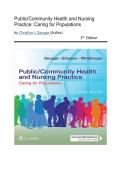
Public/Community Health and Nursing
Practice: Caring for Populations
by Christine L Savage (Author)
3rd Edition
,TABLE OF CONTENTS
I. Basis for Public Health Nursing Knowledge and Skills
1. Public Health and Nursing Practice
2. Optimizing Population Health
3. Epidemiology and Nursing Practice
4. Introduction to Community Assessment
5. Health Program Planning
6. Environmental Health
II. Community Health Across Populations: Public Health Issues
7. Health Disparities and the Social Determinants of Health
8. Health and Vulnerable Populations
9. Communicable Diseases
10. Noncommunicable Diseases
11. Mental Health
12. Substance Use and the Health of Communities
13. Injury and Violence
III. Public Health Planning
14. Health Planning for Local Public Health Departments
15. Health Planning for Acute Care Settings
16. Health Planning for Primary Care Settings
17. Health Planning with Rural and Urban Communities
18. Health Planning for Maternal-Infant and Child Health Settings
19. Health Planning for School Settings
20. Health Planning for Occupational and Environmental Health
21. Health Planning, Public Health Policy, and Finance
22. Health Planning for Emergency Preparedness and Disaster Management
,Test Bank-
Public/Community Health and Nursing Practice: Caring for Populations
Based on Common Course Topics (Chapters 1–22)
Multiple Choice Questions
CHAPTER 1: Foundations of Public/Community Health Nursing
1. Which statement best describes the primary focus of community health nursing?
A) Providing acute care to hospitalized patients
B) Promoting and preserving the health of entire populations
C) Managing chronic disease in individual patients
D) Conducting surgical procedures in outpatient settings
Answer: B
Rationale: Community health nursing focuses on the health of populations and communities rather than
individual acute care.
2. The "community as client" model emphasizes:
A) Treating the sickest individual first
B) Viewing the community itself as the recipient of nursing care
C) Focusing exclusively on school-aged children
D) Prioritizing hospital-based interventions
Answer: B
Rationale: The community-as-client model shifts the focus from individuals to the community aggregate
as the primary unit of care.
3. Which core function of public health involves systematic data collection and analysis?
A) Assurance
B) Policy development
, C) Assessment
D) Implementation
Answer: C
Rationale: Assessment is the first core function and involves monitoring health status and identifying
community health problems.
4. A community health nurse conducting windshield surveys is engaged in which activity?
A) Tertiary prevention
B) Community assessment
C) Legislative advocacy
D) Acute care management
Answer: B
Rationale: Windshield surveys are a key data-gathering technique used during community assessment.
5. The shift from "public health nursing" to "community health nursing" reflects:
A) A decrease in nursing responsibilities
B) An expanded scope that includes all settings where populations are served
C) Elimination of government-funded health programs
D) A focus solely on rural communities
Answer: B
Rationale: Community health nursing encompasses a broader scope including diverse settings beyond
traditional public health agencies.
CHAPTER 2: History of Public Health Nursing
6. Who is widely recognized as the founder of modern nursing and made significant contributions to
public health?
A) Clara Barton
Practice: Caring for Populations
by Christine L Savage (Author)
3rd Edition
,TABLE OF CONTENTS
I. Basis for Public Health Nursing Knowledge and Skills
1. Public Health and Nursing Practice
2. Optimizing Population Health
3. Epidemiology and Nursing Practice
4. Introduction to Community Assessment
5. Health Program Planning
6. Environmental Health
II. Community Health Across Populations: Public Health Issues
7. Health Disparities and the Social Determinants of Health
8. Health and Vulnerable Populations
9. Communicable Diseases
10. Noncommunicable Diseases
11. Mental Health
12. Substance Use and the Health of Communities
13. Injury and Violence
III. Public Health Planning
14. Health Planning for Local Public Health Departments
15. Health Planning for Acute Care Settings
16. Health Planning for Primary Care Settings
17. Health Planning with Rural and Urban Communities
18. Health Planning for Maternal-Infant and Child Health Settings
19. Health Planning for School Settings
20. Health Planning for Occupational and Environmental Health
21. Health Planning, Public Health Policy, and Finance
22. Health Planning for Emergency Preparedness and Disaster Management
,Test Bank-
Public/Community Health and Nursing Practice: Caring for Populations
Based on Common Course Topics (Chapters 1–22)
Multiple Choice Questions
CHAPTER 1: Foundations of Public/Community Health Nursing
1. Which statement best describes the primary focus of community health nursing?
A) Providing acute care to hospitalized patients
B) Promoting and preserving the health of entire populations
C) Managing chronic disease in individual patients
D) Conducting surgical procedures in outpatient settings
Answer: B
Rationale: Community health nursing focuses on the health of populations and communities rather than
individual acute care.
2. The "community as client" model emphasizes:
A) Treating the sickest individual first
B) Viewing the community itself as the recipient of nursing care
C) Focusing exclusively on school-aged children
D) Prioritizing hospital-based interventions
Answer: B
Rationale: The community-as-client model shifts the focus from individuals to the community aggregate
as the primary unit of care.
3. Which core function of public health involves systematic data collection and analysis?
A) Assurance
B) Policy development
, C) Assessment
D) Implementation
Answer: C
Rationale: Assessment is the first core function and involves monitoring health status and identifying
community health problems.
4. A community health nurse conducting windshield surveys is engaged in which activity?
A) Tertiary prevention
B) Community assessment
C) Legislative advocacy
D) Acute care management
Answer: B
Rationale: Windshield surveys are a key data-gathering technique used during community assessment.
5. The shift from "public health nursing" to "community health nursing" reflects:
A) A decrease in nursing responsibilities
B) An expanded scope that includes all settings where populations are served
C) Elimination of government-funded health programs
D) A focus solely on rural communities
Answer: B
Rationale: Community health nursing encompasses a broader scope including diverse settings beyond
traditional public health agencies.
CHAPTER 2: History of Public Health Nursing
6. Who is widely recognized as the founder of modern nursing and made significant contributions to
public health?
A) Clara Barton


