
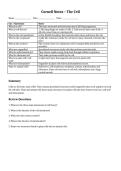
Cornell Notes – The Cell
Name: ____________________ Date: ____________________ Class: ____________________
Cue / Questions Notes
What is a cell? The basic structural and functional unit of all living organisms.
What is cell theory? 1. All living things are made of cells. 2. Cells are the basic unit of life. 3.
All cells come from pre-existing cells.
What is the cell membrane? A thin, flexible boundary that controls what enters and leaves the cell.
What is the cytoplasm? A jelly-like substance inside the cell where many chemical reactions take
place.
What is the nucleus? The control center of a eukaryotic cell. It contains DNA and directs cell
activities.
What are organelles? Specialized structures inside cells that perform particular jobs.
What do mitochondria do? They release usable energy from food through cellular respiration.
What do ribosomes do? They make proteins needed by the cell.
What is a plant cell's cell A rigid outer layer that supports and protects plant cells.
wall?
What are chloroplasts? Organelles in plant cells where photosynthesis occurs.
Plant vs. animal cells? Both have a cell membrane, cytoplasm, nucleus, mitochondria, and
ribosomes. Plant cells also have a cell wall, chloroplasts, and a large
central vacuole.
Summary
Cells are the basic units of life. They contain specialized structures called organelles that work together to keep
the cell alive. Plant and animal cells share many structures, but plant cells also have features such as a cell wall
and chloroplasts.
Review Questions
1. What are the three main statements of cell theory?
2. What is the function of the cell membrane?
3. What does the nucleus control?
4. What is the function of mitochondria?
5. Name two structures found in plant cells but not animal cells.
Name: ____________________ Date: ____________________ Class: ____________________
Cue / Questions Notes
What is a cell? The basic structural and functional unit of all living organisms.
What is cell theory? 1. All living things are made of cells. 2. Cells are the basic unit of life. 3.
All cells come from pre-existing cells.
What is the cell membrane? A thin, flexible boundary that controls what enters and leaves the cell.
What is the cytoplasm? A jelly-like substance inside the cell where many chemical reactions take
place.
What is the nucleus? The control center of a eukaryotic cell. It contains DNA and directs cell
activities.
What are organelles? Specialized structures inside cells that perform particular jobs.
What do mitochondria do? They release usable energy from food through cellular respiration.
What do ribosomes do? They make proteins needed by the cell.
What is a plant cell's cell A rigid outer layer that supports and protects plant cells.
wall?
What are chloroplasts? Organelles in plant cells where photosynthesis occurs.
Plant vs. animal cells? Both have a cell membrane, cytoplasm, nucleus, mitochondria, and
ribosomes. Plant cells also have a cell wall, chloroplasts, and a large
central vacuole.
Summary
Cells are the basic units of life. They contain specialized structures called organelles that work together to keep
the cell alive. Plant and animal cells share many structures, but plant cells also have features such as a cell wall
and chloroplasts.
Review Questions
1. What are the three main statements of cell theory?
2. What is the function of the cell membrane?
3. What does the nucleus control?
4. What is the function of mitochondria?
5. Name two structures found in plant cells but not animal cells.


