

1000 Flashcards Physical Therapy Assistant Exam
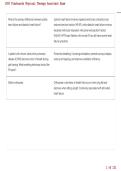
What is the primary difference between systolic Systolic heart failure involves impaired ventricular contraction and
heart failure and diastolic heart failure? reduced ejection fraction (HFrEF), while diastolic heart failure involves
impaired ventricular relaxation with preserved ejection fraction
(HFpEF). NPTE trap: Patients with normal EF can still have severe heart
failure symptoms.
A patient with chronic obstructive pulmonary Pursed-lip breathing. It prolongs exhalation, prevents airway collapse,
disease (COPD) becomes short of breath during reduces air trapping, and improves ventilation efficiency.
gait training. What breathing technique should the
PT teach?
Define orthopnea. Orthopnea is shortness of breath that occurs when lying flat and
improves when sitting upright. Commonly associated with left-sided
heart failure.
1 of 121
,1000 Flashcards Physical Therapy Assistant Exam
The normal adult resting heart rate range is 60 to 100 beats per minute.
approximately _____ to _____ beats per minute.
During exercise, a patient's systolic BP rises Stop exercise immediately because systolic BP >250 mmHg is a
excessively above 250 mmHg. What is the cardiovascular exercise termination criterion.
appropriate PT action?
What is intermittent claudication? Cramping leg pain caused by inadequate arterial blood flow during
activity, typically relieved by rest. Common in peripheral arterial
disease (PAD).
A PT palpates a weak dorsalis pedis pulse and Peripheral arterial disease. These are classic signs of arterial
notices shiny skin and hair loss on the lower insufficiency.
extremity. Which vascular condition is most likely?
What is the normal oxygen saturation (SpO2) Approximately 95%-100%. Values below 90% generally indicate
range in healthy adults? hypoxemia.
Why is the Trendelenburg position generally It increases venous return and cardiac workload, potentially worsening
avoided in patients with severe cardiac disease? heart failure or pulmonary congestion.
A patient with left-sided heart failure most Pulmonary edema causing dyspnea, crackles, and orthopnea due to
commonly develops what pulmonary symptom? fluid backup into the lungs.
2 of 121
,1000 Flashcards Physical Therapy Assistant Exam
Beta-blockers increase heart rate during exercise False. Beta-blockers decrease heart rate and blunt exercise response
tolerance testing. by blocking sympathetic stimulation.
What is the significance of an S3 heart sound? It may indicate ventricular overload or heart failure, especially in adults
over age 40.
A patient suddenly reports calf pain, swelling, Deep vein thrombosis (DVT). Exercise should be stopped and medical
warmth, and redness. What serious condition referral initiated immediately.
should the PT suspect?
What is the most common cause of myocardial Coronary artery occlusion due to atherosclerotic plaque rupture and
infarction? thrombus formation.
Define angina pectoris. Chest discomfort caused by temporary myocardial ischemia without
permanent tissue death.
3 of 121
, 1000 Flashcards Physical Therapy Assistant Exam
The FITT principle stands for Frequency, Intensity, Type.
Time, and _____.
What ECG change is classically associated with ST-segment depression.
myocardial ischemia during stress testing?
A patient with COPD demonstrates barrel chest Chronic hyperinflation and air trapping increase the anteroposterior
posture. What causes this deformity? chest diameter.
What is the normal respiratory rate for adults at Approximately 12-20 breaths per minute.
rest?
Which lab value is most closely monitored when a INR (International Normalized Ratio). Elevated INR increases bleeding
patient is taking warfarin? risk.
What is cyanosis? Bluish discoloration of skin or mucous membranes caused by
inadequate oxygenation.
4 of 121
What is the primary difference between systolic Systolic heart failure involves impaired ventricular contraction and
heart failure and diastolic heart failure? reduced ejection fraction (HFrEF), while diastolic heart failure involves
impaired ventricular relaxation with preserved ejection fraction
(HFpEF). NPTE trap: Patients with normal EF can still have severe heart
failure symptoms.
A patient with chronic obstructive pulmonary Pursed-lip breathing. It prolongs exhalation, prevents airway collapse,
disease (COPD) becomes short of breath during reduces air trapping, and improves ventilation efficiency.
gait training. What breathing technique should the
PT teach?
Define orthopnea. Orthopnea is shortness of breath that occurs when lying flat and
improves when sitting upright. Commonly associated with left-sided
heart failure.
1 of 121
,1000 Flashcards Physical Therapy Assistant Exam
The normal adult resting heart rate range is 60 to 100 beats per minute.
approximately _____ to _____ beats per minute.
During exercise, a patient's systolic BP rises Stop exercise immediately because systolic BP >250 mmHg is a
excessively above 250 mmHg. What is the cardiovascular exercise termination criterion.
appropriate PT action?
What is intermittent claudication? Cramping leg pain caused by inadequate arterial blood flow during
activity, typically relieved by rest. Common in peripheral arterial
disease (PAD).
A PT palpates a weak dorsalis pedis pulse and Peripheral arterial disease. These are classic signs of arterial
notices shiny skin and hair loss on the lower insufficiency.
extremity. Which vascular condition is most likely?
What is the normal oxygen saturation (SpO2) Approximately 95%-100%. Values below 90% generally indicate
range in healthy adults? hypoxemia.
Why is the Trendelenburg position generally It increases venous return and cardiac workload, potentially worsening
avoided in patients with severe cardiac disease? heart failure or pulmonary congestion.
A patient with left-sided heart failure most Pulmonary edema causing dyspnea, crackles, and orthopnea due to
commonly develops what pulmonary symptom? fluid backup into the lungs.
2 of 121
,1000 Flashcards Physical Therapy Assistant Exam
Beta-blockers increase heart rate during exercise False. Beta-blockers decrease heart rate and blunt exercise response
tolerance testing. by blocking sympathetic stimulation.
What is the significance of an S3 heart sound? It may indicate ventricular overload or heart failure, especially in adults
over age 40.
A patient suddenly reports calf pain, swelling, Deep vein thrombosis (DVT). Exercise should be stopped and medical
warmth, and redness. What serious condition referral initiated immediately.
should the PT suspect?
What is the most common cause of myocardial Coronary artery occlusion due to atherosclerotic plaque rupture and
infarction? thrombus formation.
Define angina pectoris. Chest discomfort caused by temporary myocardial ischemia without
permanent tissue death.
3 of 121
, 1000 Flashcards Physical Therapy Assistant Exam
The FITT principle stands for Frequency, Intensity, Type.
Time, and _____.
What ECG change is classically associated with ST-segment depression.
myocardial ischemia during stress testing?
A patient with COPD demonstrates barrel chest Chronic hyperinflation and air trapping increase the anteroposterior
posture. What causes this deformity? chest diameter.
What is the normal respiratory rate for adults at Approximately 12-20 breaths per minute.
rest?
Which lab value is most closely monitored when a INR (International Normalized Ratio). Elevated INR increases bleeding
patient is taking warfarin? risk.
What is cyanosis? Bluish discoloration of skin or mucous membranes caused by
inadequate oxygenation.
4 of 121


