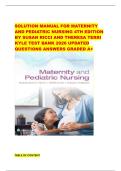
SOLUTION MANUAL FOR MATERNITY
AND PEDIATRIC NURSING 4TH EDITION
BY SUSAN RICCI AND THERESA TERRI
KYLE TEST BANK 2026 UPDATED
QUESTIONS ANSWERS GRADED A+
TABLE OF CONTENT
,1. Introduction to Maternity and Pediatric Nursing
2. Women’s Health Throughout the Life Span
3. Pregnancy
4. Labor and Birth
5. Postpartum Period
6. The Newborn
7. Childbearing at Risk
8. The Newborn at Risk
9. Health Promotion of the Growing Child and Family
10.Foundations of Pediatric Nursing
11.Nursing Care of the Child with a Health Disorder
,CHAPTER 1: INTRODUCTION TO MATERNITY AND PEDIATRIC
NURSING
This chapter introduces maternity and pediatric nursing, emphasizing
family-centered care, evidence-based practice, and health
promotion across the childbearing and childrearing continuum. It
explores the roles of nurses in supporting women, children, and
families through health promotion, illness prevention, and
management of acute and chronic conditions. The chapter highlights
the importance of advocacy, cultural competence, and
interprofessional collaboration in delivering high-quality care.
1. A nurse is providing care to a postpartum patient who expresses
concerns about breastfeeding. Which action best demonstrates
family-centered care?
A. Telling the patient that formula feeding is easier
B. Exploring the patient's concerns and providing evidence-based
information
C. Referring the patient to a lactation consultant without discussion
D. Documenting the patient's concerns in the chart only
, Correct Answer: B
Rationale: Family-centered care involves exploring the patient's
concerns and providing information to support informed decision-
making.
2. A nurse is caring for a child from a culture that values natural
remedies. The nurse's best action is to:
A. Discourage the use of natural remedies
B. Respect the family's beliefs while providing evidence-based
information
C. Report the family to child protective services
D. Ignore the family's cultural preferences
Correct Answer: B
Rationale: Cultural competence involves respecting the family's
beliefs while providing evidence-based information to support safe
care.
3. Which of the following is a key component of family-centered
maternity and pediatric care?
AND PEDIATRIC NURSING 4TH EDITION
BY SUSAN RICCI AND THERESA TERRI
KYLE TEST BANK 2026 UPDATED
QUESTIONS ANSWERS GRADED A+
TABLE OF CONTENT
,1. Introduction to Maternity and Pediatric Nursing
2. Women’s Health Throughout the Life Span
3. Pregnancy
4. Labor and Birth
5. Postpartum Period
6. The Newborn
7. Childbearing at Risk
8. The Newborn at Risk
9. Health Promotion of the Growing Child and Family
10.Foundations of Pediatric Nursing
11.Nursing Care of the Child with a Health Disorder
,CHAPTER 1: INTRODUCTION TO MATERNITY AND PEDIATRIC
NURSING
This chapter introduces maternity and pediatric nursing, emphasizing
family-centered care, evidence-based practice, and health
promotion across the childbearing and childrearing continuum. It
explores the roles of nurses in supporting women, children, and
families through health promotion, illness prevention, and
management of acute and chronic conditions. The chapter highlights
the importance of advocacy, cultural competence, and
interprofessional collaboration in delivering high-quality care.
1. A nurse is providing care to a postpartum patient who expresses
concerns about breastfeeding. Which action best demonstrates
family-centered care?
A. Telling the patient that formula feeding is easier
B. Exploring the patient's concerns and providing evidence-based
information
C. Referring the patient to a lactation consultant without discussion
D. Documenting the patient's concerns in the chart only
, Correct Answer: B
Rationale: Family-centered care involves exploring the patient's
concerns and providing information to support informed decision-
making.
2. A nurse is caring for a child from a culture that values natural
remedies. The nurse's best action is to:
A. Discourage the use of natural remedies
B. Respect the family's beliefs while providing evidence-based
information
C. Report the family to child protective services
D. Ignore the family's cultural preferences
Correct Answer: B
Rationale: Cultural competence involves respecting the family's
beliefs while providing evidence-based information to support safe
care.
3. Which of the following is a key component of family-centered
maternity and pediatric care?