

NUR 445
Exam 3
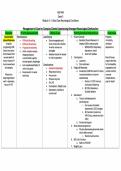
Module 5 — Critical Care Neurological Conditions
Critioal Guies
Management of Care for Complex Clients Experiencing Emergent Neurological Dysfunction
sor Priority Assessments iority Actio
Amyotrophic Manifestations: Labs/Testing: 1. Muscle Cramps: Progress:
Lateral Sclerosis Difficulty Breathing Electromyography and a. Baclofen (Muscle Relaxant > immobility,
A rapidly Difficulty Swallowing nerve conduction studies depress CNS to reduce pain) ventilator
progressing CNS Progressive weakness -> which nerves are i. SERIOUS SE: Respiratory dependence
(brain and spinal Initial: muscle cramps, damaged depression, death
cord) disease that dropping objects, Swallow studies = assess ii. Avoid with opiates
causes death of uncontrolled laughter, for risk of aspiration Constipation: Role of Nurse:
motor neurons = slurred speech, dysphagia a. Laxatives prepare families
muscle weakness Late: weakness/atrophy of Complications: b. Stool softeners for the disability
and atrophy other body parts Aspiration/dysphagia Fatigue & Weakness: progression and
Respiratory failure a. Analeptics (CNS Stimulants - alters provide comfort,
Fasciculation: muscle
Affects the twitching Pneumonia neurotransmitters to improve promote
diaphragm/chest Pressure injuries wakefulness) independence,
wall = respiratory i. Monitor LFT, BP, Tremors, prep for death
DVT, PE
failure > ETT Confusion, Breathing
Constipation, Weight Loss
ii. SE:SJS, Depression,
Depression, inability to
Suicidal ideation
care for self
Depression:
a. Tricyclic antidepressants
(amitriptyline)
i. Can cause orthostatic
hypotension, ECG changes
ii. SE:Serotonin syndrome,
HTN Crisis, anemia (monitor
CBC)
b. Emotional Support
Slow disease progression:
a. Riluzole (decreases glutamate levels
which affect nerves)
i. Monitor liver function
ADL/Life Function:
a. Referto PT/OT/ST
Weight Loss:
, NUR 445
Exam 3
Module 5 — Critical Care Neurological Conditions
a. Gastric feeding
8. Weakened diaphragm/Respiratory:
a. Mechanical ventilation
b. Tracheostomy
c. Turn, cough, deep breath > promote
gas exchange
9. Dysphagia:
a. Elevated HOB when eating/drinking
- to prevent aspiration
10. Skin Integrity:
a. Turnevery2hours
Myasthenia Gravis Manifestations: Diagnosis: 1. Increase availability of Ach: Adherence to
Ocular: Serological Testing: a. Pyridostigmine (anticholinesterase medications.
Acquired o Ptosis: drooping o AChR antibodies inhibitor)
autcimmune eyelid Electromyography: i. Initial treatment > Educate of
neuromuscular o Diplopia: double increases Ach stimulation management of
o Needles placed in
junction disorder that
vision muscle to ii. Give at prescribed hour MG + medications
results in immune
Bulbar: measure iii. Before meal 30-60 mins
system attack healthy
cells. Blocks ACh o Cranial Nerves: electrical activity iv. Monitor for: secretions,
binding and leading to XX XX o Increased jitter cramps, diarrhea
muscle weakness o Difficulty with Edrophonium Test 2. Immunosuppression:
despite normal ACh chewing/swallowing (Tensilon) a. Prednisone
release. Complications: o 10mgof i. SE:immunosuppression, Gl
Myasthenic crisis edriphonium bleed, hyperglycemia,
(EMERGENT): weakness of (anticholinesteras weight gain, obesity
respiratory, tachycardia, e)is given IV Push ii. Take with food + PPI
flaccid, pale/cool skin 2> = Increase iii. Monitor BG, stools
TREAT: IV immunoglobulin, d levels iv. Ca + Vitamin D: Prevent
plasmapheresis, intubation of Ach 2> bone loss
Cholinergic Crisis: muscle leads to 3. Medsto avoid:
fasciculations, bradycardia, improved a. Fluroguinolones, telithromycin
sweating, pallor, secretions muscle D-penicillamine
- TREAT: anticholinesterase strength ®00 oHigh dose steroids
medications o Provider assesses CCB + Magnesium
for improvement Statins
, NUR 445
Exam 3
Module 5 — Critical Care Neurological Conditions
of ptosis, dose f. General anesthetics
increases g. Hormonal contraceptives
o Reversal: atropine h. Nicotine
(reverses i. Pyridostigmine
bradycardia) 4. Plasmapheresis: large-bore dual-lumen
catheter
a. Bloodisremoved and circulates
through the machine to remove
antibodies that block AChR function
b. Goal: improve muscle strength
c. Anticoagulation required to prevent
clotting + citrate
d. Hold These: ANTI HTN,
e. SE: citrate-induced hypocalcemia +
hypotension: numbness/tingling
around lips, chest tightness, tetany,
cardiac arrhythmias
f. Hypovolemia: dizzy, light head,
nausea, sweating, tachycardia,
hypotension
i. Pause procedure,
Trendelenburg, bolus saline
g. Flush line with heparin to prevent
clotting
a. Refertodietician
b. HOB elevated to prevent dysphagia
c. Thickened liquids/ soft foods
6. Surgery:
a. Thymoma -2 thymectomy (IV
neostigmine to maintain muscle
strength and respiratory function)
7. Safety + Fall Prevention:
a. d/t muscle weakness: use gait belt
Exam 3
Module 5 — Critical Care Neurological Conditions
Critioal Guies
Management of Care for Complex Clients Experiencing Emergent Neurological Dysfunction
sor Priority Assessments iority Actio
Amyotrophic Manifestations: Labs/Testing: 1. Muscle Cramps: Progress:
Lateral Sclerosis Difficulty Breathing Electromyography and a. Baclofen (Muscle Relaxant > immobility,
A rapidly Difficulty Swallowing nerve conduction studies depress CNS to reduce pain) ventilator
progressing CNS Progressive weakness -> which nerves are i. SERIOUS SE: Respiratory dependence
(brain and spinal Initial: muscle cramps, damaged depression, death
cord) disease that dropping objects, Swallow studies = assess ii. Avoid with opiates
causes death of uncontrolled laughter, for risk of aspiration Constipation: Role of Nurse:
motor neurons = slurred speech, dysphagia a. Laxatives prepare families
muscle weakness Late: weakness/atrophy of Complications: b. Stool softeners for the disability
and atrophy other body parts Aspiration/dysphagia Fatigue & Weakness: progression and
Respiratory failure a. Analeptics (CNS Stimulants - alters provide comfort,
Fasciculation: muscle
Affects the twitching Pneumonia neurotransmitters to improve promote
diaphragm/chest Pressure injuries wakefulness) independence,
wall = respiratory i. Monitor LFT, BP, Tremors, prep for death
DVT, PE
failure > ETT Confusion, Breathing
Constipation, Weight Loss
ii. SE:SJS, Depression,
Depression, inability to
Suicidal ideation
care for self
Depression:
a. Tricyclic antidepressants
(amitriptyline)
i. Can cause orthostatic
hypotension, ECG changes
ii. SE:Serotonin syndrome,
HTN Crisis, anemia (monitor
CBC)
b. Emotional Support
Slow disease progression:
a. Riluzole (decreases glutamate levels
which affect nerves)
i. Monitor liver function
ADL/Life Function:
a. Referto PT/OT/ST
Weight Loss:
, NUR 445
Exam 3
Module 5 — Critical Care Neurological Conditions
a. Gastric feeding
8. Weakened diaphragm/Respiratory:
a. Mechanical ventilation
b. Tracheostomy
c. Turn, cough, deep breath > promote
gas exchange
9. Dysphagia:
a. Elevated HOB when eating/drinking
- to prevent aspiration
10. Skin Integrity:
a. Turnevery2hours
Myasthenia Gravis Manifestations: Diagnosis: 1. Increase availability of Ach: Adherence to
Ocular: Serological Testing: a. Pyridostigmine (anticholinesterase medications.
Acquired o Ptosis: drooping o AChR antibodies inhibitor)
autcimmune eyelid Electromyography: i. Initial treatment > Educate of
neuromuscular o Diplopia: double increases Ach stimulation management of
o Needles placed in
junction disorder that
vision muscle to ii. Give at prescribed hour MG + medications
results in immune
Bulbar: measure iii. Before meal 30-60 mins
system attack healthy
cells. Blocks ACh o Cranial Nerves: electrical activity iv. Monitor for: secretions,
binding and leading to XX XX o Increased jitter cramps, diarrhea
muscle weakness o Difficulty with Edrophonium Test 2. Immunosuppression:
despite normal ACh chewing/swallowing (Tensilon) a. Prednisone
release. Complications: o 10mgof i. SE:immunosuppression, Gl
Myasthenic crisis edriphonium bleed, hyperglycemia,
(EMERGENT): weakness of (anticholinesteras weight gain, obesity
respiratory, tachycardia, e)is given IV Push ii. Take with food + PPI
flaccid, pale/cool skin 2> = Increase iii. Monitor BG, stools
TREAT: IV immunoglobulin, d levels iv. Ca + Vitamin D: Prevent
plasmapheresis, intubation of Ach 2> bone loss
Cholinergic Crisis: muscle leads to 3. Medsto avoid:
fasciculations, bradycardia, improved a. Fluroguinolones, telithromycin
sweating, pallor, secretions muscle D-penicillamine
- TREAT: anticholinesterase strength ®00 oHigh dose steroids
medications o Provider assesses CCB + Magnesium
for improvement Statins
, NUR 445
Exam 3
Module 5 — Critical Care Neurological Conditions
of ptosis, dose f. General anesthetics
increases g. Hormonal contraceptives
o Reversal: atropine h. Nicotine
(reverses i. Pyridostigmine
bradycardia) 4. Plasmapheresis: large-bore dual-lumen
catheter
a. Bloodisremoved and circulates
through the machine to remove
antibodies that block AChR function
b. Goal: improve muscle strength
c. Anticoagulation required to prevent
clotting + citrate
d. Hold These: ANTI HTN,
e. SE: citrate-induced hypocalcemia +
hypotension: numbness/tingling
around lips, chest tightness, tetany,
cardiac arrhythmias
f. Hypovolemia: dizzy, light head,
nausea, sweating, tachycardia,
hypotension
i. Pause procedure,
Trendelenburg, bolus saline
g. Flush line with heparin to prevent
clotting
a. Refertodietician
b. HOB elevated to prevent dysphagia
c. Thickened liquids/ soft foods
6. Surgery:
a. Thymoma -2 thymectomy (IV
neostigmine to maintain muscle
strength and respiratory function)
7. Safety + Fall Prevention:
a. d/t muscle weakness: use gait belt


