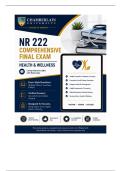
,NR 222 Comprehensive Final Exam | Health & Wellness
(2026) Actual Q&A PDF | Chamberlain
1. Which statement best reflects the World Health Organization's
definition of health?
A) Health is the absence of disease and physical symptoms
B) Health is a state of complete physical, mental, and social well-being,
not merely the absence of disease
C) Health is the ability to perform daily activities without assistance
D) Health is a subjective feeling of wellness reported by the individual
Correct Answer: Health is a state of complete physical, mental, and
social well-being, not merely the absence of disease
Rationale: The WHO defines health holistically as complete physical,
mental, and social well-being, emphasizing that health extends beyond
the absence of disease or infirmity. This definition guides nursing practice
toward caring for the whole person rather than focusing solely on
pathology.
2. Which model of health defines health as the absence of illness, signs,
and symptoms of disease?
A) Eudaimonistic model
B) Adaptive model
C) Clinical model
D) Role performance model
Correct Answer: Clinical model
Rationale: The clinical model defines health as the absence of illness,
signs, and symptoms of disease. It does not emphasize prevention or
wellness but rather views health as the opposite of disease. The role
,performance model defines health by the ability to perform social roles,
and the adaptive model focuses on adjustment to change.
3. A patient states, "I can't go to work because of my back pain." Which
health model is reflected by this statement?
A) Clinical model
B) Adaptive model
C) Eudaimonistic model
D) Role performance model
Correct Answer: Role performance model
Rationale: The role performance model defines health by the ability to
perform social roles, such as working, parenting, or maintaining family
responsibilities. This patient is defining their health status based on
inability to work. The clinical model defines health as the absence of
disease, and the adaptive model focuses on adjustment to change.
4. Which model of health is defined by "the ability to adjust positively to
social, mental, and psychological change"?
A) Clinical model
B) Adaptive model
C) Role performance model
D) Eudaimonistic model
Correct Answer: Adaptive model
Rationale: The adaptive model defines health as the ability to adjust
positively to social, mental, and psychological change. Illness occurs when
the person is unable to adjust. The clinical model focuses on absence of
disease, and the role performance model focuses on ability to fulfill
societal roles.
, 5. A nurse is teaching a patient about healthy eating. According to the
Health Belief Model, which factor is most likely to influence the patient's
decision to adopt a healthy diet?
A) The patient's perception of the seriousness of diet-related illness
B) The patient's family history of heart disease
C) The patient's income level
D) The patient's age
Correct Answer: The patient's perception of the seriousness of diet-
related illness
Rationale: The Health Belief Model includes perceived seriousness as a
key component influencing health behavior. A patient's perception of how
serious diet-related illness would be influences their motivation to adopt
healthy eating habits. Perceived susceptibility, benefits, and barriers are
also components of this model.
6. Self-efficacy in the context of health behavior refers to:
A) A person's belief in their ability to successfully perform a health
behavior
B) The support a person receives from family and friends
C) The perceived benefits of taking health action
D) The external cues that trigger health behavior
Correct Answer: A person's belief in their ability to successfully perform
a health behavior
Rationale: Self-efficacy is a person's confidence in their ability to
organize and execute a specific course of action. High self-efficacy
increases the likelihood that a person will adopt and maintain health
behaviors. Perceived benefits, social support, and cues to action are other
components of health behavior models.
(2026) Actual Q&A PDF | Chamberlain
1. Which statement best reflects the World Health Organization's
definition of health?
A) Health is the absence of disease and physical symptoms
B) Health is a state of complete physical, mental, and social well-being,
not merely the absence of disease
C) Health is the ability to perform daily activities without assistance
D) Health is a subjective feeling of wellness reported by the individual
Correct Answer: Health is a state of complete physical, mental, and
social well-being, not merely the absence of disease
Rationale: The WHO defines health holistically as complete physical,
mental, and social well-being, emphasizing that health extends beyond
the absence of disease or infirmity. This definition guides nursing practice
toward caring for the whole person rather than focusing solely on
pathology.
2. Which model of health defines health as the absence of illness, signs,
and symptoms of disease?
A) Eudaimonistic model
B) Adaptive model
C) Clinical model
D) Role performance model
Correct Answer: Clinical model
Rationale: The clinical model defines health as the absence of illness,
signs, and symptoms of disease. It does not emphasize prevention or
wellness but rather views health as the opposite of disease. The role
,performance model defines health by the ability to perform social roles,
and the adaptive model focuses on adjustment to change.
3. A patient states, "I can't go to work because of my back pain." Which
health model is reflected by this statement?
A) Clinical model
B) Adaptive model
C) Eudaimonistic model
D) Role performance model
Correct Answer: Role performance model
Rationale: The role performance model defines health by the ability to
perform social roles, such as working, parenting, or maintaining family
responsibilities. This patient is defining their health status based on
inability to work. The clinical model defines health as the absence of
disease, and the adaptive model focuses on adjustment to change.
4. Which model of health is defined by "the ability to adjust positively to
social, mental, and psychological change"?
A) Clinical model
B) Adaptive model
C) Role performance model
D) Eudaimonistic model
Correct Answer: Adaptive model
Rationale: The adaptive model defines health as the ability to adjust
positively to social, mental, and psychological change. Illness occurs when
the person is unable to adjust. The clinical model focuses on absence of
disease, and the role performance model focuses on ability to fulfill
societal roles.
, 5. A nurse is teaching a patient about healthy eating. According to the
Health Belief Model, which factor is most likely to influence the patient's
decision to adopt a healthy diet?
A) The patient's perception of the seriousness of diet-related illness
B) The patient's family history of heart disease
C) The patient's income level
D) The patient's age
Correct Answer: The patient's perception of the seriousness of diet-
related illness
Rationale: The Health Belief Model includes perceived seriousness as a
key component influencing health behavior. A patient's perception of how
serious diet-related illness would be influences their motivation to adopt
healthy eating habits. Perceived susceptibility, benefits, and barriers are
also components of this model.
6. Self-efficacy in the context of health behavior refers to:
A) A person's belief in their ability to successfully perform a health
behavior
B) The support a person receives from family and friends
C) The perceived benefits of taking health action
D) The external cues that trigger health behavior
Correct Answer: A person's belief in their ability to successfully perform
a health behavior
Rationale: Self-efficacy is a person's confidence in their ability to
organize and execute a specific course of action. High self-efficacy
increases the likelihood that a person will adopt and maintain health
behaviors. Perceived benefits, social support, and cues to action are other
components of health behavior models.