

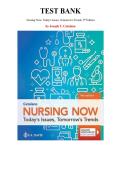
TEST BANK
Nursing Now: Today's Issues, Tomorrow's Trends, 9th Edition
by Joseph T. Catalano
TU
TO
R
G
U
R
U
, TABLE OF CONTENT
Unit 1: The Growth of Nursing
1: The Development of a Profession
2: Historical Perspectives
3: Theories and Models of Nursing
4: The Process of Educating Nurses
5: The Evolution of Licensure, Certification, and Nursing Organizations
Unit 2: Making the Transition to Professional
6: Ethics in Nursing
7: Bioethical Issues
8: Nursing Law and Liability
TU
9: Reality Shock in the Workplace
Unit 3: Leading and Managing
10: Leadership, Followership, and Management
11: Communication, Negotiation, and Conflict Resolution
12: Understanding and Dealing Successfully with Difficult Behavior
TO
13: Health-Care Delivery Systems
14: Ensuring Quality Care
15: Delegation in Nursing
16: Incivility: The Antithesis of Caring
17: Nursing informatics
18: The Politically Active Nurse
R
Unit 4: Issues in Delivering Care
19: The Health-Care Debate: Best Allocation of Resources for the Best Outcomes
20: Spirituality and Health-Care
G
21: Diversity
22: Impact of the Aging Population on Health-Care Delivery
23: Client Education: A Moral Imperative
U
24: Nursing Research and Evidence-Based Practice
25: Integrative Health Practices
26: Preparing for and Responding to Disasters
R
27: Developments in Current Nursing Practice
28: NCLEX®: What You Need to Know
U
,TEST BANK for
Nursing Now: Today's Issues, Tomorrows Trends, 9th Ed. Joseph Catalano
Well Elaborated Questions & Answers (Answers at the End of Each Chapter)
Chapter 1: The Growth of Nursing
1. Nurses are often the primary, and frequently the only, defendants named when errors are made
that result in injury to the client. This is due to which concept associated with the nursing
TU
profession?
1. Autonomy
2. Accountability
TO
3. Precision
4. Specificity
Answer:
2. If a nurse uses information from research as the basis for making decisions about providing
R
NURSINGTB.COM
care, this nurse is engaging in which type of practice?
G
1. Client-based practice
2. Physician-based practice
U
3. Evidence-based practice
4. Provider-based practice
R
Answer:
3. Today’s nurses are often found in remote and often hostile areas, providing care for the sick
U
and dying, working 12-hour shifts, being on call, and working rotating shifts. This is why
nursing is universally known as which type of profession?
1. Altruistic
2. Synergistic
, 3. Optimistic
4. Pragmatic
Answer:
4. With Florence Nightingale’s radically new idea about a separate educational setting for nurses,
the nursing profession took its first steps toward which of the following?
TU
1. Autonomy
2. Accountability
3. Precision
TO
4. Specificity
Answer:
5. If an advanced practice nurse is prepared to provide direct client care in primary care settings,
focusing on health promotion, illness prevention, early diagnosis, and treatment of common
R
NURSINGTB.COM
health problems, this nurse is acting in which advanced practice role?
1. Nurse practitioner
G
2. Certified nurse midwife
3. Clinical nurse specialist
U
4. Case manager
R
Answer:
6. If an advanced practice nurse focuses on the care of pregnant women before, during, and after
U
the birth process, this nurse is acting in which advanced practice role?
1. Nurse practitioner
2. Certified nurse midwife
3. Clinical nurse specialist
Nursing Now: Today's Issues, Tomorrow's Trends, 9th Edition
by Joseph T. Catalano
TU
TO
R
G
U
R
U
, TABLE OF CONTENT
Unit 1: The Growth of Nursing
1: The Development of a Profession
2: Historical Perspectives
3: Theories and Models of Nursing
4: The Process of Educating Nurses
5: The Evolution of Licensure, Certification, and Nursing Organizations
Unit 2: Making the Transition to Professional
6: Ethics in Nursing
7: Bioethical Issues
8: Nursing Law and Liability
TU
9: Reality Shock in the Workplace
Unit 3: Leading and Managing
10: Leadership, Followership, and Management
11: Communication, Negotiation, and Conflict Resolution
12: Understanding and Dealing Successfully with Difficult Behavior
TO
13: Health-Care Delivery Systems
14: Ensuring Quality Care
15: Delegation in Nursing
16: Incivility: The Antithesis of Caring
17: Nursing informatics
18: The Politically Active Nurse
R
Unit 4: Issues in Delivering Care
19: The Health-Care Debate: Best Allocation of Resources for the Best Outcomes
20: Spirituality and Health-Care
G
21: Diversity
22: Impact of the Aging Population on Health-Care Delivery
23: Client Education: A Moral Imperative
U
24: Nursing Research and Evidence-Based Practice
25: Integrative Health Practices
26: Preparing for and Responding to Disasters
R
27: Developments in Current Nursing Practice
28: NCLEX®: What You Need to Know
U
,TEST BANK for
Nursing Now: Today's Issues, Tomorrows Trends, 9th Ed. Joseph Catalano
Well Elaborated Questions & Answers (Answers at the End of Each Chapter)
Chapter 1: The Growth of Nursing
1. Nurses are often the primary, and frequently the only, defendants named when errors are made
that result in injury to the client. This is due to which concept associated with the nursing
TU
profession?
1. Autonomy
2. Accountability
TO
3. Precision
4. Specificity
Answer:
2. If a nurse uses information from research as the basis for making decisions about providing
R
NURSINGTB.COM
care, this nurse is engaging in which type of practice?
G
1. Client-based practice
2. Physician-based practice
U
3. Evidence-based practice
4. Provider-based practice
R
Answer:
3. Today’s nurses are often found in remote and often hostile areas, providing care for the sick
U
and dying, working 12-hour shifts, being on call, and working rotating shifts. This is why
nursing is universally known as which type of profession?
1. Altruistic
2. Synergistic
, 3. Optimistic
4. Pragmatic
Answer:
4. With Florence Nightingale’s radically new idea about a separate educational setting for nurses,
the nursing profession took its first steps toward which of the following?
TU
1. Autonomy
2. Accountability
3. Precision
TO
4. Specificity
Answer:
5. If an advanced practice nurse is prepared to provide direct client care in primary care settings,
focusing on health promotion, illness prevention, early diagnosis, and treatment of common
R
NURSINGTB.COM
health problems, this nurse is acting in which advanced practice role?
1. Nurse practitioner
G
2. Certified nurse midwife
3. Clinical nurse specialist
U
4. Case manager
R
Answer:
6. If an advanced practice nurse focuses on the care of pregnant women before, during, and after
U
the birth process, this nurse is acting in which advanced practice role?
1. Nurse practitioner
2. Certified nurse midwife
3. Clinical nurse specialist


