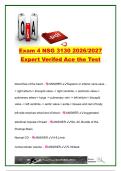
This comprehensive NSG 3130 Exam 4 2026/2027 study guide contains 50+ questions and answers covering the major cardiovascular and respiratory concepts presented in the seven-page nursing review document. The cardiovascular section begins with blood flow through the heart, oxygenated versus deoxygenated circulation, cardiac electrical conduction through the SA node, AV node, Bundle of His and Purkinje fibers, normal cardiac output and stroke volume, and preload. It then develops these foundations through left- and right-sided heart failure, coronary artery disease, atherosclerosis, cardiovascular aging, lipid values and anticoagulant therapy involving warfarin, heparin and enoxaparin.
A central examination area is heart failure and cardiovascular nursing care. The document differentiates right ventricular failure, which it describes in terms of systemic venous backup and associated gastrointestinal manifestations, from left ventricular failure, which is associated with pulmonary congestion and respiratory symptoms. Nursing interventions presented in the material include monitoring weight and intake/output, positioning the patient with the head of the bed elevated, administering prescribed diuretics and vasodilators, and recognizing manifestations such as fine crackles and difficulty breathing. The guide also connects coronary artery disease with narrowing of the coronary arteries from atherosclerotic plaque accumulation.
The respiratory portion provides concentrated review of COPD, emphysema, chronic bronchitis, asthma, pneumonia and atelectasis. COPD content addresses impaired airflow, alveolar-wall damage, loss of elasticity, air trapping, hyperinflation, barrel chest, chronic cough and difficulty clearing mucus. Asthma is presented as bronchial narrowing or obstruction associated with manifestations such as dyspnea, coughing and wheezing, while pneumonia material emphasizes pulmonary infection, fever, cough, breathing difficulty, airway maintenance and aspiration precautions. Atelectasis is reviewed in relation to lung collapse, shallow breathing, hypoventilation and postoperative risk, with incentive spirometry, coughing and deep breathing identified among the interventions in the source.
The document also provides practical preparation for oxygen delivery and airway management. It compares nasal cannulas, simple face masks, partial rebreather masks, nonrebreather masks and Venturi masks, including the flow-rate and oxygen-concentration ranges stated in the study material. Additional questions distinguish oropharyngeal and nasopharyngeal airways, explain endotracheal-tube cuff function, discuss transition to a tracheostomy when prolonged ventilatory support is required, and review tracheostomy suctioning and accidental decannulation. CPAP and BiPAP are differentiated according to the pressure delivered during inhalation and exhalation.
Further respiratory assessment topics include Cheyne-Stokes, Kussmaul and Biot breathing patterns; hypercapnia, hypoxemia and hypoxia; ABGs in COPD; pulmonary-function terminology; and age-related respiratory changes. Students can review Forced Vital Capacity (FVC), Residual Volume (RV), Functional Residual Capacity (FRC), incentive-spirometer use and strategies identified in the document for promoting healthy breathing. The final section also reviews age-related changes such as decreased lung elasticity, weaker respiratory muscles and changes in the heart and blood vessels.
Because this is a nursing exam resource, students should use the numerical values and clinical statements as presented in the document when studying specifically for NSG 3130 Exam 4. The uploaded file does not include a bibliography or identify an authoritative nursing textbook or journal from which its answers were derived, so a particular textbook or scholarly article cannot accurately be claimed as the source. It also does not identify the university or college associated with NSG 3130; consequently, assigning a university name based solely on the course number would be unsupported.
Relevant Students: NSG 3130 students, undergraduate nursing students, BSN students, ADN nursing students, medical-surgical nursing students, adult health nursing students, cardiovascular nursing students, respiratory nursing students, NCLEX-RN candidates reviewing cardiopulmonary concepts, and nursing students preparing for examinations on heart failure, COPD, oxygen therapy and airway management.
Keywords: NSG 3130 Exam 4, NSG 3130 Exam 2026, NSG 3130 Exam 2027, NSG 3130 questions and answers, NSG 3130 study guide, nursing Exam 4 questions, cardiovascular nursing exam, respiratory nursing exam, heart blood flow, cardiac conduction system, cardiac output, stroke volume, preload, heart failure nursing, left sided heart failure, right sided heart failure, coronary artery disease, atherosclerosis, warfarin nursing, heparin nursing, COPD nursing, emphysema, chronic bronchitis, asthma nursing, pneumonia nursing, atelectasis nursing, oxygen therapy nursing, nasal cannula, simple face mask, partial rebreather mask, nonrebreather mask, Venturi mask, endotracheal tube, tracheostomy care, tracheostomy suctioning, CPAP vs BiPAP, Cheyne Stokes respiration, Kussmaul breathing, Biot breathing, hypercapnia, hypoxemia, hypoxia, ABG COPD, pulmonary function tests, forced vital capacity, residual volume, functional residual capacity, incentive spirometer, cardiopulmonary nursing, NCLEX respiratory review
Content preview
Exam 4 NSG 3130 2026/2027
Expert Verifed Ace the Test
blood flow of the heart - ANSWER ✔✔Superior or inferior vena cava -
> right atrium-> tricuspid valve -> right ventricle -> pulmonic valve->
pulmonary artery-> lungs -> pulmonary vein -> left atrium-> bicuspid
valve -> left ventricle -> aortic valve-> aorta-> tissues and rest of body
left side receives what kind of blood - ANSWER ✔✔oxygenated
electrical impulse of heart - ANSWER ✔✔SA, AV, Bundle of His,
Purkinje fibers
Normal CO - ANSWER ✔✔4-8 L/min
normal stroke volume - ANSWER ✔✔70 ml/beat
, preload - ANSWER ✔✔amount of blood in ventricles before
systole/amount of blood sitting the ventricles at the end of diastole
right ventricle failure - ANSWER ✔✔Right ventricle failure= backs up
into superior and inferior vena cava, provide diuretics and vasodilators,
talk to patient about drinking less fluid, monitor patients weight
left ventricle failure - ANSWER ✔✔hypertension and MI, backs up
into lungs, resp symptoms, elevate patients head or bed, diuretic, fine
crackles. increase HOB manage patients I&O's
What causes coronary artery disease? - ANSWER ✔✔Narrowing of
coronary arteries (atherosclerosis), buildup of plaque can occlude
coronary arteries
anticoagulants for heart failure - ANSWER ✔✔warfarin (coumadin)
and heparin, warfarin has a slower onset but is long term, vitamin k is
warfarin reversal agent, monitor carefully for signs and symptoms of
bleeding, heparin or enoxaparin= given first few days
COPD - ANSWER ✔✔impaired airflow in the lungs
Damage to alveolar wall and loss of elasticity
Emphysema and chronic bronchitis (caused by smoking)