

Written by students who passed Immediately available after payment Read online or as PDF Wrong document? Swap it for free 4.6 TrustPilot
logo-home
Document preview thumbnail
Preview 4 out of 34 pages
Exam (elaborations)

NSG 552 Psychopharmacology Exam 1 Modules 1–3 2026/2027 | 100+ Questions & Answers | Antipsychotics, Antidepressants, EPS, CYP450, Lithium & Mood Stabilizers

Document preview thumbnail
Preview 4 out of 34 pages

This NSG 552 Psychopharmacology Exam 1 Modules 1–3 2026/2027 is a comprehensive 34-page exam question-and-answer study resource with 100+ review questions, definitions, medication facts, adverse effects, monitoring requirements, and treatment concepts. The document covers foundational psychopharmacology and neurobiology, pharmacokinetics, pharmacodynamics, CYP450 metabolism and drug interactions, neurotransmitters and dopamine pathways, first- and second-generation antipsychotics, extrapyramidal symptoms, schizophrenia pharmacotherapy, antidepressants, serotonin syndrome, bipolar disorder, lithium, anticonvulsant mood stabilizers, and medication toxicity. The cover identifies the resource as an expert-verified Exam 1 review covering Modules 1–3 for the 2026/2027 academic period. The opening modules establish core pharmacokinetic and pharmacodynamic principles. Students review absorption, distribution, metabolism and excretion, drug half-life, therapeutic index, tolerance, receptor binding and affinity, and the differences between agonists, partial agonists, antagonists and inverse agonists. The material gives particular attention to the cytochrome P450 (CYP450) enzyme system, explaining inhibition and induction as mechanisms of drug-drug interactions. It discusses how CYP450 inhibitors can decrease metabolism and raise serum drug concentrations, whereas inducers can accelerate hepatic metabolism and lower concentrations. Grapefruit juice is presented as an example of an inhibitor, and an escitalopram scenario illustrates the effect of CYP3A4 induction on drug levels. Neurobiology content reviews the amygdala, thalamus, hypothalamus and frontal lobe, alongside major neurotransmitters including serotonin, norepinephrine, dopamine, GABA and glutamate. The document organizes dopamine function into the mesolimbic, mesocortical, nigrostriatal and tuberoinfundibular pathways. These pathways are connected respectively with positive psychotic symptoms, negative symptoms, extrapyramidal motor effects and prolactin regulation. The study guide further reviews monoamines and catecholamines and introduces the monoamine theory of depression in relation to serotonin, norepinephrine and dopamine. A major section examines first-generation and second-generation antipsychotic medications. First-generation or typical agents include haloperidol, chlorpromazine, fluphenazine and perphenazine, while second-generation or atypical agents include aripiprazole, quetiapine, olanzapine, risperidone and clozapine. The questions compare D2 antagonism with combined dopamine-serotonin receptor activity and contrast the greater neurological adverse-effect burden associated with FGAs with the metabolic concerns emphasized for many SGAs. The document also discusses high- versus low-potency antipsychotics, H1-related sedation and weight gain, hyperprolactinemia, metabolic syndrome, QTc prolongation and long-acting injectable formulations. The exam gives extensive attention to extrapyramidal symptoms (EPS), tardive dyskinesia and neuroleptic malignant syndrome (NMS). Learners review acute dystonia, akathisia, drug-induced Parkinsonian manifestations and tardive dyskinesia, including characteristic onset patterns and clinical presentations. The document identifies benztropine as its first-line answer for dystonia and propranolol for akathisia. Tardive dyskinesia content includes facial and oral movements, risk factors, the AIMS Scale, and VMAT2 inhibitors such as valbenazine and deutetrabenazine. NMS is presented as a potentially life-threatening reaction characterized by fever, muscle rigidity and altered mental status, with autonomic dysfunction also discussed. Clozapine pharmacology and antipsychotic monitoring receive focused coverage. The resource discusses clozapine in relation to agranulocytosis, sialorrhea, seizures, tardive dyskinesia and suicidal-risk reduction as framed in the document. It reviews ANC monitoring and identifies weight, BMI, blood pressure, fasting blood glucose/A1C and fasting lipid profile as baseline and ongoing parameters for patients receiving second-generation antipsychotics. Risperidone is highlighted in relation to prolactin elevation, while ziprasidone and aripiprazole are presented as comparatively weight-neutral options. The antidepressant pharmacology section compares SSRIs, SNRIs, tricyclic antidepressants, MAO inhibitors and atypical antidepressants. Specific medications include sertraline, fluoxetine, escitalopram, paroxetine, citalopram, duloxetine, venlafaxine, bupropion, trazodone, mirtazapine, imipramine, nortriptyline, clomipramine, amitriptyline, selegiline and phenelzine. Questions review mechanisms of action, medication selection, half-life, gastrointestinal effects, sexual dysfunction, sedation, weight effects, anticholinergic effects, cardiovascular toxicity and overdose concerns. Bupropion is discussed in relation to norepinephrine/dopamine activity and contraindications involving seizure and eating disorders, while trazodone is associated with priapism and mirtazapine with patients experiencing insomnia and weight loss. High-yield antidepressant safety material includes MAOI dietary restrictions, hypertensive crisis, antidepressant discontinuation syndrome and serotonin syndrome. The document reviews tyramine-containing foods such as aged cheese, cured meats and wine and gives a 14-day washout period when switching between most SSRIs and MAOIs, with a longer period presented for fluoxetine. The FINISH mnemonic summarizes antidepressant discontinuation symptoms: flu-like symptoms, insomnia, nausea, imbalance, sensory disturbances and hyperarousal. Serotonin syndrome is summarized through altered mental status, autonomic nervous system overactivity and neuromuscular hyperactivity. Pediatric material also reviews fluoxetine and escitalopram and the antidepressant black-box warning concerning increased suicidal thoughts or self-harm risk in children and adolescents. The final modules concentrate on bipolar disorder and mood-stabilizing pharmacotherapy. Lithium is identified in the document as the gold-standard treatment for bipolar I disorder and is reviewed alongside valproate, carbamazepine and lamotrigine, with additional discussion of topiramate and gabapentin. Lithium content covers therapeutic serum levels, baseline TSH, creatinine, BUN, pregnancy testing, CBC, CMP and age-related ECG considerations, along with early and later manifestations of toxicity. The study guide also associates lithium with anti-suicidal and neuroprotective properties and reviews its pregnancy-related association with Ebstein anomaly. Anticonvulsant material reviews valproate toxicity, hyperammonemia, hepatic effects, thrombocytopenia, neural-tube defects, carbamazepine auto-induction, agranulocytosis, Stevens-Johnson syndrome and lamotrigine-related rash risk. Therapeutic levels are provided for carbamazepine and valproate, and the document outlines baseline laboratory monitoring for both medications. It also emphasizes the interaction between valproate and lamotrigine and the need for lower lamotrigine dosing as presented in the source. The final questions use SIGECAPS to review depressive symptoms and DIGFAST for bipolar/manic symptoms. Relevant students: NSG 552 students, Psychopharmacology students, PMHNP students, Psychiatric Mental Health Nurse Practitioner students, MSN students, DNP students, APRN students, graduate nursing students, advanced pharmacology students, psychiatric nursing students, mental health nursing students, nurse practitioner students, behavioral health students, psychopharmacology exam candidates, advanced practice psychiatric nursing students Source accuracy note: The uploaded document explicitly identifies the course as NSG 552 Psychopharmacology, the assessment as Exam 1, the covered material as Modules 1–3, and the academic period as 2026/2027. It does not identify a university, referenced textbook, peer-reviewed journal, DOI, or formal APA reference list. No unsupported university or academic citation has therefore been invented. Keywords: NSG 552 Psychopharmacology Exam 1, NSG 552 Exam 1 2026, NSG 552 Exam 1 2026/2027, NSG 552 Modules 1-3, NSG 552 questions and answers, psychopharmacology exam questions, psychopharmacology study guide, PMHNP psychopharmacology, pharmacokinetics, pharmacodynamics, CYP450, dopamine pathways, serotonin, norepinephrine, GABA, glutamate, first generation antipsychotics, second generation antipsychotics, typical antipsychotics, atypical antipsychotics, schizophrenia pharmacology, extrapyramidal symptoms, EPS, tardive dyskinesia, AIMS Scale, neuroleptic malignant syndrome, NMS, clozapine, antipsychotic metabolic syndrome, antidepressant pharmacology, SSRIs, SNRIs, tricyclic antidepressants, MAO inhibitors, serotonin syndrome, antidepressant discontinuation syndrome, bupropion, bipolar disorder pharmacology, lithium, lithium toxicity, valproate, carbamazepine, lamotrigine, Stevens Johnson syndrome, mood stabilizers, SIGECAPS, DIGFAST

Content preview

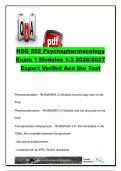
NSG 552 Psychopharmacology
Exam 1 Modules 1-3 2026/2027
Expert Verifed Ace the Test


Pharmacokinetics - ANSWER ✔✔Studies how the body acts on the

drug


Pharmacodynamics - ANSWER ✔✔Studies how the drug acts on the

body


First-generation antipsychotic - ANSWER ✔✔- first developed in the

1950s, first available treatment for psychosis

- aka typical antipsychotics

- increased risk for EPS, Tardive dyskinesia

,- d2 blocker

- Currently 11 FDA-approved and commerically available FGAs

- Most common differences between individual FGAs are their potency

and side effects

- examples include Thorazine (chlorpromazine), Haldol (haloperidol),

Prolixin (fluphenazine), perphenazine (Trilafon


Second-generation antipsychotic - ANSWER ✔✔- examples include

Abilify (aripiprazole), Seroquel (quetiapine), Zyprexa (olanzapine),

Risperdal (risperidone), Clozaril (clozapine)

- lower risk of EPS symptoms compared to 1st gen

- higher risk of metabolic side effects

- serotonin-dopamine receptor antagonists

- AKA atypical antipsychotics


EPS - ANSWER ✔✔Involuntary movements that occur as a side

effect to certina medications. AKA drug induced movement disorder. May

include tardive dyskinesia, dystonic reactions, parkinsons-like

symptoms, akathesia, NMD, akinesia

- Can be acute or chronic

,- related to suppression of D2 dopamine receptors in the nigrostriatal

pathway


Tardive dyskinesia - ANSWER ✔✔- characterized by involuntary

movments in the face and body

- often induced by long-term use of anitpsychotic drugs

- can be associated with use of other medication types (antidepressants,

lithium, antihistamines)

- more common with 1st gen antipsychotics

- movements may include: writhing, mouth puckering, tongue rolling, lip

smacking, pill rolling, tongue protrusion


Upregulation - ANSWER ✔✔Refers to the activiation of the nervous

system. Is the process by which a cell increases its response to a

subtance or signal from outside the cell to carry out a specific response


downregulation - ANSWER ✔✔Refers to state of calm/relation within

nervous system. Characterized by a decreased response by a cell to a

molecule or neurotransmitter.


Receptor Profiles - ANSWER ✔✔FGA - Primarily D2 antagonism.

Also antagonize M2, H1, and a1 receptors


3
COPYRIGHT©JOSHCLAY 2026/2027. YEAR PUBLISHED 2026. COMPANY REGISTRATION NUMBER: 619652435. TERMS OF USE. PRIVACY
STATEMENT. ALL RIGHTS RESERVED

, SGA - 5-HT2A & D2 antagonism. Rapid D2 dissociation. 5HT2A

agonism. Also antagonizes M2, H1, 5HT2C, and a1 receptors


Binding - ANSWER ✔✔When a neurotransmitter binds to a receptor

on a receiving cell, it causes ion channels to open or close.


Affinity - ANSWER ✔✔The property of a drug that describes its ability

to bind to a receptor

Constant

Unique for each drug-receptor pair as it is dependent on each of their

structures


CYP450 - ANSWER ✔✔- membrane-bound hemoproteins that play a

pivotal role in the detoxification of xenobiotics, cellular metabolism, and

homeostatis

-Inhibitition or induction of CYP enzymes is a major mechanism

underlying drug-drug interactions

- A CYP450 inhibitor prevents or reduces work by CYP450 enzymes =

decreased drug metabolism and increased risk for toxicity

- A CYP450 inducer increases rate of hepatic metabolism = decreased

serum concentation of other drugs metabolized by the same hepatic

isoenzyme

Document information

Uploaded on
August 26, 2026
Number of pages
34
Written in
2026/2027
Type
Exam (elaborations)
Contains
Questions & answers
$18.99

Wrong document? Swap it for free Within 14 days of purchase and before downloading, you can choose a different document. You can simply spend the amount again.
Written by students who passed
Immediately available after payment
Read online or as PDF

Seller avatar
Reputation scores are based on the amount of documents a seller has sold for a fee and the reviews they have received for those documents. There are three levels: Bronze, Silver and Gold. The better the reputation, the more your can rely on the quality of the sellers work.
JOSHCLAY
3.5
(83)
Sold
390
Followers
16
Items
20497
Last sold
1 day ago


Why students choose Stuvia

Created by fellow students, verified by reviews

Quality you can trust: written by students who passed their tests and reviewed by others who've used these notes.

Didn't get what you expected? Choose another document

No worries! You can instantly pick a different document that better fits what you're looking for.

Pay as you like, start learning right away

No subscription, no commitments. Pay the way you're used to via credit card and download your PDF document instantly.

Student with book image

“Bought, downloaded, and aced it. It really can be that simple.”

Alisha Student

Working on your references?

Create accurate citations in APA, MLA and Harvard with our free citation generator.

Working on your references?

Frequently asked questions

