

Written by students who passed Immediately available after payment Read online or as PDF Wrong document? Swap it for free 4.6 TrustPilot
logo-home
Document preview thumbnail
Preview 3 out of 27 pages
Exam (elaborations)

NRNP 6550 Midterm Exam 2026/2027 | Most-Tested Questions & Answers | Cardiology, Respiratory, Geriatrics, Neurology, Psychiatry, Eye & ENT | Walden University

Document preview thumbnail
Preview 3 out of 27 pages

This NRNP 6550 Midterm Exam Review 2026/2027 is a comprehensive 27-page question-and-answer study resource covering high-yield concepts in advanced acute and primary care. The document emphasizes cardiovascular emergencies, respiratory disorders, geriatric assessment, neurological and psychiatric conditions, ophthalmology, ENT disorders, infectious disease, emergency diagnostics, and pharmacological management. Questions combine direct knowledge review with detailed patient scenarios requiring learners to recognize clinical findings, select diagnostic tests, identify treatment priorities, and differentiate similar conditions. The cover explicitly identifies the resource as an NRNP 6550 midterm exam review for Walden University. The cardiovascular and vascular material covers hypertensive urgency versus emergency, acute coronary syndrome, myocardial infarction, unstable angina, aortic aneurysm, pulmonary embolism, deep-vein thrombosis, peripheral arterial disease, congestive heart failure, pericarditis, cardiac rehabilitation, and obstructive shock. Students review the sequence for interpreting a 12-lead ECG, systolic murmurs associated with aortic stenosis and acute mitral regurgitation, S3 findings in acute left ventricular overload, and diagnostic evaluation of suspected ascending aortic aneurysm with contrast-enhanced CT as presented in the document. Additional questions address genetic pulmonary-embolism risks such as Factor V and protein C/S deficiencies, D-dimer testing, anticoagulation monitoring, acute coronary syndrome interventions, and first-line CHF therapy. A major section concentrates on pulmonary and critical-care management, including asthma, COPD, pleural effusion, pulmonary embolism, hospital-acquired pneumonia, ventilator-associated pneumonia, atelectasis, acute pulmonary edema, and acute respiratory distress syndrome (ARDS). The resource reviews FEV1 in acute asthma assessment, indications for admission or intubation, long-acting bronchodilator therapy following COPD exacerbation, pulmonary rehabilitation, sputum and blood cultures, ABG assessment, and chest-radiograph interpretation. ARDS questions address bilateral infiltrates, refractory hypoxemia, decreased PaO2/FiO2 ratio, right-to-left shunting, alveolar-capillary membrane permeability, PEEP adjustment, and risks associated with prolonged high inspired-oxygen concentrations. The gerontology and neurocognitive content includes long-term-care placement risk factors, dementia, delirium, caregiver burden and abuse, driving safety, depression screening, end-of-life decision-making, and advanced directives. The document distinguishes Alzheimer, Lewy body, vascular, and Parkinson-related dementia and identifies Alzheimer disease as the most common dementia type. It reviews the Short Confusion Assessment Method (Short-CAM), including acute onset, inattention, disorganized thinking, and altered level of consciousness. Questions also emphasize identifying systemic causes of delirium rather than reflexively treating a calm delirious patient pharmacologically. Psychiatric and behavioral-health review covers generalized anxiety disorder, panic attacks, panic disorder, PTSD, depression, psychotic versus neurotic disorders, the Transtheoretical Model of Change, and atypical antipsychotics. The exam reviews diagnostic duration requirements for generalized anxiety disorder, immediate pharmacologic management of panic symptoms as stated in the source, norepinephrine in relation to PTSD, and distinctions between expected panic attacks and panic disorder. Medications discussed include fluoxetine, lorazepam, diazepam, olanzapine, clozapine, quetiapine, risperidone, aripiprazole, and ziprasidone, along with metabolic monitoring such as lipid testing for patients receiving atypical antipsychotics. The document also provides detailed ophthalmology and ENT review. Eye conditions include cataracts, macular degeneration, open-angle and angle-closure glaucoma, corneal abrasion, foreign bodies, orbital trauma, gonococcal and allergic conjunctivitis, and open-globe injury. Learners review the Amsler Grid, Wood’s lamp, tonometry, diminished red reflex, intraocular foreign-body considerations, ophthalmic corticosteroid precautions, and avoiding pressure on an open-globe injury. ENT material includes anterior and posterior epistaxis, nasal packing, bacterial sinusitis, otitis media, epiglottitis, Bell palsy, and orbital cellulitis. The resource repeatedly connects clinical presentation with the appropriate diagnostic or emergency-management response. Infectious-disease and pharmacology topics include Streptococcus pneumoniae, Legionella pneumophila, tuberculosis exposure, HIV/AIDS-associated infection, sepsis, gonococcal conjunctivitis, and bacterial respiratory infections. Medication discussions include beta blockers, ACE inhibitors, furosemide, clonidine, captopril, nitroprusside, labetalol, nicardipine, heparin, thrombin inhibitors, azithromycin, clarithromycin, levofloxacin, isoniazid, vitamin B6, corticosteroids, NSAIDs, bronchodilators, and antiplatelet therapies. The document also reviews heparin-induced thrombocytopenia, thrombolytic-therapy considerations, and glycoprotein IIb/IIIa inhibitors in higher-risk non-ST-elevation myocardial infarction scenarios. Additional high-yield concepts include levels of prevention, cardiac rehabilitation phases, hemochromatosis, secondary hypertension, end-of-life care, geriatric depression screening, chest X-ray interpretation, EKG interpretation, ventilator management, and caregiver safety. This broad clinical scope makes the document particularly relevant to graduate nursing students preparing for NRNP 6550 assessments that emphasize recognition of acute deterioration, diagnostic reasoning, evidence-based intervention selection, and management of complex adult and geriatric patients. Relevant students: NRNP 6550 students, Walden University students, Adult-Gerontology Acute Care Nurse Practitioner students, AGACNP students, acute care nurse practitioner students, MSN students, DNP students, APRN students, graduate nursing students, advanced practice nursing students, adult gerontology students, advanced assessment students, critical care nursing students, emergency care students, nurse practitioner midterm exam candidates Source accuracy note: The uploaded document explicitly identifies the material as NRNP 6550 Midterm 2026/2027 Exam Review and names Walden University on its cover. It also references clinical frameworks or guidance such as JNC 8, DSM-5, the Short-CAM, Geriatric Depression Scale, and Transtheoretical Model of Change within the study content. However, the document does not provide a formal APA reference list, complete textbook citation, DOI, or peer-reviewed journal bibliography; therefore, no unsupported academic reference has been invented. Keywords: NRNP 6550 Midterm Exam, NRNP 6550 Midterm 2026, NRNP 6550 Midterm 2026/2027, NRNP 6550 questions and answers, NRNP 6550 exam review, NRNP 6550 study guide, NRNP6550 midterm, Walden University NRNP 6550, AGACNP midterm exam, acute care nurse practitioner exam, advanced practice nursing, acute coronary syndrome, myocardial infarction, hypertensive emergency, aortic aneurysm, pulmonary embolism, DVT, heart failure, pericarditis, ARDS, COPD exacerbation, asthma management, pulmonary edema, hospital acquired pneumonia, ventilator acquired pneumonia, geriatric assessment, Alzheimer disease, vascular dementia, delirium, Short CAM, PTSD, generalized anxiety disorder, panic disorder, atypical antipsychotics, cataracts, macular degeneration, glaucoma, corneal abrasion, epistaxis, Bell palsy, orbital cellulitis, EKG interpretation, chest X ray interpretation, advanced directive, critical care management

Content preview

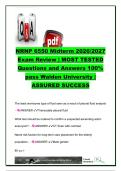
NRNP 6550 Midterm 2026/2027
Exam Review | MOST TESTED
Questions and Answers 100%
pass Walden University |
ASSURED SUCCESS


The least worrisome type of fluid seen as a result of pleural fluid analysis

- ANSWER ✔✔Transudate pleural fluid


What test should be ordered to confirm a suspected ascending aortic

aneurysm? - ANSWER ✔✔CT Scan with contrast


Name risk factors for long-term care placement for the elderly

population. - ANSWER ✔✔Male gender


80 y.o.+

,Living Alone

bowel/bladder incontinence

Hx of falls

dysfunctional coping

Intellectual impairment

A patient with anterior epistaxis has been treated with direct pressure for

20 minutes. What are expected findings when the patient is instructed to

gently blow their nose? - ANSWER ✔✔Successful treatment will be

indicated by dark residual blood or clots being discharged from the nose.

If bleeding has not stopped you will see a bright red steady trickle of

blood requiring more invasive measures.

What is the most common organism in treating otitis media, bacterial

sinusitis, bacterial pharyngitis, AND community-acquired pneumonia? -

ANSWER ✔✔Streptococcus pneumoniae


What is the greatest risk factor for vascular dementia? - ANSWER

✔✔Vascular diseases that result in target organ damage such as:


hypertension

dyslipidemia

, diabetes


Hypertensive urgency vs emergency - ANSWER ✔✔- Hypertensive

urgency: BP >200/120 w/o sx; Tx with PO furosemide, clonidine or

captopril


- Hypertensive emergency: BP >200/120 WITH sx or evidence of end

organ damage; Tx with IV nitroprusside, labetalol or nicardipine

*Both req immediate treatment

What annual lab testing should be done for patients taking atypical

antipsychotics? - ANSWER ✔✔Lipid Panel


Name some atypical antipsychotics - ANSWER ✔✔OLAnzapine


CLOZapine

QUETIapine

RISPERidone

Aripiprazole

Ziprasidone


3
COPYRIGHT©JOSHCLAY 2026/2027. YEAR PUBLISHED 2026. COMPANY REGISTRATION NUMBER: 619652435. TERMS OF USE. PRIVACY
STATEMENT. ALL RIGHTS RESERVED


Document information

Uploaded on
August 26, 2026
Number of pages
27
Written in
2026/2027
Type
Exam (elaborations)
Contains
Questions & answers
$18.99

Wrong document? Swap it for free Within 14 days of purchase and before downloading, you can choose a different document. You can simply spend the amount again.
Written by students who passed
Immediately available after payment
Read online or as PDF

Seller avatar
Reputation scores are based on the amount of documents a seller has sold for a fee and the reviews they have received for those documents. There are three levels: Bronze, Silver and Gold. The better the reputation, the more your can rely on the quality of the sellers work.
JOSHCLAY
3.5
(83)
Sold
390
Followers
16
Items
20497
Last sold
1 day ago


Why students choose Stuvia

Created by fellow students, verified by reviews

Quality you can trust: written by students who passed their tests and reviewed by others who've used these notes.

Didn't get what you expected? Choose another document

No worries! You can instantly pick a different document that better fits what you're looking for.

Pay as you like, start learning right away

No subscription, no commitments. Pay the way you're used to via credit card and download your PDF document instantly.

Student with book image

“Bought, downloaded, and aced it. It really can be that simple.”

Alisha Student

Working on your references?

Create accurate citations in APA, MLA and Harvard with our free citation generator.

Working on your references?

Frequently asked questions
