Nur-111- Exam 4
Nur-111- Exam 4
Study online at https://quizlet.com/_9qsd95
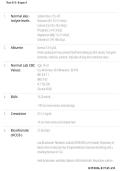
1. Normal elec- Sodium (Na+) 135-145
trolyte levels Potassium (K+) 3.5-5.5 mEq/L
Calcium (Ca+) 8.5-10.5 mEq/L
Phosphate 2.4-4.5 mEq/L
Magnesium (Mg) 1.6-2.5 mEq/L
Chloride (Cl-) 95-108 mEq/L
2. Albumin Normal: 3.5-5 g/dL
Protein produced in liver, prevents fluid from leaking out of B. vessels; Transports
hormones, medicine, nutrients. Indication of long-term nutritional status
3. Normal Lab CBC Hgb. 14-24
Values Hct. 44-64 men: 40-54% women: 38-47%
RBC 4.8-7.1
WBC 9-30
PLT 150-300
Glucose 40-60
4. BUN 10-20 md/dL
>100 can mean serious renal damage
5. Creatinine 0.5-1.2 mg/dL
>4 can mean serious renal impairment
6. Bicarbonate 22-26 mEq/L
(HCO3-)
Low Bicarbonate- Metabolic acidosis(DECREASED pH in blood), Respiratory al-
kalosis-Arise in blood pH due to hyperventilation (excessive breathing) and a
resulting decrease in CO2.
High bicarbonate- metabolic alkalosis (HIGH blood pH), Respiratory acidosis-
8/25/2026, 8:37:45 AM
, Nur-111- Exam 4
Nur-111- Exam 4
Study online at https://quizlet.com/_9qsd95
drop in blood pH due to hypoventilation (too little breathing) and a resulting
accumulation of Co2.
7. respiratory alka- Arise in blood pH due to hyperventilation (excessive breathing) and a resulting
losis decrease in CO2.
8. Hemoglobin (Hg) men: 13.5-18 g/dL
women: 12-16 g/dL
9. Erythrocyte Sed- men: <20 mm/hr
imentation Rate women: <30 mm/hr
(ESR)
10. Daily Weights DO THIS FOR KIDS. Indication of fluid overload / over hydration, NOT dehydration
11. IV fluid for Dehy- hypotonic-0.45% NS
dration Shifts fluid into intracellular space
12. Hypertonic IV so- -3% saline
lutions -5% Saline
-10% Dextrose in Water
-5% Dextrose in 0.9% Saline
-5% Dextrose in 0.45% Saline
-5% Dextrose in LR
-Causes the cell to shrink, fluid overload w/pulmonary edema
-Give to patients with cerebral edema (reduces pressure), hyponatremia (pulls
sodium back into the intravascular system)
13. Hypotonic IV flu- Lowers the serum osmolality within the vascular space, causing fluid to shift from
ids the intravascular space to both the intracellular and interstitial spaces. Never give
hypotonic solutions to patients who are at risk for increased ICP because of a
potential fluid shift to the brain
• 1/3 Strength Normal Saline (0.33% NaCl)
8/25/2026, 8:37:45 AM
, Nur-111- Exam 4
Nur-111- Exam 4
Study online at https://quizlet.com/_9qsd95
• 1/2 Strength Normal Saline (0.45% NaCl) (Patients retaining salt, cardiac pa-
tients)
• D5W (5% Dextrose in Water)
14. Isotonic IV fluids • Normal Saline (0.9% NaCl)
• Lactated Ringer (LR)
• IV fluids are used to replace or maintain fluid
15. Bioethics ethics that encompass all those perspectives that seek to understand human
nature & behavior, the domain of social science, & the natural world
16. Bioethics, clini- Professional ethics
cal ethics, & re-
search ethics are
a part of:
17. True/False: A False
nurse who be-
lieves that abor-
tion is wrong
based on a rule
that an innocent
life should never
be taken is apply-
ing the Utilitarian
Theory of Ethics
to practice.
18. True/False: True
Those who use a
laissez-faire
approach to
value
8/25/2026, 8:37:45 AM
, Nur-111- Exam 4
Nur-111- Exam 4
Study online at https://quizlet.com/_9qsd95
transmission
leave children to
explore values
on their own and
to develop a
personal value
system.
19. True/False: In an True
ethical dilemma,
two or more clear
moral principles
apply but sup-
port mutually in-
consistent cours-
es of action.
20. True/False: 4. The False
care-based ap-
proach to ethics
focuses on the
application of
ethical principles.
21. True/False: A True
nurse who acts
as an interme-
diary between a
patient and a
physician who is
not listening to
the patient is
8/25/2026, 8:37:45 AM
Nur-111- Exam 4
Study online at https://quizlet.com/_9qsd95
1. Normal elec- Sodium (Na+) 135-145
trolyte levels Potassium (K+) 3.5-5.5 mEq/L
Calcium (Ca+) 8.5-10.5 mEq/L
Phosphate 2.4-4.5 mEq/L
Magnesium (Mg) 1.6-2.5 mEq/L
Chloride (Cl-) 95-108 mEq/L
2. Albumin Normal: 3.5-5 g/dL
Protein produced in liver, prevents fluid from leaking out of B. vessels; Transports
hormones, medicine, nutrients. Indication of long-term nutritional status
3. Normal Lab CBC Hgb. 14-24
Values Hct. 44-64 men: 40-54% women: 38-47%
RBC 4.8-7.1
WBC 9-30
PLT 150-300
Glucose 40-60
4. BUN 10-20 md/dL
>100 can mean serious renal damage
5. Creatinine 0.5-1.2 mg/dL
>4 can mean serious renal impairment
6. Bicarbonate 22-26 mEq/L
(HCO3-)
Low Bicarbonate- Metabolic acidosis(DECREASED pH in blood), Respiratory al-
kalosis-Arise in blood pH due to hyperventilation (excessive breathing) and a
resulting decrease in CO2.
High bicarbonate- metabolic alkalosis (HIGH blood pH), Respiratory acidosis-
8/25/2026, 8:37:45 AM
, Nur-111- Exam 4
Nur-111- Exam 4
Study online at https://quizlet.com/_9qsd95
drop in blood pH due to hypoventilation (too little breathing) and a resulting
accumulation of Co2.
7. respiratory alka- Arise in blood pH due to hyperventilation (excessive breathing) and a resulting
losis decrease in CO2.
8. Hemoglobin (Hg) men: 13.5-18 g/dL
women: 12-16 g/dL
9. Erythrocyte Sed- men: <20 mm/hr
imentation Rate women: <30 mm/hr
(ESR)
10. Daily Weights DO THIS FOR KIDS. Indication of fluid overload / over hydration, NOT dehydration
11. IV fluid for Dehy- hypotonic-0.45% NS
dration Shifts fluid into intracellular space
12. Hypertonic IV so- -3% saline
lutions -5% Saline
-10% Dextrose in Water
-5% Dextrose in 0.9% Saline
-5% Dextrose in 0.45% Saline
-5% Dextrose in LR
-Causes the cell to shrink, fluid overload w/pulmonary edema
-Give to patients with cerebral edema (reduces pressure), hyponatremia (pulls
sodium back into the intravascular system)
13. Hypotonic IV flu- Lowers the serum osmolality within the vascular space, causing fluid to shift from
ids the intravascular space to both the intracellular and interstitial spaces. Never give
hypotonic solutions to patients who are at risk for increased ICP because of a
potential fluid shift to the brain
• 1/3 Strength Normal Saline (0.33% NaCl)
8/25/2026, 8:37:45 AM
, Nur-111- Exam 4
Nur-111- Exam 4
Study online at https://quizlet.com/_9qsd95
• 1/2 Strength Normal Saline (0.45% NaCl) (Patients retaining salt, cardiac pa-
tients)
• D5W (5% Dextrose in Water)
14. Isotonic IV fluids • Normal Saline (0.9% NaCl)
• Lactated Ringer (LR)
• IV fluids are used to replace or maintain fluid
15. Bioethics ethics that encompass all those perspectives that seek to understand human
nature & behavior, the domain of social science, & the natural world
16. Bioethics, clini- Professional ethics
cal ethics, & re-
search ethics are
a part of:
17. True/False: A False
nurse who be-
lieves that abor-
tion is wrong
based on a rule
that an innocent
life should never
be taken is apply-
ing the Utilitarian
Theory of Ethics
to practice.
18. True/False: True
Those who use a
laissez-faire
approach to
value
8/25/2026, 8:37:45 AM
, Nur-111- Exam 4
Nur-111- Exam 4
Study online at https://quizlet.com/_9qsd95
transmission
leave children to
explore values
on their own and
to develop a
personal value
system.
19. True/False: In an True
ethical dilemma,
two or more clear
moral principles
apply but sup-
port mutually in-
consistent cours-
es of action.
20. True/False: 4. The False
care-based ap-
proach to ethics
focuses on the
application of
ethical principles.
21. True/False: A True
nurse who acts
as an interme-
diary between a
patient and a
physician who is
not listening to
the patient is
8/25/2026, 8:37:45 AM