
CST Exam 2025/2026/2027 - Certified Surgical Technologist (NBSTSA) 3 Versions x 175 Questions Each
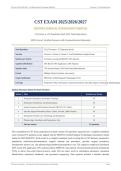
CST EXAM 2025/2026/2027
CERTIFIED SURGICAL TECHNOLOGIST (NBSTSA)
3 Versions x 175 Questions Each (525 Total Questions)
100% Correct Verified Answers with Comprehensive Rationales
Total Questions 525 (3 Versions x 175 Questions Each)
Versions Version 1, Version 2, Version 3 - Each Standalone Complete Exam
Sections per Version 6 sections covering all NBSTSA CST domains
Cognitive Distribution 30% Recall | 50% Application | 20% Analysis
Question Style 75% Scenario-based | 25% Direct Recall/Identification
Format Multiple Choice (4 options, one correct)
Target Certification NBSTSA Certified Surgical Technologist (CST)
Coverage Preoperative Prep, Sterilization, Anatomy/Procedures, Specialty Surgery, Positioning, Pharmacology
Section Structure (Same for Each Version)
Section Topic Questions per Version
1 Preoperative Preparation and Aseptic Technique 30
2 Sterilization, Disinfection, and Instrumentation 30
3 Surgical Anatomy and Procedures (General, OB/GYN, GU, Ortho) 40
4 Specialty Surgical Procedures (Neuro, Cardiac, Vascular, Ophth, Plastics) 30
5 Intraoperative Patient Care, Positioning, and Emergencies 25
6 Pharmacology, Anesthesia, and Postoperative Care 20
Total per Version 175 questions
This comprehensive CST Exam preparation test bank contains 525 questions organized into 3 complete standalone
exam versions (175 questions each), aligned with the NBSTSA Certified Surgical Technologist examination content
outline for 2025/2026/2027. Each version is a complete standalone exam covering all six CST domains: preoperative
preparation, sterilization/instrumentation, surgical anatomy and procedures, specialty surgical procedures,
intraoperative patient care, and pharmacology/anesthesia/postoperative care. The cognitive complexity distribution
(30% recall, 50% application, 20% analysis) reflects NBSTSA exam patterns. Scenario-based questions predominate
(75%) to mirror real-world clinical practice, while 25% test direct recall of sterilization parameters, instrument
identification, anatomical landmarks, and procedural sequencing. Each question includes a detailed rationale
CST Exam Preparation - 525 Questions with Verified Answers & Rationales Page 1
,CST Exam 2025/2026/2027 - Certified Surgical Technologist (NBSTSA) 3 Versions x 175 Questions Each
explaining the correct answer and why distractors are incorrect, citing aseptic principles, sterilization science,
surgical anatomy, instrumentation, patient safety protocols, and professional standards. Use the three versions for
comprehensive practice, self-assessment, and identification of areas requiring further study.
CST Exam Preparation - 525 Questions with Verified Answers & Rationales Page 2
,CST Exam 2025/2026/2027 - Certified Surgical Technologist (NBSTSA) 3 Versions x 175 Questions Each
VERSION 1
CST Exam 2025/2026 - Complete Standalone Exam (175 Questions)
SECTION 1: Preoperative Preparation and Aseptic Technique (Q1-Q30)
OR setup, sterile field establishment, patient skin prep (chlorhexidine, povidone-iodine, alcohol-based), hair removal
methods, draping techniques, surgical scrub techniques, gowning and gloving, sterile field maintenance.
Q1: A surgical technologist is preparing to establish a sterile field for an abdominal procedure. According to
AORN standards, what is the proper sequence for establishing the sterile field?
A. Open gown first, then gloves, then drape the patient, then open sterile supplies
B. Open sterile supplies first, then establish the sterile field with drapes, then gown and glove using
closed-assist technique, then arrange supplies on the sterile field [CORRECT]
C. Drape the patient first, then gown and glove, then open supplies
D. Open the Mayo stand first, then the back table, then gown and glove
Correct Answer: B
Rationale: Per AORN standards, the proper sequence for establishing the sterile field is: (1) inspect packaging
for integrity and expiration; (2) open sterile supplies onto the sterile field using proper technique (peel pouches,
wrapper corners); (3) establish the sterile field with drapes; (4) perform surgical scrub and gown/glove using
closed-assist technique; (5) arrange supplies on the sterile field. Opening supplies first ensures they are available
and allows the circulator to assist without reaching over the sterile field. Gowning and gloving should use the
closed-glove technique when possible to maintain sterility of the gown cuffs.
Q2: When performing a surgical hand scrub, the recommended duration for a traditional brush-based scrub
is:
A. 1 minute
B. 2 minutes
C. 5 minutes (traditional anatomical timed scrub with brush) [CORRECT]
D. 10 minutes
Correct Answer: C
Rationale: The traditional brush-based surgical scrub requires 5 minutes of scrubbing with an antimicrobial
agent (chlorhexidine gluconate or povidone-iodine). The scrub covers all surfaces of the hands, fingers, and
forearms up to 2 inches above the elbow. Brushless waterless scrubs (alcohol-based with CHG) typically require
2-3 applications and have been shown to be as effective as traditional scrubs while reducing skin irritation. The
5-minute scrub time is based on the time needed for the antimicrobial agent to achieve maximal microbial
reduction and persistent activity.
CST Exam Preparation - 525 Questions with Verified Answers & Rationales Page 3
, CST Exam 2025/2026/2027 - Certified Surgical Technologist (NBSTSA) 3 Versions x 175 Questions Each
Q3: Which skin prep agent is CONTRAINDICATED for use around the eyes and ears due to risk of corneal
damage and ototoxicity?
A. Chlorhexidine gluconate (CHG) [CORRECT]
B. Povidone-iodine (Betadine)
C. Alcohol-based prep
D. Isopropyl alcohol alone
Correct Answer: A
Rationale: Chlorhexidine gluconate (CHG) is contraindicated for use around the eyes (risk of corneal damage
and blindness) and ears (ototoxicity if it enters the middle ear). For these areas, povidone-iodine is the preferred
agent. CHG is otherwise preferred for most skin prep because it has persistent activity (6+ hours) and is not
inactivated by blood or organic matter. Alcohol-based preps dry quickly but are flammable and must be allowed
to dry completely before draping to prevent surgical fires.
Q4: A patient is scheduled for an elective abdominal procedure. What is the current recommendation
regarding preoperative hair removal?
A. Shave the hair in the pre-op holding area with a razor
B. Shave the hair in the OR immediately before incision
C. Remove hair only if it interferes with the incision or closure, using clippers (not razors), preferably
outside the OR [CORRECT]
D. Use a depilatory cream on all patients
Correct Answer: C
Rationale: Current AORN and CDC guidelines recommend hair removal only when hair interferes with the
incision, closure, or dressing. When removal is necessary, clippers should be used (not razors) because razors
cause micro-abrasions that increase surgical site infection (SSI) risk. Hair removal should occur outside the OR
(in pre-op holding) to prevent hair from contaminating the sterile field. Depilatory creams may cause skin
irritation and are not routinely used. Shaving is associated with increased SSI rates compared to clipping or no
hair removal.
Q5: When gowning another sterile team member, what is the proper technique?
A. Hand the gown directly to the person
B. Open the gown and hold it by the neck, allowing the person to slip arms into the sleeves without
touching the outside; then assist with gloving using the open-glove technique [CORRECT]
C. Place the gown on the Mayo stand for the person to pick up
D. Wrap the gown around the person from behind
Correct Answer: B
Rationale: When assisting with gowning, the sterile team member opens the gown and holds it by the inside at
the shoulder/neck area, allowing the person to slip their arms into the sleeves without touching the outside of the
gown. The circulator then ties the inner gown tie at the back. After gowning, the open-glove technique is used for
the person to don gloves. The closed-glove technique is used only when self-gowning with a sterilized gown. The
outside of the gown is considered sterile; the inside is not.
CST Exam Preparation - 525 Questions with Verified Answers & Rationales Page 4
CST EXAM 2025/2026/2027
CERTIFIED SURGICAL TECHNOLOGIST (NBSTSA)
3 Versions x 175 Questions Each (525 Total Questions)
100% Correct Verified Answers with Comprehensive Rationales
Total Questions 525 (3 Versions x 175 Questions Each)
Versions Version 1, Version 2, Version 3 - Each Standalone Complete Exam
Sections per Version 6 sections covering all NBSTSA CST domains
Cognitive Distribution 30% Recall | 50% Application | 20% Analysis
Question Style 75% Scenario-based | 25% Direct Recall/Identification
Format Multiple Choice (4 options, one correct)
Target Certification NBSTSA Certified Surgical Technologist (CST)
Coverage Preoperative Prep, Sterilization, Anatomy/Procedures, Specialty Surgery, Positioning, Pharmacology
Section Structure (Same for Each Version)
Section Topic Questions per Version
1 Preoperative Preparation and Aseptic Technique 30
2 Sterilization, Disinfection, and Instrumentation 30
3 Surgical Anatomy and Procedures (General, OB/GYN, GU, Ortho) 40
4 Specialty Surgical Procedures (Neuro, Cardiac, Vascular, Ophth, Plastics) 30
5 Intraoperative Patient Care, Positioning, and Emergencies 25
6 Pharmacology, Anesthesia, and Postoperative Care 20
Total per Version 175 questions
This comprehensive CST Exam preparation test bank contains 525 questions organized into 3 complete standalone
exam versions (175 questions each), aligned with the NBSTSA Certified Surgical Technologist examination content
outline for 2025/2026/2027. Each version is a complete standalone exam covering all six CST domains: preoperative
preparation, sterilization/instrumentation, surgical anatomy and procedures, specialty surgical procedures,
intraoperative patient care, and pharmacology/anesthesia/postoperative care. The cognitive complexity distribution
(30% recall, 50% application, 20% analysis) reflects NBSTSA exam patterns. Scenario-based questions predominate
(75%) to mirror real-world clinical practice, while 25% test direct recall of sterilization parameters, instrument
identification, anatomical landmarks, and procedural sequencing. Each question includes a detailed rationale
CST Exam Preparation - 525 Questions with Verified Answers & Rationales Page 1
,CST Exam 2025/2026/2027 - Certified Surgical Technologist (NBSTSA) 3 Versions x 175 Questions Each
explaining the correct answer and why distractors are incorrect, citing aseptic principles, sterilization science,
surgical anatomy, instrumentation, patient safety protocols, and professional standards. Use the three versions for
comprehensive practice, self-assessment, and identification of areas requiring further study.
CST Exam Preparation - 525 Questions with Verified Answers & Rationales Page 2
,CST Exam 2025/2026/2027 - Certified Surgical Technologist (NBSTSA) 3 Versions x 175 Questions Each
VERSION 1
CST Exam 2025/2026 - Complete Standalone Exam (175 Questions)
SECTION 1: Preoperative Preparation and Aseptic Technique (Q1-Q30)
OR setup, sterile field establishment, patient skin prep (chlorhexidine, povidone-iodine, alcohol-based), hair removal
methods, draping techniques, surgical scrub techniques, gowning and gloving, sterile field maintenance.
Q1: A surgical technologist is preparing to establish a sterile field for an abdominal procedure. According to
AORN standards, what is the proper sequence for establishing the sterile field?
A. Open gown first, then gloves, then drape the patient, then open sterile supplies
B. Open sterile supplies first, then establish the sterile field with drapes, then gown and glove using
closed-assist technique, then arrange supplies on the sterile field [CORRECT]
C. Drape the patient first, then gown and glove, then open supplies
D. Open the Mayo stand first, then the back table, then gown and glove
Correct Answer: B
Rationale: Per AORN standards, the proper sequence for establishing the sterile field is: (1) inspect packaging
for integrity and expiration; (2) open sterile supplies onto the sterile field using proper technique (peel pouches,
wrapper corners); (3) establish the sterile field with drapes; (4) perform surgical scrub and gown/glove using
closed-assist technique; (5) arrange supplies on the sterile field. Opening supplies first ensures they are available
and allows the circulator to assist without reaching over the sterile field. Gowning and gloving should use the
closed-glove technique when possible to maintain sterility of the gown cuffs.
Q2: When performing a surgical hand scrub, the recommended duration for a traditional brush-based scrub
is:
A. 1 minute
B. 2 minutes
C. 5 minutes (traditional anatomical timed scrub with brush) [CORRECT]
D. 10 minutes
Correct Answer: C
Rationale: The traditional brush-based surgical scrub requires 5 minutes of scrubbing with an antimicrobial
agent (chlorhexidine gluconate or povidone-iodine). The scrub covers all surfaces of the hands, fingers, and
forearms up to 2 inches above the elbow. Brushless waterless scrubs (alcohol-based with CHG) typically require
2-3 applications and have been shown to be as effective as traditional scrubs while reducing skin irritation. The
5-minute scrub time is based on the time needed for the antimicrobial agent to achieve maximal microbial
reduction and persistent activity.
CST Exam Preparation - 525 Questions with Verified Answers & Rationales Page 3
, CST Exam 2025/2026/2027 - Certified Surgical Technologist (NBSTSA) 3 Versions x 175 Questions Each
Q3: Which skin prep agent is CONTRAINDICATED for use around the eyes and ears due to risk of corneal
damage and ototoxicity?
A. Chlorhexidine gluconate (CHG) [CORRECT]
B. Povidone-iodine (Betadine)
C. Alcohol-based prep
D. Isopropyl alcohol alone
Correct Answer: A
Rationale: Chlorhexidine gluconate (CHG) is contraindicated for use around the eyes (risk of corneal damage
and blindness) and ears (ototoxicity if it enters the middle ear). For these areas, povidone-iodine is the preferred
agent. CHG is otherwise preferred for most skin prep because it has persistent activity (6+ hours) and is not
inactivated by blood or organic matter. Alcohol-based preps dry quickly but are flammable and must be allowed
to dry completely before draping to prevent surgical fires.
Q4: A patient is scheduled for an elective abdominal procedure. What is the current recommendation
regarding preoperative hair removal?
A. Shave the hair in the pre-op holding area with a razor
B. Shave the hair in the OR immediately before incision
C. Remove hair only if it interferes with the incision or closure, using clippers (not razors), preferably
outside the OR [CORRECT]
D. Use a depilatory cream on all patients
Correct Answer: C
Rationale: Current AORN and CDC guidelines recommend hair removal only when hair interferes with the
incision, closure, or dressing. When removal is necessary, clippers should be used (not razors) because razors
cause micro-abrasions that increase surgical site infection (SSI) risk. Hair removal should occur outside the OR
(in pre-op holding) to prevent hair from contaminating the sterile field. Depilatory creams may cause skin
irritation and are not routinely used. Shaving is associated with increased SSI rates compared to clipping or no
hair removal.
Q5: When gowning another sterile team member, what is the proper technique?
A. Hand the gown directly to the person
B. Open the gown and hold it by the neck, allowing the person to slip arms into the sleeves without
touching the outside; then assist with gloving using the open-glove technique [CORRECT]
C. Place the gown on the Mayo stand for the person to pick up
D. Wrap the gown around the person from behind
Correct Answer: B
Rationale: When assisting with gowning, the sterile team member opens the gown and holds it by the inside at
the shoulder/neck area, allowing the person to slip their arms into the sleeves without touching the outside of the
gown. The circulator then ties the inner gown tie at the back. After gowning, the open-glove technique is used for
the person to don gloves. The closed-glove technique is used only when self-gowning with a sterilized gown. The
outside of the gown is considered sterile; the inside is not.
CST Exam Preparation - 525 Questions with Verified Answers & Rationales Page 4


