

S SELECTION
Out of a mass of information, specific facts and quotes are selected (often with little consideration of their original contexts) to reinforce the
propagandist’s purpose.
A ASSERTION
Rather than arguing, effective propaganda makes bold statements which are harder to challenge. It presents enthusiastic statements
presented as fact.
R REPETITION An idea once repeated enough times, is taken as the truth.
R RHETORICAL QUESTIONS
These are questions that do not require an answer from the listener/ viewer. Its answer will be given or implied by the speaker/ writer
therefore requiring you to submit to the idea presented rather than think for yourself.
PINPOINTING THE
E
The focus is moved away by one person/group and the blame is placed on someone/another group. You project a person or idea as the
"enemy" through suggestion or false accusations. Assigning blame to an individual or group that isn't responsible, thus alleviating feelings of
ENEMY/SCAPEGOATING guilt from responsible parties and/or distracting attention from the need to fix 95 the problem for which blame is being assigned.
LYING/ FALSIFYING
L INFORMATION
The creation or deletion of information from public records, in the purpose of making a false record of an event or the actions of a person
during a court session, or possibly a battle, etc. The famous saying “Truth is the first casualty of war,” reiterates this idea.
F
A form of patriotism. An attempt to justify an action on the grounds that doing so will make one more patriotic, or in some way benefit a group,
FLAG-WAVING country, or idea. The feeling of patriotism which this technique attempts to inspire may diminish or entirely omit one's capability for rational
examination of the matter in question.
E ENDORSEMENT Where a credible/famous person endorses a product – this makes one think that it must be good seen because X is using the product.
E
Words like peace, happiness, freedom, mother, home create positive associations when linked to a person or issue. Advertisers use them in
EMOTIVE LANGUAGE slogans such as “All good mothers feed their children [product]” or “Pay your TV license. It’s the right thing to do.” Pronouns like we suggest unity
and inclusivity, while you makes the audience feel empowered and responsible for change.
B
This technique persuades the target audience to take the course of 96 action that "everyone else is taking." ‘Keeping up with the Joneses.’
BANDWAGON Inevitable victory: Encourages people to join a cause by portraying success as certain and staying involved as the best choice.
Join the crowd: Appeals to the desire to be on the winning side by presenting the movement as unstoppable and beneficial to join.
BLACK-AND-WHITE
B FALLACY
Presenting only two choices, with the product or idea being propagated as the better choice. You are either for or against – no middle ground. You
must buy into the product or the ideology. This is often used in political campaigns and debates.
S SLOGANS A slogan is a brief, striking phrase enlisted to support reasoned ideas, but often tend to act only as emotional appeals. Military campaigns, such as
"The War on Terror" may also be regarded to be slogans, devised to prevent free thought on the issues.
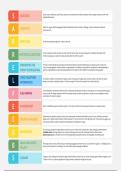
Out of a mass of information, specific facts and quotes are selected (often with little consideration of their original contexts) to reinforce the
propagandist’s purpose.
A ASSERTION
Rather than arguing, effective propaganda makes bold statements which are harder to challenge. It presents enthusiastic statements
presented as fact.
R REPETITION An idea once repeated enough times, is taken as the truth.
R RHETORICAL QUESTIONS
These are questions that do not require an answer from the listener/ viewer. Its answer will be given or implied by the speaker/ writer
therefore requiring you to submit to the idea presented rather than think for yourself.
PINPOINTING THE
E
The focus is moved away by one person/group and the blame is placed on someone/another group. You project a person or idea as the
"enemy" through suggestion or false accusations. Assigning blame to an individual or group that isn't responsible, thus alleviating feelings of
ENEMY/SCAPEGOATING guilt from responsible parties and/or distracting attention from the need to fix 95 the problem for which blame is being assigned.
LYING/ FALSIFYING
L INFORMATION
The creation or deletion of information from public records, in the purpose of making a false record of an event or the actions of a person
during a court session, or possibly a battle, etc. The famous saying “Truth is the first casualty of war,” reiterates this idea.
F
A form of patriotism. An attempt to justify an action on the grounds that doing so will make one more patriotic, or in some way benefit a group,
FLAG-WAVING country, or idea. The feeling of patriotism which this technique attempts to inspire may diminish or entirely omit one's capability for rational
examination of the matter in question.
E ENDORSEMENT Where a credible/famous person endorses a product – this makes one think that it must be good seen because X is using the product.
E
Words like peace, happiness, freedom, mother, home create positive associations when linked to a person or issue. Advertisers use them in
EMOTIVE LANGUAGE slogans such as “All good mothers feed their children [product]” or “Pay your TV license. It’s the right thing to do.” Pronouns like we suggest unity
and inclusivity, while you makes the audience feel empowered and responsible for change.
B
This technique persuades the target audience to take the course of 96 action that "everyone else is taking." ‘Keeping up with the Joneses.’
BANDWAGON Inevitable victory: Encourages people to join a cause by portraying success as certain and staying involved as the best choice.
Join the crowd: Appeals to the desire to be on the winning side by presenting the movement as unstoppable and beneficial to join.
BLACK-AND-WHITE
B FALLACY
Presenting only two choices, with the product or idea being propagated as the better choice. You are either for or against – no middle ground. You
must buy into the product or the ideology. This is often used in political campaigns and debates.
S SLOGANS A slogan is a brief, striking phrase enlisted to support reasoned ideas, but often tend to act only as emotional appeals. Military campaigns, such as
"The War on Terror" may also be regarded to be slogans, devised to prevent free thought on the issues.

