NURS 5463: Exam 4 Study Guide
Comprehensive Resource To Help You Ace 2026-2027 Exams Includes Frequently Tested Questions With
ELABORATED 100% Correct COMPLETE SOLUTIONS
Guaranteed Pass First Attempt!! Current Update!!
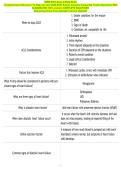
1. Unsafe conditions for the rescuer
2. DNR
When to stop ACLS?
3. Signs of death
4. Conditions not compatible for life
1. Witnessed arrest?
2. Initial rhythm
3. Time elapsed (depends on the situation)
ACLS Considerations 4. Duration of CPR (depends on the situation)
5. Patient's overall condition
5. Legal/ethical considerations
7. Debrief
1. Witnessed cardiac arrest with immediate CPR
Factors that improve ACLS
2. Utilization of defibrillation when indicated
What IV drip should be considered in patients with per-
Nitroglycerin
sistant signs of heart failure?
Orthopnea
What are three signs of heart failure? JVD
Pulmonary Edema
What is diastolic heart failure? AKA heart failure with preserved ejection fraction (HFpEF)
It occurs when the heart's left ventricle becomes stitt and
When does diastolic heart failure occur? does not relax properly, leading to impaired filling of the
heart with blood.
A measure of how much blood is pumped out with each
Define ejection fraction heartbeat) remains normal, but symptoms of heart failure
still develop.
Common signs of diastolic heart failure
, NURS 5463: Exam 4 Study Guide
Comprehensive Resource To Help You Ace 2026-2027 Exams Includes Frequently Tested Questions With
ELABORATED 100% Correct COMPLETE SOLUTIONS
Guaranteed Pass First Attempt!! Current Update!!
- Shortness of breath (dyspnea):
- Fatigue and Weakness:
- Swelling (edema):
- Weight Gain:
- Frequent Urination:
- Cough or Wheezing:
- Diflculty Exercising:
- Chest Pain or Discomfort:
- Palpitations
- Cool Extremities:
What is systolic heart failure? AKA heart failure with reduced ejection fraction (HFrEF).
It occurs when the heart's left ventricle loses its ability
When does systolic heart failure occur? to contract ettectively which impairs the heart's ability to
pump blood to meet the body's needs.
The EF is reduced, typically below 40%, compared to a
Ejection fraction in systolic heart failure
normal range of 50-70%.
- CAD
- HTN
- Dilated cardiomyopathy:
- Valve diseases: (AS, AR, MS, MR)
What are the causes of systolic heart failure? - Arrhythmias
- Myocarditis:
- Smoking
- Excessive alcohol use,
- Drug use (e.g., cocaine).
- Shortness of breath (dyspnea)
- Fatigue and weakness
What are the symptoms of systolic heart failrue? - Fluid retention
- Cough or wheezing
- Rapid or irregular heartbeat
, NURS 5463: Exam 4 Study Guide
Comprehensive Resource To Help You Ace 2026-2027 Exams Includes Frequently Tested Questions With
ELABORATED 100% Correct COMPLETE SOLUTIONS
Guaranteed Pass First Attempt!! Current Update!!
- Chest pain or pressure
- Exercise intolerance
- Cool extremities or pale skin
Rate control with:
- digoxin
- beta blockers (atenolol, metoprolol)
- calcium channel blockers (diltiazem, verapamil)
- amiodarone
Treatments for Atrial Fibrillation
Procedures
- Cardiac ablation
- TEE (recommended before cardioversion)
- Cardioversion
- MAZE procedure
CHADs2-Vasc score
0 = low risk (anticoags are not recommended)
1 = low-moderate risk (consider anticoags and/or
How do you risk stratify Afib? anti-platelet therapy)
> 2 = moderate-high risk (anticoags are recommended)
Also recommended, rate control with beta-blockers, calci-
um channel blockers, amiodaronem, digoxin)
Risk stratification
Mangement of Afib depends on:
Hemodynamic stability
- Valvular disorders
- Structural disease
- Ischemic heart disease,
- OSA
Causes of Afib
- Obesity
- Hypoventilation syndrome
- Smoking, alcohol intake, illicit drug use
- History of rheumatic fever
Comprehensive Resource To Help You Ace 2026-2027 Exams Includes Frequently Tested Questions With
ELABORATED 100% Correct COMPLETE SOLUTIONS
Guaranteed Pass First Attempt!! Current Update!!
1. Unsafe conditions for the rescuer
2. DNR
When to stop ACLS?
3. Signs of death
4. Conditions not compatible for life
1. Witnessed arrest?
2. Initial rhythm
3. Time elapsed (depends on the situation)
ACLS Considerations 4. Duration of CPR (depends on the situation)
5. Patient's overall condition
5. Legal/ethical considerations
7. Debrief
1. Witnessed cardiac arrest with immediate CPR
Factors that improve ACLS
2. Utilization of defibrillation when indicated
What IV drip should be considered in patients with per-
Nitroglycerin
sistant signs of heart failure?
Orthopnea
What are three signs of heart failure? JVD
Pulmonary Edema
What is diastolic heart failure? AKA heart failure with preserved ejection fraction (HFpEF)
It occurs when the heart's left ventricle becomes stitt and
When does diastolic heart failure occur? does not relax properly, leading to impaired filling of the
heart with blood.
A measure of how much blood is pumped out with each
Define ejection fraction heartbeat) remains normal, but symptoms of heart failure
still develop.
Common signs of diastolic heart failure
, NURS 5463: Exam 4 Study Guide
Comprehensive Resource To Help You Ace 2026-2027 Exams Includes Frequently Tested Questions With
ELABORATED 100% Correct COMPLETE SOLUTIONS
Guaranteed Pass First Attempt!! Current Update!!
- Shortness of breath (dyspnea):
- Fatigue and Weakness:
- Swelling (edema):
- Weight Gain:
- Frequent Urination:
- Cough or Wheezing:
- Diflculty Exercising:
- Chest Pain or Discomfort:
- Palpitations
- Cool Extremities:
What is systolic heart failure? AKA heart failure with reduced ejection fraction (HFrEF).
It occurs when the heart's left ventricle loses its ability
When does systolic heart failure occur? to contract ettectively which impairs the heart's ability to
pump blood to meet the body's needs.
The EF is reduced, typically below 40%, compared to a
Ejection fraction in systolic heart failure
normal range of 50-70%.
- CAD
- HTN
- Dilated cardiomyopathy:
- Valve diseases: (AS, AR, MS, MR)
What are the causes of systolic heart failure? - Arrhythmias
- Myocarditis:
- Smoking
- Excessive alcohol use,
- Drug use (e.g., cocaine).
- Shortness of breath (dyspnea)
- Fatigue and weakness
What are the symptoms of systolic heart failrue? - Fluid retention
- Cough or wheezing
- Rapid or irregular heartbeat
, NURS 5463: Exam 4 Study Guide
Comprehensive Resource To Help You Ace 2026-2027 Exams Includes Frequently Tested Questions With
ELABORATED 100% Correct COMPLETE SOLUTIONS
Guaranteed Pass First Attempt!! Current Update!!
- Chest pain or pressure
- Exercise intolerance
- Cool extremities or pale skin
Rate control with:
- digoxin
- beta blockers (atenolol, metoprolol)
- calcium channel blockers (diltiazem, verapamil)
- amiodarone
Treatments for Atrial Fibrillation
Procedures
- Cardiac ablation
- TEE (recommended before cardioversion)
- Cardioversion
- MAZE procedure
CHADs2-Vasc score
0 = low risk (anticoags are not recommended)
1 = low-moderate risk (consider anticoags and/or
How do you risk stratify Afib? anti-platelet therapy)
> 2 = moderate-high risk (anticoags are recommended)
Also recommended, rate control with beta-blockers, calci-
um channel blockers, amiodaronem, digoxin)
Risk stratification
Mangement of Afib depends on:
Hemodynamic stability
- Valvular disorders
- Structural disease
- Ischemic heart disease,
- OSA
Causes of Afib
- Obesity
- Hypoventilation syndrome
- Smoking, alcohol intake, illicit drug use
- History of rheumatic fever