

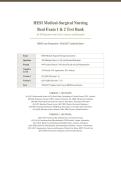
HESI Medical-Surgical Nursing
Real Exam 1 & 2 Test Bank
All 200 Questions with Correct Answers and Rationales
HESI Exam Preparation | 2026/2027 Updated Edition
Exam HESI Medical-Surgical Nursing Examination
Questions 200 Multiple Choice (A-D) with Detailed Rationales
Format 80% Scenario-Based / 20% Direct Recall and Lab Interpretation
Cognitive
25% Recall, 55% Application, 20% Analysis
Levels
Version 1 Q1-Q100 (Sections 1-6)
Version 2 Q101-Q200 (Sections 7-12)
Year 2026/2027 Updated with Current HESI Exam Patterns
VERSION 1 - SECTIONS:
Q1-Q25: Cardiovascular System (ACS, Heart Failure, Dysrhythmias, Valvular Disease, HTN, Vascular)
Q26-Q45: Respiratory System (COPD, Asthma, Pneumonia, PE, ARDS, Mechanical Ventilation)
Q46-Q60: Neurological System (Stroke, Seizures, Head Injury, Neurological Disorders)
Q61-Q75: Renal and Urinary System (AKI, CKD, Dialysis, Electrolyte Imbalances)
Q76-Q90: Gastrointestinal System (GI Bleeding, Pancreatitis, Liver Failure, Bowel Disorders)
Q91-Q100: Endocrine System (Diabetes, DKA, HHS, Thyroid, Adrenal Disorders)
VERSION 2 - SECTIONS:
Q101-Q120: Cardiovascular and Respiratory (Advanced Concepts)
Q121-Q140: Neurological and Musculoskeletal (CNS Disorders, Trauma, Orthopedics)
Q141-Q160: Renal, GI, and Nutritional (Fluid/Electrolytes, Nutrition, GI Surgery)
Q161-Q180: Endocrine, Hematological, and Immunological (Diabetes, Anemias, Autoimmune)
Q181-Q195: Integumentary, Sensory, and Emergency (Wound Care, Burns, EENT, Critical Care)
Q196-Q200: Prioritization, Delegation, and Professional Practice
, HESI Med-Surge Real Exam 1 & 2 | Test Bank | 2026
VERSION 1: MED SURGE HESI REAL EXAM 1
Section 1: Cardiovascular System
Q1: A 58-year-old male presents to the emergency department with crushing substernal chest pain that began 2 hours
ago. The pain radiates to his left arm and jaw. He is diaphoretic with BP 88/54 mmHg, HR 112 bpm, and bilateral
crackles. 12-lead ECG reveals ST-segment elevation in leads II, III, and aVF. Which of the following is the MOST
appropriate priority nursing intervention?
A. Administer sublingual nitroglycerin and reassess in 5 minutes
B. Prepare the patient for immediate reperfusion therapy (PCI or fibrinolytics)
C. Obtain a chest X-ray and wait for cardiology consultation
D. Administer oral metoprolol to reduce heart rate
B. Prepare the patient for immediate reperfusion therapy (PCI or fibrinolytics) **[CORRECT]**
Correct Answer: B - Prepare the patient for immediate reperfusion therapy (PCI or fibrinolytics)
Rationale: This patient presents with an acute inferior STEMI complicated by cardiogenic shock (hypotension, tachycardia, crackles
indicating pulmonary edema). The highest priority intervention is immediate reperfusion therapy, either percutaneous coronary intervention
(PCI) or fibrinolytic administration, as time is muscle and door-to-balloon or door-to-needle time is critical. Nitroglycerin (A) is
contraindicated in hypotension and right ventricular involvement (inferior STEMI). Metoprolol (D) is also contraindicated in acute
decompensated heart failure, hypotension, and bradycardia risk. Waiting for consultation (C) delays life-saving treatment. HESI prioritization
follows ABCs and the acute-is-chronic framework.
Q2: A 72-year-old female with a history of heart failure is admitted with worsening dyspnea, 3-pillow orthopnea, and
bilateral pitting edema (2+). Her current medications include furosemide 40 mg daily, lisinopril 10 mg daily, and
carvedilol 6.25 mg twice daily. Which of the following findings would indicate the patient is experiencing fluid overload
despite diuretic therapy?
A. Weight loss of 2 kg over the past 3 days
B. Serum sodium of 148 mEq/L
C. Jugular venous distension (JVD) at 45 degrees and S3 gallop
D. Blood pressure of 100/60 mmHg with dry mucous membranes
C. Jugular venous distension (JVD) at 45 degrees and S3 gallop **[CORRECT]**
Correct Answer: C - Jugular venous distension (JVD) at 45 degrees and S3 gallop
Rationale: Jugular venous distension and an S3 gallop are classic signs of volume overload and elevated left ventricular filling pressures in
heart failure. Weight loss (A) and dry mucous membranes with low blood pressure (D) suggest volume depletion or over-diuresis, not
overload. A serum sodium of 148 mEq/L (B) indicates hypernatremia, which may occur with dehydration or excessive free water loss, not
directly with volume overload (heart failure patients more commonly develop hyponatremia due to RAAS activation). HESI exams test the
ability to differentiate fluid overload from depletion using clinical assessment findings.
Q3: The nurse is caring for a patient with atrial fibrillation who is receiving heparin drip and warfarin 5 mg daily. The
patient's INR is 1.4 and aPTT is 78 seconds (therapeutic range 60-80 seconds). Which of the following nursing actions is
MOST appropriate?
A. Discontinue the heparin drip since the INR is subtherapeutic
B. Administer vitamin K as ordered to reverse anticoagulation
C. Continue both heparin and warfarin; the INR has not yet reached therapeutic range
D. Increase the warfarin dose to 10 mg to rapidly achieve therapeutic INR
C. Continue both heparin and warfarin; the INR has not yet reached therapeutic range **[CORRECT]**
Correct Answer: C - Continue both heparin and warfarin; the INR has not yet reached therapeutic range
Rationale: During bridging therapy for atrial fibrillation, heparin is continued until the INR reaches the therapeutic range of 2.0-3.0 for at
least 24 hours. An INR of 1.4 is subtherapeutic, so warfarin must be continued and heparin should NOT be discontinued yet. Discontinuing
heparin (A) would leave the patient inadequately anticoagulated. Vitamin K (B) reverses warfarin and is indicated for bleeding or
supratherapeutic INR, not subtherapeutic values. Rapidly increasing warfarin (D) is dangerous and can cause overshooting to supratherapeutic
levels; warfarin takes 3-5 days for full effect due to inhibition of existing clotting factors. This is a common HESI anticoagulation
management scenario.
Page 2
, HESI Med-Surge Real Exam 1 & 2 | Test Bank | 2026
Q4: A 65-year-old patient is being discharged after a myocardial infarction. Which of the following statements by the
patient indicates the need for FURTHER teaching regarding secondary prevention?
A. I will take my aspirin every day to prevent another heart attack
B. I will stop taking my cholesterol medication once my LDL is normal
C. I will report any chest pain or shortness of breath to my doctor right away
D. I will walk for 30 minutes a day as my doctor recommended
B. I will stop taking my cholesterol medication once my LDL is normal **[CORRECT]**
Correct Answer: B - I will stop taking my cholesterol medication once my LDL is normal
Rationale: Statin therapy after MI is a lifelong secondary prevention measure regardless of LDL levels, as statins stabilize plaques and reduce
inflammation. The patient should NEVER discontinue statins simply because LDL normalizes. Daily aspirin (A), reporting warning signs (C),
and regular exercise (D) are all correct secondary prevention behaviors. HESI exams frequently test patient teaching and the ability to identify
incorrect statements that require further education. This is a critical safety issue because discontinuing statins post-MI significantly increases
the risk of recurrent cardiac events.
Q5: A patient with chronic heart failure (NYHA Class III) has been started on sacubitril/valsartan (Entresto). Which of
the following is the MOST critical instruction for the nurse to provide?
A. Take the medication with a potassium-sparing diuretic for enhanced effect
B. There must be a 36-hour washout period when transitioning from an ACE inhibitor
C. Expect a persistent dry cough as a common side effect of this medication
D. Take the medication on an empty stomach for optimal absorption
B. There must be a 36-hour washout period when transitioning from an ACE inhibitor **[CORRECT]**
Correct Answer: B - There must be a 36-hour washout period when transitioning from an ACE inhibitor
Rationale: Sacubitril/valsartan is an ARNI (angiotensin receptor-neprilysin inhibitor) that requires a mandatory 36-hour washout period after
discontinuing ACE inhibitors to avoid angioedema, a life-threatening reaction. This is a critical safety requirement unique to ARNI therapy.
Taking it with a potassium-sparing diuretic (A) increases the risk of hyperkalemia. A dry cough (C) is associated with ACE inhibitors, not
ARNIs. Food does not significantly affect absorption (D). HESI exams test this specific drug interaction because it is a high-risk medication
safety issue.
Q6: The nurse is monitoring a patient with aortic stenosis. Which of the following assessment findings would the nurse
anticipate?
A. Widened pulse pressure with bounding peripheral pulses
B. A crescendo-decrescendo systolic murmur heard best at the right second intercostal space
C. A blowing diastolic murmur heard best at the left sternal border
D. Bifid or split S2 with fixed splitting
B. A crescendo-decrescendo systolic murmur heard best at the right second intercostal space **[CORRECT]**
Correct Answer: B - A crescendo-decrescendo systolic murmur heard best at the right second intercostal space
Rationale: Aortic stenosis produces a classic crescendo-decrescendo systolic ejection murmur best heard at the right second intercostal space
(aortic area), radiating to the carotid arteries. Widened pulse pressure with bounding pulses (A) is characteristic of aortic regurgitation, not
stenosis. A blowing diastolic murmur at the left sternal border (C) describes aortic regurgitation. Fixed splitting of S2 (D) is characteristic of
atrial septal defect. HESI exams test the ability to differentiate valvular heart disease by murmur characteristics and auscultation sites.
Q7: A patient is admitted with acute decompensated heart failure and is prescribed intravenous nitroglycerin. Which of
the following is the MOST important nursing consideration during nitroglycerin administration?
A. Monitor for hypertension and tachycardia as primary adverse effects
B. Ensure the patient is in a supine position before initiating the infusion
C. Use non-PVC IV tubing and protect the solution from light
D. Limit IV fluid rate to 50 mL/hr to prevent fluid overload
C. Use non-PVC IV tubing and protect the solution from light **[CORRECT]**
Correct Answer: C - Use non-PVC IV tubing and protect the solution from light
Rationale: IV nitroglycerin adheres to PVC tubing, significantly reducing the delivered dose, so special non-PVC tubing must be used.
Nitroglycerin is also light-sensitive and must be protected from light with an opaque cover. The primary adverse effects are hypotension and
reflex tachycardia (A describes the opposite effects). The patient should have the head of bed elevated, not supine (B) to reduce preload and
improve breathing. Fluid rate management (D) is important but not the MOST critical consideration specific to nitroglycerin. This is a
Page 3
, HESI Med-Surge Real Exam 1 & 2 | Test Bank | 2026
frequently tested HESI pharmacology item.
Q8: A 48-year-old patient is diagnosed with hypertrophic cardiomyopathy (HCM) after experiencing syncope during
exercise. Which of the following instructions should the nurse include in the discharge teaching?
A. Encourage participation in competitive sports to improve cardiovascular fitness
B. Avoid beta-blockers as they may worsen the outflow obstruction
C. Stay well-hydrated and avoid strenuous exercise and Valsalva maneuver
D. Take over-the-counter decongestants as needed for upper respiratory symptoms
C. Stay well-hydrated and avoid strenuous exercise and Valsalva maneuver **[CORRECT]**
Correct Answer: C - Stay well-hydrated and avoid strenuous exercise and Valsalva maneuver
Rationale: In HCM, the hypertrophied ventricular septum obstructs outflow, and dehydration or Valsalva maneuver (which decreases venous
return) worsens the obstruction. Strenuous exercise can trigger lethal dysrhythmias and syncope, which is why competitive sports are
contraindicated (A is wrong). Beta-blockers are actually first-line therapy for HCM because they slow heart rate and increase diastolic filling
time, reducing obstruction (B is wrong). Decongestants (D) contain sympathomimetics that increase heart rate and contractility, worsening
outflow obstruction. HESI tests HCM management because it is the leading cause of sudden cardiac death in young athletes.
Q9: The nurse receives a laboratory report showing a troponin I level of 0.08 ng/mL (reference: less than 0.04 ng/mL) for
a patient with chest pain. Which of the following is the MOST appropriate interpretation?
A. This is a normal result and cardiac injury can be ruled out
B. This is a mildly elevated result and should be correlated with clinical presentation and serial troponins
C. This level indicates massive myocardial infarction requiring immediate surgical intervention
D. This is a false positive and the test should be repeated using a different biomarker
B. This is a mildly elevated result and should be correlated with clinical presentation and serial troponins **[CORRECT]**
Correct Answer: B - This is a mildly elevated result and should be correlated with clinical presentation and serial troponins
Rationale: A troponin I of 0.08 ng/mL is elevated above the 99th percentile upper reference limit (0.04 ng/mL) and indicates myocardial
injury. However, a single troponin result should never be interpreted in isolation. Serial troponins (typically drawn at 0, 3, and 6 hours) are
required to identify the characteristic rise and fall pattern diagnostic of acute myocardial infarction. Ruling out cardiac injury (A) is incorrect
because the value is elevated. Massive MI (C) would show much higher troponin levels. Troponin is highly specific for cardiac injury, so false
positives (D) are less likely but can occur with renal failure or sepsis. HESI emphasizes the importance of serial cardiac biomarker
interpretation.
Q10: A patient with peripheral arterial disease (PAD) reports intermittent claudication in the right calf after walking
one block. Which of the following statements by the nurse is MOST appropriate regarding exercise therapy?
A. Rest completely and avoid walking to prevent tissue ischemia
B. Walk until pain occurs, then stop and rest until the pain resolves before walking again
C. Push through the pain and continue walking to build tolerance
D. Use a heating pad on the calf before walking to improve circulation
B. Walk until pain occurs, then stop and rest until the pain resolves before walking again **[CORRECT]**
Correct Answer: B - Walk until pain occurs, then stop and rest until the pain resolves before walking again
Rationale: The gold-standard non-pharmacologic treatment for PAD claudication is a supervised exercise program following the
walk-rest-walk pattern: walk until claudication pain occurs, rest until pain resolves, then resume walking. This promotes collateral circulation
formation and progressively increases walking distance. Complete rest (A) leads to deconditioning. Pushing through pain (C) can cause tissue
injury and is contraindicated. Heating pads (D) are dangerous because patients with PAD have reduced sensation and are at risk for thermal
injury due to impaired perfusion. HESI tests this specific exercise recommendation as it is a key intervention for PAD management.
Q11: A 70-year-old patient with heart failure has a BNP level of 1,200 pg/mL (normal: less than 100 pg/mL). The nurse
understands that this laboratory result indicates which of the following?
A. The patient is experiencing acute kidney injury secondary to heart failure
B. The patient has significant cardiac wall stretch and volume overload
C. The patient has a high probability of developing an acute myocardial infarction within 24 hours
D. The patient's heart failure is well-controlled and the BNP reflects baseline cardiac function
B. The patient has significant cardiac wall stretch and volume overload **[CORRECT]**
Correct Answer: B - The patient has significant cardiac wall stretch and volume overload
Page 4
Real Exam 1 & 2 Test Bank
All 200 Questions with Correct Answers and Rationales
HESI Exam Preparation | 2026/2027 Updated Edition
Exam HESI Medical-Surgical Nursing Examination
Questions 200 Multiple Choice (A-D) with Detailed Rationales
Format 80% Scenario-Based / 20% Direct Recall and Lab Interpretation
Cognitive
25% Recall, 55% Application, 20% Analysis
Levels
Version 1 Q1-Q100 (Sections 1-6)
Version 2 Q101-Q200 (Sections 7-12)
Year 2026/2027 Updated with Current HESI Exam Patterns
VERSION 1 - SECTIONS:
Q1-Q25: Cardiovascular System (ACS, Heart Failure, Dysrhythmias, Valvular Disease, HTN, Vascular)
Q26-Q45: Respiratory System (COPD, Asthma, Pneumonia, PE, ARDS, Mechanical Ventilation)
Q46-Q60: Neurological System (Stroke, Seizures, Head Injury, Neurological Disorders)
Q61-Q75: Renal and Urinary System (AKI, CKD, Dialysis, Electrolyte Imbalances)
Q76-Q90: Gastrointestinal System (GI Bleeding, Pancreatitis, Liver Failure, Bowel Disorders)
Q91-Q100: Endocrine System (Diabetes, DKA, HHS, Thyroid, Adrenal Disorders)
VERSION 2 - SECTIONS:
Q101-Q120: Cardiovascular and Respiratory (Advanced Concepts)
Q121-Q140: Neurological and Musculoskeletal (CNS Disorders, Trauma, Orthopedics)
Q141-Q160: Renal, GI, and Nutritional (Fluid/Electrolytes, Nutrition, GI Surgery)
Q161-Q180: Endocrine, Hematological, and Immunological (Diabetes, Anemias, Autoimmune)
Q181-Q195: Integumentary, Sensory, and Emergency (Wound Care, Burns, EENT, Critical Care)
Q196-Q200: Prioritization, Delegation, and Professional Practice
, HESI Med-Surge Real Exam 1 & 2 | Test Bank | 2026
VERSION 1: MED SURGE HESI REAL EXAM 1
Section 1: Cardiovascular System
Q1: A 58-year-old male presents to the emergency department with crushing substernal chest pain that began 2 hours
ago. The pain radiates to his left arm and jaw. He is diaphoretic with BP 88/54 mmHg, HR 112 bpm, and bilateral
crackles. 12-lead ECG reveals ST-segment elevation in leads II, III, and aVF. Which of the following is the MOST
appropriate priority nursing intervention?
A. Administer sublingual nitroglycerin and reassess in 5 minutes
B. Prepare the patient for immediate reperfusion therapy (PCI or fibrinolytics)
C. Obtain a chest X-ray and wait for cardiology consultation
D. Administer oral metoprolol to reduce heart rate
B. Prepare the patient for immediate reperfusion therapy (PCI or fibrinolytics) **[CORRECT]**
Correct Answer: B - Prepare the patient for immediate reperfusion therapy (PCI or fibrinolytics)
Rationale: This patient presents with an acute inferior STEMI complicated by cardiogenic shock (hypotension, tachycardia, crackles
indicating pulmonary edema). The highest priority intervention is immediate reperfusion therapy, either percutaneous coronary intervention
(PCI) or fibrinolytic administration, as time is muscle and door-to-balloon or door-to-needle time is critical. Nitroglycerin (A) is
contraindicated in hypotension and right ventricular involvement (inferior STEMI). Metoprolol (D) is also contraindicated in acute
decompensated heart failure, hypotension, and bradycardia risk. Waiting for consultation (C) delays life-saving treatment. HESI prioritization
follows ABCs and the acute-is-chronic framework.
Q2: A 72-year-old female with a history of heart failure is admitted with worsening dyspnea, 3-pillow orthopnea, and
bilateral pitting edema (2+). Her current medications include furosemide 40 mg daily, lisinopril 10 mg daily, and
carvedilol 6.25 mg twice daily. Which of the following findings would indicate the patient is experiencing fluid overload
despite diuretic therapy?
A. Weight loss of 2 kg over the past 3 days
B. Serum sodium of 148 mEq/L
C. Jugular venous distension (JVD) at 45 degrees and S3 gallop
D. Blood pressure of 100/60 mmHg with dry mucous membranes
C. Jugular venous distension (JVD) at 45 degrees and S3 gallop **[CORRECT]**
Correct Answer: C - Jugular venous distension (JVD) at 45 degrees and S3 gallop
Rationale: Jugular venous distension and an S3 gallop are classic signs of volume overload and elevated left ventricular filling pressures in
heart failure. Weight loss (A) and dry mucous membranes with low blood pressure (D) suggest volume depletion or over-diuresis, not
overload. A serum sodium of 148 mEq/L (B) indicates hypernatremia, which may occur with dehydration or excessive free water loss, not
directly with volume overload (heart failure patients more commonly develop hyponatremia due to RAAS activation). HESI exams test the
ability to differentiate fluid overload from depletion using clinical assessment findings.
Q3: The nurse is caring for a patient with atrial fibrillation who is receiving heparin drip and warfarin 5 mg daily. The
patient's INR is 1.4 and aPTT is 78 seconds (therapeutic range 60-80 seconds). Which of the following nursing actions is
MOST appropriate?
A. Discontinue the heparin drip since the INR is subtherapeutic
B. Administer vitamin K as ordered to reverse anticoagulation
C. Continue both heparin and warfarin; the INR has not yet reached therapeutic range
D. Increase the warfarin dose to 10 mg to rapidly achieve therapeutic INR
C. Continue both heparin and warfarin; the INR has not yet reached therapeutic range **[CORRECT]**
Correct Answer: C - Continue both heparin and warfarin; the INR has not yet reached therapeutic range
Rationale: During bridging therapy for atrial fibrillation, heparin is continued until the INR reaches the therapeutic range of 2.0-3.0 for at
least 24 hours. An INR of 1.4 is subtherapeutic, so warfarin must be continued and heparin should NOT be discontinued yet. Discontinuing
heparin (A) would leave the patient inadequately anticoagulated. Vitamin K (B) reverses warfarin and is indicated for bleeding or
supratherapeutic INR, not subtherapeutic values. Rapidly increasing warfarin (D) is dangerous and can cause overshooting to supratherapeutic
levels; warfarin takes 3-5 days for full effect due to inhibition of existing clotting factors. This is a common HESI anticoagulation
management scenario.
Page 2
, HESI Med-Surge Real Exam 1 & 2 | Test Bank | 2026
Q4: A 65-year-old patient is being discharged after a myocardial infarction. Which of the following statements by the
patient indicates the need for FURTHER teaching regarding secondary prevention?
A. I will take my aspirin every day to prevent another heart attack
B. I will stop taking my cholesterol medication once my LDL is normal
C. I will report any chest pain or shortness of breath to my doctor right away
D. I will walk for 30 minutes a day as my doctor recommended
B. I will stop taking my cholesterol medication once my LDL is normal **[CORRECT]**
Correct Answer: B - I will stop taking my cholesterol medication once my LDL is normal
Rationale: Statin therapy after MI is a lifelong secondary prevention measure regardless of LDL levels, as statins stabilize plaques and reduce
inflammation. The patient should NEVER discontinue statins simply because LDL normalizes. Daily aspirin (A), reporting warning signs (C),
and regular exercise (D) are all correct secondary prevention behaviors. HESI exams frequently test patient teaching and the ability to identify
incorrect statements that require further education. This is a critical safety issue because discontinuing statins post-MI significantly increases
the risk of recurrent cardiac events.
Q5: A patient with chronic heart failure (NYHA Class III) has been started on sacubitril/valsartan (Entresto). Which of
the following is the MOST critical instruction for the nurse to provide?
A. Take the medication with a potassium-sparing diuretic for enhanced effect
B. There must be a 36-hour washout period when transitioning from an ACE inhibitor
C. Expect a persistent dry cough as a common side effect of this medication
D. Take the medication on an empty stomach for optimal absorption
B. There must be a 36-hour washout period when transitioning from an ACE inhibitor **[CORRECT]**
Correct Answer: B - There must be a 36-hour washout period when transitioning from an ACE inhibitor
Rationale: Sacubitril/valsartan is an ARNI (angiotensin receptor-neprilysin inhibitor) that requires a mandatory 36-hour washout period after
discontinuing ACE inhibitors to avoid angioedema, a life-threatening reaction. This is a critical safety requirement unique to ARNI therapy.
Taking it with a potassium-sparing diuretic (A) increases the risk of hyperkalemia. A dry cough (C) is associated with ACE inhibitors, not
ARNIs. Food does not significantly affect absorption (D). HESI exams test this specific drug interaction because it is a high-risk medication
safety issue.
Q6: The nurse is monitoring a patient with aortic stenosis. Which of the following assessment findings would the nurse
anticipate?
A. Widened pulse pressure with bounding peripheral pulses
B. A crescendo-decrescendo systolic murmur heard best at the right second intercostal space
C. A blowing diastolic murmur heard best at the left sternal border
D. Bifid or split S2 with fixed splitting
B. A crescendo-decrescendo systolic murmur heard best at the right second intercostal space **[CORRECT]**
Correct Answer: B - A crescendo-decrescendo systolic murmur heard best at the right second intercostal space
Rationale: Aortic stenosis produces a classic crescendo-decrescendo systolic ejection murmur best heard at the right second intercostal space
(aortic area), radiating to the carotid arteries. Widened pulse pressure with bounding pulses (A) is characteristic of aortic regurgitation, not
stenosis. A blowing diastolic murmur at the left sternal border (C) describes aortic regurgitation. Fixed splitting of S2 (D) is characteristic of
atrial septal defect. HESI exams test the ability to differentiate valvular heart disease by murmur characteristics and auscultation sites.
Q7: A patient is admitted with acute decompensated heart failure and is prescribed intravenous nitroglycerin. Which of
the following is the MOST important nursing consideration during nitroglycerin administration?
A. Monitor for hypertension and tachycardia as primary adverse effects
B. Ensure the patient is in a supine position before initiating the infusion
C. Use non-PVC IV tubing and protect the solution from light
D. Limit IV fluid rate to 50 mL/hr to prevent fluid overload
C. Use non-PVC IV tubing and protect the solution from light **[CORRECT]**
Correct Answer: C - Use non-PVC IV tubing and protect the solution from light
Rationale: IV nitroglycerin adheres to PVC tubing, significantly reducing the delivered dose, so special non-PVC tubing must be used.
Nitroglycerin is also light-sensitive and must be protected from light with an opaque cover. The primary adverse effects are hypotension and
reflex tachycardia (A describes the opposite effects). The patient should have the head of bed elevated, not supine (B) to reduce preload and
improve breathing. Fluid rate management (D) is important but not the MOST critical consideration specific to nitroglycerin. This is a
Page 3
, HESI Med-Surge Real Exam 1 & 2 | Test Bank | 2026
frequently tested HESI pharmacology item.
Q8: A 48-year-old patient is diagnosed with hypertrophic cardiomyopathy (HCM) after experiencing syncope during
exercise. Which of the following instructions should the nurse include in the discharge teaching?
A. Encourage participation in competitive sports to improve cardiovascular fitness
B. Avoid beta-blockers as they may worsen the outflow obstruction
C. Stay well-hydrated and avoid strenuous exercise and Valsalva maneuver
D. Take over-the-counter decongestants as needed for upper respiratory symptoms
C. Stay well-hydrated and avoid strenuous exercise and Valsalva maneuver **[CORRECT]**
Correct Answer: C - Stay well-hydrated and avoid strenuous exercise and Valsalva maneuver
Rationale: In HCM, the hypertrophied ventricular septum obstructs outflow, and dehydration or Valsalva maneuver (which decreases venous
return) worsens the obstruction. Strenuous exercise can trigger lethal dysrhythmias and syncope, which is why competitive sports are
contraindicated (A is wrong). Beta-blockers are actually first-line therapy for HCM because they slow heart rate and increase diastolic filling
time, reducing obstruction (B is wrong). Decongestants (D) contain sympathomimetics that increase heart rate and contractility, worsening
outflow obstruction. HESI tests HCM management because it is the leading cause of sudden cardiac death in young athletes.
Q9: The nurse receives a laboratory report showing a troponin I level of 0.08 ng/mL (reference: less than 0.04 ng/mL) for
a patient with chest pain. Which of the following is the MOST appropriate interpretation?
A. This is a normal result and cardiac injury can be ruled out
B. This is a mildly elevated result and should be correlated with clinical presentation and serial troponins
C. This level indicates massive myocardial infarction requiring immediate surgical intervention
D. This is a false positive and the test should be repeated using a different biomarker
B. This is a mildly elevated result and should be correlated with clinical presentation and serial troponins **[CORRECT]**
Correct Answer: B - This is a mildly elevated result and should be correlated with clinical presentation and serial troponins
Rationale: A troponin I of 0.08 ng/mL is elevated above the 99th percentile upper reference limit (0.04 ng/mL) and indicates myocardial
injury. However, a single troponin result should never be interpreted in isolation. Serial troponins (typically drawn at 0, 3, and 6 hours) are
required to identify the characteristic rise and fall pattern diagnostic of acute myocardial infarction. Ruling out cardiac injury (A) is incorrect
because the value is elevated. Massive MI (C) would show much higher troponin levels. Troponin is highly specific for cardiac injury, so false
positives (D) are less likely but can occur with renal failure or sepsis. HESI emphasizes the importance of serial cardiac biomarker
interpretation.
Q10: A patient with peripheral arterial disease (PAD) reports intermittent claudication in the right calf after walking
one block. Which of the following statements by the nurse is MOST appropriate regarding exercise therapy?
A. Rest completely and avoid walking to prevent tissue ischemia
B. Walk until pain occurs, then stop and rest until the pain resolves before walking again
C. Push through the pain and continue walking to build tolerance
D. Use a heating pad on the calf before walking to improve circulation
B. Walk until pain occurs, then stop and rest until the pain resolves before walking again **[CORRECT]**
Correct Answer: B - Walk until pain occurs, then stop and rest until the pain resolves before walking again
Rationale: The gold-standard non-pharmacologic treatment for PAD claudication is a supervised exercise program following the
walk-rest-walk pattern: walk until claudication pain occurs, rest until pain resolves, then resume walking. This promotes collateral circulation
formation and progressively increases walking distance. Complete rest (A) leads to deconditioning. Pushing through pain (C) can cause tissue
injury and is contraindicated. Heating pads (D) are dangerous because patients with PAD have reduced sensation and are at risk for thermal
injury due to impaired perfusion. HESI tests this specific exercise recommendation as it is a key intervention for PAD management.
Q11: A 70-year-old patient with heart failure has a BNP level of 1,200 pg/mL (normal: less than 100 pg/mL). The nurse
understands that this laboratory result indicates which of the following?
A. The patient is experiencing acute kidney injury secondary to heart failure
B. The patient has significant cardiac wall stretch and volume overload
C. The patient has a high probability of developing an acute myocardial infarction within 24 hours
D. The patient's heart failure is well-controlled and the BNP reflects baseline cardiac function
B. The patient has significant cardiac wall stretch and volume overload **[CORRECT]**
Correct Answer: B - The patient has significant cardiac wall stretch and volume overload
Page 4


