

Written by students who passed Immediately available after payment Read online or as PDF Wrong document? Swap it for free 4.6 TrustPilot
logo-home
Document preview thumbnail
Preview 2 out of 11 pages
Exam (elaborations)

NSG 6005 Week 6 Pharmacology Exam 2026/2027 | 15 Questions & Answers | Pain Management, Migraines, Opioids, NSAIDs, Prednisone & Analgesics

Document preview thumbnail
Preview 2 out of 11 pages

This NSG 6005 Week 6 Pharmacology Exam 2026/2027 study resource contains 15 exam questions with correct answers across 11 pages, providing focused preparation on pain pharmacology, migraine and headache treatment, opioid analgesics, NSAIDs, corticosteroid complications, chronic pain management and medication safety. The document is presented as an A+ Score Assured question-and-answer review and uses patient-based clinical scenarios involving children, adolescents, adults and older patients to test medication selection, adverse effects, preventive therapy and patient education. The uploaded source identifies the course code as NSG 6005 but does not identify a university, so no unsupported university affiliation has been added. A major focus is migraine pharmacology and headache management across different age groups. The resource examines preventive versus abortive migraine treatment and includes medications such as propranolol, amitriptyline, naproxen, sumatriptan, zolmitriptan, naratriptan, Fiorinal and Fioricet. One pediatric scenario involves a nine-year-old experiencing four to five migraines each month with significant school absence, while an adolescent scenario examines initial management of recurrent classic migraines using NSAID abortive therapy and a headache diary to identify triggers. The migraine section further examines triptan therapy and individualized headache management. Students review naratriptan use in a young adult with longstanding migraines, potential interactions with antidepressants and St. John's Wort, menstrual patterns as a consideration for preventive therapy and pregnancy-related counseling as presented in the document. Another scenario involving long-term Fiorinal use emphasizes assessing the frequency of medication use before determining ongoing treatment. The document also covers tension headache pharmacotherapy, distinguishing treatment options for patients describing a squeezing headache pattern from those used for migraine. The supplied answer identifies naproxen together with maintaining a headache diary as an initial approach in the scenario presented. Students therefore practice matching headache presentation with the pharmacological strategy specified by the course material. Another substantial area is opioid analgesic pharmacology and patient education. Questions involving acetaminophen with codeine and acetaminophen with hydrocodone (Vicodin) reinforce sedation precautions, avoidance of driving, constipation prevention through fluids and fiber and the importance of avoiding additional acetaminophen-containing products. A fractured-ankle scenario also tests selection of analgesic therapy for acute musculoskeletal pain. The resource distinguishes the goals and management principles of acute and chronic pain. For acute pain, the supplied answer emphasizes reducing or eliminating pain while minimizing adverse reactions. Chronic-pain questions examine when a Pain Management Contract may be appropriate and the importance of assessing potential chemical dependency before long-term treatment. Repeated reports of lost prescriptions accompanied by requests for replacements are identified in the document as a warning sign for possible medication misuse or dependency. Students also review the physiology and neurobiology of pain. Questions examine chemicals involved in the local spread of pain, including neurokinin A, and the roles of different brain regions in pain processing. The resource specifically links the reticular and limbic systems with motivational aspects of pain and challenges the misconception that preterm and newborn infants lack functional pain pathways. The corticosteroid section focuses on prednisone therapy and complications associated with prolonged or high cumulative exposure. One question links a total prednisone dose exceeding one gram with additional gastrointestinal-protective therapy using a proton-pump inhibitor as presented in the source. Another case involves a patient taking prednisone for six months and emphasizes assessment for osteoporosis, reinforcing the importance of monitoring complications associated with prolonged systemic corticosteroid therapy. The exam also incorporates NSAID and aspirin-related gastrointestinal safety, particularly in older adults. An 82-year-old patient taking aspirin daily for arthritis develops heartburn, and the scenario tests an appropriate response after acute gastrointestinal bleeding has been excluded. Together with questions involving naproxen, the material reinforces the relationship between analgesic selection, gastrointestinal adverse effects and protective pharmacotherapy. Overall, this NSG 6005 Week 6 Pharmacology resource is most useful for students who need concentrated practice applying pharmacology principles to pain, headaches and analgesic prescribing scenarios. The questions require students to recognize appropriate drug classes, differentiate preventive from abortive migraine therapy, identify opioid safety counseling, recognize chronic corticosteroid complications and evaluate warning signs associated with problematic pain-medication use. Because the document contains course-specific answer selections, these answers should be studied according to the source while current clinical recommendations should be checked separately when applying the material in practice. Relevant students: NSG 6005 students, Advanced Pharmacology students, Family Nurse Practitioner students, FNP students, MSN students, DNP students, APRN students, graduate nursing students, advanced practice nursing students, Nurse Practitioner pharmacology students and students reviewing pain-management pharmacology for advanced nursing examinations. Academic Reference Brunton, L. L., & Knollmann, B. C. (Eds.). Goodman & Gilman's The Pharmacological Basis of Therapeutics. McGraw Hill. This is a relevant supporting academic pharmacology reference for concepts represented in the document, particularly opioid analgesics, NSAIDs, corticosteroids, pain mechanisms and pharmacological management of headache disorders. The uploaded NSG 6005 document does not identify a required textbook or journal source, so this reference should be considered supporting literature rather than the confirmed source of its questions. Keywords NSG 6005 Week 6 Pharmacology, NSG 6005 Week 6 exam, NSG 6005 Pharmacology 2026, NSG 6005 Pharmacology 2027, NSG 6005 questions and answers, NSG 6005 exam questions, NSG 6005 study guide, advanced pharmacology exam, advanced pharmacology questions and answers, Week 6 pharmacology exam, pain management pharmacology, pain pharmacology questions, migraine pharmacology, migraine treatment, migraine prevention, pediatric migraine treatment, tension headache treatment, headache pharmacology, propranolol migraine prevention, naproxen migraine, sumatriptan, naratriptan, zolmitriptan, triptan pharmacology, Fiorinal, Fioricet, opioid analgesics, opioid patient education, acetaminophen codeine, Tylenol 3, hydrocodone acetaminophen, Vicodin pharmacology, opioid constipation, acute pain management, chronic pain management, pain management contract, chemical dependency assessment, pain pathways, neurokinin A, NSAID pharmacology, aspirin adverse effects, prednisone adverse effects, corticosteroid pharmacology, prednisone osteoporosis, proton pump inhibitors, omeprazole, analgesic pharmacology, FNP pharmacology, Nurse Practitioner pharmacology, APRN pharmacology, MSN pharmacology, DNP pharmacology

Content preview

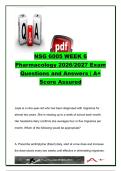
NSG 6005 WEEK 6
Pharmacology 2026/2027 Exam
Questions and Answers | A+
Score Assured


Jayla is a nine-year-old who has been diagnosed with migraines for

almost two years. She is missing up to a week of school each month.

Her headache diary confirms she averages four or five migraines per

month. Which of the following would be appropriate?


A. Prescribe amitriptyline (Elavil) daily, start at a low dose and increase

the dose slowly every two weeks until effective in eliminating migraines.

, B. Encourage her mother to give her Excedrin Migraine (aspirin,

acetaminophen, and caffeine) at the first sign of a headache to abort the

headache.

C. Prescribe propranolol (Inderal) to be taken daily for at least three

months.

D. Explain that it is rare for a nine-year-old to get migraines and that she

needs an MRI to rule out a brain tumor. - ANSWER ✔✔C. Prescribe

propranolol (Inderal) to be taken daily for at least three months.

When prescribed an opioid analgesic such as acetaminophen and

codeine (Tylenol #3), which of the following instructions should the

patient follow?


A. The medication may cause sedation, so the patient should not drive.

B. Constipation is a common side effect, so the patient should increase

fluids and fiber.

C. The patient should not take any other acetaminophen-containing

medications at the same time.


D. All the given options are correct. - ANSWER ✔✔D. All the given

options are correct

Document information

Uploaded on
August 22, 2026
Number of pages
11
Written in
2026/2027
Type
Exam (elaborations)
Contains
Questions & answers
$18.99

Wrong document? Swap it for free Within 14 days of purchase and before downloading, you can choose a different document. You can simply spend the amount again.
Written by students who passed
Immediately available after payment
Read online or as PDF

Seller avatar
Reputation scores are based on the amount of documents a seller has sold for a fee and the reviews they have received for those documents. There are three levels: Bronze, Silver and Gold. The better the reputation, the more your can rely on the quality of the sellers work.
JOSHCLAY
3.5
(83)
Sold
390
Followers
16
Items
20497
Last sold
1 day ago


Why students choose Stuvia

Created by fellow students, verified by reviews

Quality you can trust: written by students who passed their tests and reviewed by others who've used these notes.

Didn't get what you expected? Choose another document

No worries! You can instantly pick a different document that better fits what you're looking for.

Pay as you like, start learning right away

No subscription, no commitments. Pay the way you're used to via credit card and download your PDF document instantly.

Student with book image

“Bought, downloaded, and aced it. It really can be that simple.”

Alisha Student

Working on your references?

Create accurate citations in APA, MLA and Harvard with our free citation generator.

Working on your references?

Frequently asked questions

