

Written by students who passed Immediately available after payment Read online or as PDF Wrong document? Swap it for free 4.6 TrustPilot
logo-home
Document preview thumbnail
Preview 2 out of 14 pages
Exam (elaborations)

NUR 180 Final Exam 2026/2027 | 101 Questions & Correct Answers | Mental Health, Psychiatric Nursing, Psych Meds & Patient Safety

Document preview thumbnail
Preview 2 out of 14 pages

This NUR 180 Final Exam Review 2026/2027 contains 101 exam questions with correct answers across 14 pages, providing a focused and comprehensive review of mental health and psychiatric nursing. The material covers schizophrenia, depressive disorders, anxiety and panic disorders, obsessive-compulsive disorder (OCD), personality disorders, substance use and withdrawal, eating disorders, suicide assessment, psychiatric medications, therapeutic communication, patient safety, legal and ethical nursing responsibilities, cultural and spiritual care, grief, end-of-life care, and abuse recognition. The document identifies NUR 180 as the course code but does not name a university, so no unsupported institution has been added. A major portion of the review focuses on schizophrenia and psychotic disorders, including hallucinations, delusions, loose associations, catatonia, positive and negative symptoms, and therapeutic responses to altered thought content. Students are tested on how nurses should respond to clients experiencing delusions without reinforcing the false belief, while simultaneously acknowledging the patient's emotions and maintaining safety. The material distinguishes positive symptoms such as hallucinations, delusions and disorganized speech from negative symptoms including avolition, anhedonia and affective blunting. The document provides extensive preparation in psychopharmacology and medication safety. Questions address lithium therapeutic levels and toxicity, baseline renal and thyroid assessments, nephrogenic diabetes insipidus, valproic acid monitoring, SSRIs such as fluoxetine and sertraline, MAOIs such as phenelzine, benzodiazepines, buspirone, clozapine, olanzapine and first-generation antipsychotics. High-priority adverse effects and emergencies include Neuroleptic Malignant Syndrome (NMS), extrapyramidal symptoms, acute dystonia, akathisia, tardive dyskinesia, metabolic effects, hypertensive crisis and lithium toxicity. Another important section addresses depression, suicide prevention, anxiety and panic disorders. Students review major depressive disorder, persistent depressive disorder, anhedonia, vegetative symptoms and therapeutic communication with depressed clients. Suicide-related questions emphasize direct assessment of suicidal plans and means, recognition of high-risk situations and immediate safety assessment. Panic disorder material addresses recurrent unexpected panic attacks, severe anxiety, hyperventilation, remaining with the patient, reassurance and appropriate breathing strategies. The resource also examines personality disorders and behavioral management, including borderline, antisocial, narcissistic, histrionic and schizoid personality disorders as well as Cluster B and Cluster C characteristics. Nursing interventions emphasize consistent boundaries, neutral communication, safety precautions and appropriate limit-setting. OCD questions cover compulsive behaviors, anxiety associated with rituals and nursing strategies that initially accommodate rituals while working toward improved functioning. A substantial portion is devoted to substance use disorders, intoxication and withdrawal. The review includes alcohol withdrawal seizures, delirium tremens, Wernicke-Korsakoff prevention with thiamine, benzodiazepines used during acute alcohol withdrawal, opioid overdose, naloxone, opioid withdrawal manifestations, the Clinical Opiate Withdrawal Scale (COWS) and naltrexone for reducing alcohol cravings. These questions emphasize recognition of potentially life-threatening complications and priority nursing interventions. Students also review eating disorders, particularly anorexia nervosa and bulimia nervosa. Covered concepts include refeeding syndrome, very low BMI, nutritional rehabilitation, discharge readiness, Russell's sign, dental erosion, parotid enlargement and fluoxetine use in bulimia. The questions integrate physical assessment findings with medication knowledge and nursing priorities. The final exam material extends beyond psychiatric diagnoses to legal, ethical, cultural and spiritual nursing care. Topics include patient autonomy, refusal of medication and blood transfusions, involuntary admission, legally appropriate documentation, mandatory reporting of suspected elder abuse, domestic violence screening, the FICA spiritual assessment framework, religious practices, cultural assessment and therapeutic milieu management. Grief and end-of-life questions additionally address the Kübler-Ross stages, hospice concepts, chaplain referrals and physical signs associated with imminent death. The content is consistent with major subject areas taught in undergraduate psychiatric-mental health nursing, particularly therapeutic communication, psychiatric disorders, psychopharmacology, crisis intervention, safety and culturally responsive care. A suitable academic reference for these areas is Varcarolis' Foundations of Psychiatric-Mental Health Nursing: A Clinical Approach, a standard psychiatric nursing text covering evidence-based nursing interventions, mental health disorders, psychopharmacology and therapeutic nurse-patient relationships. Relevant students: This document is particularly relevant for NUR 180 students, Mental Health Nursing students, Psychiatric Nursing students, ADN students, BSN students, RN nursing students, practical nursing students, nursing students preparing for psychiatric clinical examinations, and students reviewing mental health concepts for comprehensive nursing finals or NCLEX-style assessments. Academic Reference Halter, M. J. Varcarolis' Foundations of Psychiatric-Mental Health Nursing: A Clinical Approach. Elsevier. Keywords NUR 180 final exam, NUR 180 questions and answers, NUR 180 exam 2026, NUR 180 exam 2027, NUR 180 study guide, mental health nursing final exam, psychiatric nursing final exam, psychiatric nursing questions and answers, mental health exam questions, psych nursing study guide, schizophrenia nursing, positive and negative symptoms, therapeutic communication, major depressive disorder, suicide assessment, suicide prevention nursing, anxiety disorders, panic disorder, OCD nursing, personality disorders, borderline personality disorder, antisocial personality disorder, psychiatric medications, psychopharmacology nursing, lithium therapeutic level, lithium toxicity, antipsychotic medications, Neuroleptic Malignant Syndrome, extrapyramidal symptoms, tardive dyskinesia, clozapine ANC, olanzapine side effects, SSRI side effects, MAOI hypertensive crisis, alcohol withdrawal, delirium tremens, opioid overdose, naloxone, COWS assessment, anorexia nervosa, bulimia nervosa, refeeding syndrome, ECT nursing, patient autonomy, psychiatric patient safety, therapeutic milieu, elder abuse nursing, domestic violence screening, spiritual assessment, FICA assessment, grief and loss nursing, NCLEX mental health review, psychiatric nursing exam preparation

Content preview

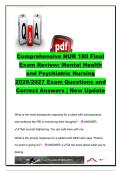
Comprehensive NUR 180 Final
Exam Review: Mental Health
and Psychiatric Nursing
2026/2027 Exam Questions and
Correct Answers | New Update


What is the most therapeutic response for a client with schizophrenia

who believes the FBI is monitoring their thoughts? - ANSWER

✔✔That sounds frightening. You are safe here with me.


What is the priority response for a patient with MDD who says 'There's

no point in going on'? - ANSWER ✔✔Tell me more about what you're

feeling.

, What symptom is indicated by a patient sitting motionless in a bizarre

posture for hours? - ANSWER ✔✔Catatonia


What is the priority intervention for a patient experiencing a severe panic

attack? - ANSWER ✔✔Stay with patient, provide reassurance.


Which cluster of personality disorders is characterized by dramatic,

emotional, erratic behavior? - ANSWER ✔✔Cluster B


When do alcohol withdrawal seizures typically occur? - ANSWER

✔✔24-48 hours


What is the priority action for a client who says 'I've been thinking about

killing myself'? - ANSWER ✔✔Ask directly: 'Do you have a plan and

means?'

What are the expected findings for a lithium level of 1.8 mEq/L? -

ANSWER ✔✔Ataxia, coarse tremor, confusion


In which direction should a Muslim patient face to pray in the US? -

ANSWER ✔✔Northeast


What is the priority to maintain a safe milieu for an agitated patient with a

history of violence? - ANSWER ✔✔You seem upset, can you tell me

what's going on?

Document information

Uploaded on
August 22, 2026
Number of pages
14
Written in
2026/2027
Type
Exam (elaborations)
Contains
Questions & answers
$18.99

Wrong document? Swap it for free Within 14 days of purchase and before downloading, you can choose a different document. You can simply spend the amount again.
Written by students who passed
Immediately available after payment
Read online or as PDF

Seller avatar
Reputation scores are based on the amount of documents a seller has sold for a fee and the reviews they have received for those documents. There are three levels: Bronze, Silver and Gold. The better the reputation, the more your can rely on the quality of the sellers work.
JOSHCLAY
3.5
(83)
Sold
387
Followers
16
Items
20447
Last sold
2 days ago


Why students choose Stuvia

Created by fellow students, verified by reviews

Quality you can trust: written by students who passed their tests and reviewed by others who've used these notes.

Didn't get what you expected? Choose another document

No worries! You can instantly pick a different document that better fits what you're looking for.

Pay as you like, start learning right away

No subscription, no commitments. Pay the way you're used to via credit card and download your PDF document instantly.

Student with book image

“Bought, downloaded, and aced it. It really can be that simple.”

Alisha Student

Working on your references?

Create accurate citations in APA, MLA and Harvard with our free citation generator.

Working on your references?

Frequently asked questions

