
======================================================================
AQA GCSE ENGLISH LITERATURE: AN INSPECTOR CALLS GRADE 9 PACK
======================================================================
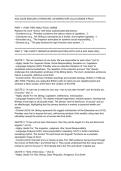
PART 1: HIGH-TIER ANALYTICAL VERBS
Replace the word "shows" with these sophisticated alternatives:
• Condemns (e.g., "Priestley condemns the callous nature of capitalism...")
• Caricatures (e.g., "Mr. Birling is caricatured as a foolish, short-sighted capitalist...")
• Advocates (e.g., "The Inspector advocates for systemic social responsibility...")
• Dissects (e.g., "The play dissects the rigid Victorian class system...")
======================================================================
PART 2: THE 5 MOST VERSATILE MICRO-QUOTES (WITH AO2 & AO3 ANALYSIS)
======================================================================
QUOTE 1: "We are members of one body. We are responsible for each other." (Act 3)
• Highly Useful For: Inspector Goole, Social Responsibility, Socialism vs. Capitalism.
• Language Analysis (AO2): Priestley uses an extended metaphor of "one body" to
emphasize interconnectedness. The repetition of the collective pronoun "We" directly
challenges the individualistic worldview of the Birling family. The short, declarative sentences
deliver a powerful, definitive moral truth.
• Context (AO3): This echoes Christian teachings and socialist ideology. Written in 1945 just
after WWII, Priestley was urging the British public to reject pre-war capitalist greed and
embrace a fairer society, which led to the creation of the NHS.
QUOTE 2: "A man has to make his own way—has to look after himself—and his family too,
of course." (Act 1)
• Highly Useful For: Mr. Birling, Capitalism, Selfishness, Individualism.
• Language Analysis (AO2): The dashes indicate fragmented, hesitant speech, showing that
Birling's moral logic is structurally weak. The phrase "and his family too, of course" acts as
an afterthought, highlighting that his primary devotion is entirely to personal wealth and
status.
• Context (AO3): Mr. Birling represents the rugged individualism of the Edwardian era (1912).
Priestley uses him to expose the toxic, self-serving mindset of the wealthy ruling class that
ultimately caused the social ruin of women like Eva Smith.
QUOTE 3: "If men will not learn that lesson, then they will be taught it in fire and blood and
anguish." (Act 3)
• Highly Useful For: The Inspector, Judgment, War, Social Responsibility.
• Language Analysis (AO2): Uses polysyndeton (repeating "and") to build a relentless,
escalating rhythm. The tricolon "fire and blood and anguish" functions as a prophetic,
apocalyptic image of doom.
• Context (AO3): Dramatic irony is heavily at play. The 1945 audience had just lived through
the horrors of World War I and World War II. They would understand that the ruling class’s
refusal to care for the poor in 1912 literally led to the "fire and blood" of global war.
QUOTE 4: "Girls of that class—" (Act 2)
• Highly Useful For: Mrs. Birling, Class Prejudice, Arrogance, Eva Smith.
AQA GCSE ENGLISH LITERATURE: AN INSPECTOR CALLS GRADE 9 PACK
======================================================================
PART 1: HIGH-TIER ANALYTICAL VERBS
Replace the word "shows" with these sophisticated alternatives:
• Condemns (e.g., "Priestley condemns the callous nature of capitalism...")
• Caricatures (e.g., "Mr. Birling is caricatured as a foolish, short-sighted capitalist...")
• Advocates (e.g., "The Inspector advocates for systemic social responsibility...")
• Dissects (e.g., "The play dissects the rigid Victorian class system...")
======================================================================
PART 2: THE 5 MOST VERSATILE MICRO-QUOTES (WITH AO2 & AO3 ANALYSIS)
======================================================================
QUOTE 1: "We are members of one body. We are responsible for each other." (Act 3)
• Highly Useful For: Inspector Goole, Social Responsibility, Socialism vs. Capitalism.
• Language Analysis (AO2): Priestley uses an extended metaphor of "one body" to
emphasize interconnectedness. The repetition of the collective pronoun "We" directly
challenges the individualistic worldview of the Birling family. The short, declarative sentences
deliver a powerful, definitive moral truth.
• Context (AO3): This echoes Christian teachings and socialist ideology. Written in 1945 just
after WWII, Priestley was urging the British public to reject pre-war capitalist greed and
embrace a fairer society, which led to the creation of the NHS.
QUOTE 2: "A man has to make his own way—has to look after himself—and his family too,
of course." (Act 1)
• Highly Useful For: Mr. Birling, Capitalism, Selfishness, Individualism.
• Language Analysis (AO2): The dashes indicate fragmented, hesitant speech, showing that
Birling's moral logic is structurally weak. The phrase "and his family too, of course" acts as
an afterthought, highlighting that his primary devotion is entirely to personal wealth and
status.
• Context (AO3): Mr. Birling represents the rugged individualism of the Edwardian era (1912).
Priestley uses him to expose the toxic, self-serving mindset of the wealthy ruling class that
ultimately caused the social ruin of women like Eva Smith.
QUOTE 3: "If men will not learn that lesson, then they will be taught it in fire and blood and
anguish." (Act 3)
• Highly Useful For: The Inspector, Judgment, War, Social Responsibility.
• Language Analysis (AO2): Uses polysyndeton (repeating "and") to build a relentless,
escalating rhythm. The tricolon "fire and blood and anguish" functions as a prophetic,
apocalyptic image of doom.
• Context (AO3): Dramatic irony is heavily at play. The 1945 audience had just lived through
the horrors of World War I and World War II. They would understand that the ruling class’s
refusal to care for the poor in 1912 literally led to the "fire and blood" of global war.
QUOTE 4: "Girls of that class—" (Act 2)
• Highly Useful For: Mrs. Birling, Class Prejudice, Arrogance, Eva Smith.


