

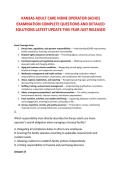
KANSAS ADULT CARE HOME OPERATOR (ACHO)
EXAMINATION COMPLETE QUESTIONS AND DETAILED
SOLUTIONS LATEST UPDATE THIS YEAR JUST RELEASED
Exam Coverage Areas
1. Kansas laws, regulations, and operator responsibilities — Understanding KDADS requirements,
facility compliance, licensing, and operator accountability.
2. Resident rights and person-centered care — Promoting dignity, autonomy, privacy, choice,
independence, and informed participation.
3. Functional capacity and negotiated service agreements — Matching services to residents'
assessed needs and changing abilities.
4. Aging and common chronic conditions — Recognizing normal aging, common diseases,
functional changes, and supportive-care needs.
5. Medication management and health services — Understanding medication-related
responsibilities, documentation, observation, and coordination with licensed professionals.
6. Abuse, neglect, exploitation, and reporting — Recognizing warning signs, protecting residents,
documenting concerns, and following reporting requirements.
7. Staffing, training, and personnel management — Understanding qualifications, orientation,
competency, supervision, background checks, and ongoing education.
8. Safety, emergency preparedness, and infection prevention — Fire safety, emergencies,
environmental hazards, infection control, and disaster preparedness.
9. Food, nutrition, activities, and resident well-being — Supporting adequate nutrition, hydration,
social engagement, meaningful activities, and quality of life.
10. Survey, inspection, records, and quality assurance — Preparing for surveys, maintaining
required records, correcting deficiencies, and sustaining compliance.
1.
Which responsibility most directly describes the Kansas adult care home
operator's overall obligation when managing a licensed facility?
A. Delegating all compliance duties to direct-care employees
B. Ensuring the facility operates according to applicable requirements and
resident needs
C. Allowing residents to establish facility policies independently
D. Limiting responsibility to financial and purchasing decisions
Answer: B
,Rationale: The operator has authority and responsibility for facility operations
and compliance with applicable licensing requirements. Kansas regulations
specifically describe operator responsibility for ensuring residents receive care
and services consistent with their functional capacity and negotiated service
agreements. ()
2.
Which approach best reflects the person-centered model emphasized in Kansas
adult care home operator training?
A. Providing identical services to every resident
B. Prioritizing facility routines over individual preferences
C. Supporting resident choice, autonomy, independence, and dignity
D. Restricting resident decisions to reduce staff workload
Answer: C
Rationale: Kansas operator training specifically emphasizes resident choice,
autonomy, independence, and a home-like environment as components of
person-centered housing with services. (
3.
When developing services for an adult care home resident, which information
should primarily guide the services provided?
A. The preferences of the previous resident
B. The facility's staffing convenience
C. The resident's assessed functional capacity and negotiated agreement
D. The resident's room location
Answer: C
,Rationale: Services should be based on the resident's functional abilities and the
negotiated service agreement rather than convenience or generalized
assumptions.
4.
Which situation would most clearly demonstrate respect for resident autonomy in
an adult care home?
A. Choosing clothing for residents without asking them
B. Allowing a capable resident to select preferred daily activities
C. Requiring every resident to follow identical schedules
D. Making all personal decisions on behalf of residents
Answer: B
Rationale: Autonomy means supporting residents in making appropriate choices
about their own lives and services.
5.
Why is understanding the normal aging process particularly important for an adult
care home operator?
A. It eliminates the need for medical professionals
B. It helps distinguish expected changes from potential health concerns
C. It allows operators to diagnose diseases independently
D. It prevents residents from receiving individualized services
Answer: B
Rationale: Operators and staff should understand normal aging so they can
recognize changes that may indicate illness, injury, or declining function and
appropriately communicate concerns.
, 6.
Which combination represents common reasons older adults may seek supportive
housing according to Kansas operator training materials?
A. Medication, memory, mobility, nutrition, and assistance with daily activities
B. Employment advancement, college admission, and transportation
C. Business development, taxation, and investment planning
D. Sports performance, recreation, and competitive training
Answer: A
Rationale: KDADS operator training identifies medication, memory, mobility,
psychosocial support, nutrition, ADLs, and IADLs among reasons people may seek
supportive housing. (kdads.ks.gov)
7.
What is the primary purpose of a resident's negotiated service agreement?
A. To establish the facility's advertising strategy
B. To identify agreed-upon services and support based on resident needs
C. To replace all medical documentation
D. To determine employee wages
Answer: B
Rationale: A negotiated service agreement establishes the services and support
the resident and facility agree are appropriate, helping ensure individualized care.
8.
EXAMINATION COMPLETE QUESTIONS AND DETAILED
SOLUTIONS LATEST UPDATE THIS YEAR JUST RELEASED
Exam Coverage Areas
1. Kansas laws, regulations, and operator responsibilities — Understanding KDADS requirements,
facility compliance, licensing, and operator accountability.
2. Resident rights and person-centered care — Promoting dignity, autonomy, privacy, choice,
independence, and informed participation.
3. Functional capacity and negotiated service agreements — Matching services to residents'
assessed needs and changing abilities.
4. Aging and common chronic conditions — Recognizing normal aging, common diseases,
functional changes, and supportive-care needs.
5. Medication management and health services — Understanding medication-related
responsibilities, documentation, observation, and coordination with licensed professionals.
6. Abuse, neglect, exploitation, and reporting — Recognizing warning signs, protecting residents,
documenting concerns, and following reporting requirements.
7. Staffing, training, and personnel management — Understanding qualifications, orientation,
competency, supervision, background checks, and ongoing education.
8. Safety, emergency preparedness, and infection prevention — Fire safety, emergencies,
environmental hazards, infection control, and disaster preparedness.
9. Food, nutrition, activities, and resident well-being — Supporting adequate nutrition, hydration,
social engagement, meaningful activities, and quality of life.
10. Survey, inspection, records, and quality assurance — Preparing for surveys, maintaining
required records, correcting deficiencies, and sustaining compliance.
1.
Which responsibility most directly describes the Kansas adult care home
operator's overall obligation when managing a licensed facility?
A. Delegating all compliance duties to direct-care employees
B. Ensuring the facility operates according to applicable requirements and
resident needs
C. Allowing residents to establish facility policies independently
D. Limiting responsibility to financial and purchasing decisions
Answer: B
,Rationale: The operator has authority and responsibility for facility operations
and compliance with applicable licensing requirements. Kansas regulations
specifically describe operator responsibility for ensuring residents receive care
and services consistent with their functional capacity and negotiated service
agreements. ()
2.
Which approach best reflects the person-centered model emphasized in Kansas
adult care home operator training?
A. Providing identical services to every resident
B. Prioritizing facility routines over individual preferences
C. Supporting resident choice, autonomy, independence, and dignity
D. Restricting resident decisions to reduce staff workload
Answer: C
Rationale: Kansas operator training specifically emphasizes resident choice,
autonomy, independence, and a home-like environment as components of
person-centered housing with services. (
3.
When developing services for an adult care home resident, which information
should primarily guide the services provided?
A. The preferences of the previous resident
B. The facility's staffing convenience
C. The resident's assessed functional capacity and negotiated agreement
D. The resident's room location
Answer: C
,Rationale: Services should be based on the resident's functional abilities and the
negotiated service agreement rather than convenience or generalized
assumptions.
4.
Which situation would most clearly demonstrate respect for resident autonomy in
an adult care home?
A. Choosing clothing for residents without asking them
B. Allowing a capable resident to select preferred daily activities
C. Requiring every resident to follow identical schedules
D. Making all personal decisions on behalf of residents
Answer: B
Rationale: Autonomy means supporting residents in making appropriate choices
about their own lives and services.
5.
Why is understanding the normal aging process particularly important for an adult
care home operator?
A. It eliminates the need for medical professionals
B. It helps distinguish expected changes from potential health concerns
C. It allows operators to diagnose diseases independently
D. It prevents residents from receiving individualized services
Answer: B
Rationale: Operators and staff should understand normal aging so they can
recognize changes that may indicate illness, injury, or declining function and
appropriately communicate concerns.
, 6.
Which combination represents common reasons older adults may seek supportive
housing according to Kansas operator training materials?
A. Medication, memory, mobility, nutrition, and assistance with daily activities
B. Employment advancement, college admission, and transportation
C. Business development, taxation, and investment planning
D. Sports performance, recreation, and competitive training
Answer: A
Rationale: KDADS operator training identifies medication, memory, mobility,
psychosocial support, nutrition, ADLs, and IADLs among reasons people may seek
supportive housing. (kdads.ks.gov)
7.
What is the primary purpose of a resident's negotiated service agreement?
A. To establish the facility's advertising strategy
B. To identify agreed-upon services and support based on resident needs
C. To replace all medical documentation
D. To determine employee wages
Answer: B
Rationale: A negotiated service agreement establishes the services and support
the resident and facility agree are appropriate, helping ensure individualized care.
8.


