

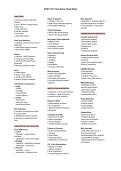
POSC 123: Final Exam Cheat Sheet
SANCTIONS
Robert H. Mnookin Main Argument
● economic, political, diplomatic
● “shadow of the court” ● negotiation + mediation effective
pressure
● legal rulings influence bargaining ● success depends on conditions
● goal = behavior change without
● encourages settlements ● communication + compromise
military force
essential
● trade restrictions
Conflict Examples
● financial penalties
● Benin–Niger border dispute
● travel bans HUMANITARIAN INTERVENTION
● South China Sea Arbitration
● diplomatic isolation
Complex Emergencies
Why States Prefer Arbitration ● government collapse
Gary Clyde Hufbauer
● greater control ● humanitarian disaster
● sanctions work best when costs on
● more flexibility ● human rights abuses
target high
● sovereignty concerns ● displacement
● international support important
● less intrusive process ● violence
● enforcement matters
● institutional breakdown
Why Compliance High
Bosnia
● legitimacy Boutros Boutros-Ghali
● sanctions + NATO pressure
● reputation ● challenges facing peace
● increased costs of conflict
● credibility operations
● contributed to Dayton Peace
● stability ● need for international support
Agreement
● predictability ● limits of intervention
● example of relative success
● voluntary participation
UNAMIR (Rwanda)
Syria
Main Argument ● 1994 genocide
● Assad regime
● states resist adjudication ● limited mandate
● Russia + Iran support
● prefer arbitration ● insufficient resources
● sanctions less effective
● still comply with awards ● failed to stop mass violence
● behavior largely unchanged
● long-term interests outweigh
resistance MINUSTAH (Haiti)
Unintended Consequences
● stabilization mission
● target:
● security improvement
○ inflation NEGOTIATION & MEDIATION
● governance support
○ shortages
● negotiation = direct communication ● institution building
○ unemployment
● mediation = neutral third party ● peacebuilding efforts
○ civilian suffering
● peaceful conflict resolution
● sender:
Peace Operations
○ trade losses
Barbara F. Walter ● protect civilians
○ diplomatic costs
● implementation problems ● reduce violence
○ enforcement burden
● fear of cheating ● create stability
● agreements require long-term ● support recovery
Main Argument
commitment
● sanctions sometimes successful
Peacebuilding
● not guaranteed
Colombian Civil War ● governance reform
● effectiveness varies by context
● government vs FARC ● institution building
● best when combined with other
● peace negotiations ● economic development
tools
● reduced violence ● long-term stability
● conflict resolution example ● address root causes
ARBITRATION & ADJUDICATION
Factors for Success Main Argument
Three Differences
● mutual hurting stalemate ● intervention often occurs in
● control
● ripeness complex emergencies
○ arbitration = parties choose
● trust-building ● peacekeeping alone insufficient
arbitrators
● third-party support ● peacebuilding necessary
○ adjudication = permanent judges
● willingness to compromise ● lasting peace requires long-term
● flexibility
commitment
○ arbitration = adaptable procedures
U.S.–Cuba Normalization
○ adjudication = fixed rules
● decades of hostility
● structure
● Vatican mediation
○ arbitration = ad hoc
● direct negotiations
○ adjudication = standing courts
● restored diplomatic relations
SANCTIONS
Robert H. Mnookin Main Argument
● economic, political, diplomatic
● “shadow of the court” ● negotiation + mediation effective
pressure
● legal rulings influence bargaining ● success depends on conditions
● goal = behavior change without
● encourages settlements ● communication + compromise
military force
essential
● trade restrictions
Conflict Examples
● financial penalties
● Benin–Niger border dispute
● travel bans HUMANITARIAN INTERVENTION
● South China Sea Arbitration
● diplomatic isolation
Complex Emergencies
Why States Prefer Arbitration ● government collapse
Gary Clyde Hufbauer
● greater control ● humanitarian disaster
● sanctions work best when costs on
● more flexibility ● human rights abuses
target high
● sovereignty concerns ● displacement
● international support important
● less intrusive process ● violence
● enforcement matters
● institutional breakdown
Why Compliance High
Bosnia
● legitimacy Boutros Boutros-Ghali
● sanctions + NATO pressure
● reputation ● challenges facing peace
● increased costs of conflict
● credibility operations
● contributed to Dayton Peace
● stability ● need for international support
Agreement
● predictability ● limits of intervention
● example of relative success
● voluntary participation
UNAMIR (Rwanda)
Syria
Main Argument ● 1994 genocide
● Assad regime
● states resist adjudication ● limited mandate
● Russia + Iran support
● prefer arbitration ● insufficient resources
● sanctions less effective
● still comply with awards ● failed to stop mass violence
● behavior largely unchanged
● long-term interests outweigh
resistance MINUSTAH (Haiti)
Unintended Consequences
● stabilization mission
● target:
● security improvement
○ inflation NEGOTIATION & MEDIATION
● governance support
○ shortages
● negotiation = direct communication ● institution building
○ unemployment
● mediation = neutral third party ● peacebuilding efforts
○ civilian suffering
● peaceful conflict resolution
● sender:
Peace Operations
○ trade losses
Barbara F. Walter ● protect civilians
○ diplomatic costs
● implementation problems ● reduce violence
○ enforcement burden
● fear of cheating ● create stability
● agreements require long-term ● support recovery
Main Argument
commitment
● sanctions sometimes successful
Peacebuilding
● not guaranteed
Colombian Civil War ● governance reform
● effectiveness varies by context
● government vs FARC ● institution building
● best when combined with other
● peace negotiations ● economic development
tools
● reduced violence ● long-term stability
● conflict resolution example ● address root causes
ARBITRATION & ADJUDICATION
Factors for Success Main Argument
Three Differences
● mutual hurting stalemate ● intervention often occurs in
● control
● ripeness complex emergencies
○ arbitration = parties choose
● trust-building ● peacekeeping alone insufficient
arbitrators
● third-party support ● peacebuilding necessary
○ adjudication = permanent judges
● willingness to compromise ● lasting peace requires long-term
● flexibility
commitment
○ arbitration = adaptable procedures
U.S.–Cuba Normalization
○ adjudication = fixed rules
● decades of hostility
● structure
● Vatican mediation
○ arbitration = ad hoc
● direct negotiations
○ adjudication = standing courts
● restored diplomatic relations


