
EKG rhythms q
EKG rhythms
Study online at https://quizlet.com/_1682on
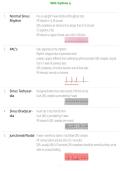
1. Normal Sinus Has an upright P wave identical throughout strip
Rhythm PR interval is <0.20 second
QRS complexes are identical & no longer than 0.12 second
ST segment is flat
RR interval is regular & heart rate is 60 to 100/min
2. PAC's Rate: depends on the rhythem
Rhythm: irregular due to premature beat
p waves: appear different from underlying rythem precedes QRS complex, may be
lost in T wave of previous beat.
QRS complexes: of normal duration and all look alike
PR intervals: normal or shortned
3. Sinus Tachycar- Recognized when heart rate exceeds 100/min at rest
dia Each QRS complex is preceded by P wave
4. Sinus Bradycar- Heart rate is less than 60/min
dia Each QRS is preceded by P wave
PR interval & QRS complex are normal
5. Junctional/Nodal P wave: inverted or absent. may follow QRS complex.
PR: interval (short and less than 0.12 seconds)
QRS: usually 0.06-0.10 seconds QRS complexes should be normal but they can be
wide or unusual looking
1/5
, EKG rhythms q
EKG rhythms
Study online at https://quizlet.com/_1682on
6. Accelerated Junc- Rate: 40-60 BPM
tional rhythm: regular
P waves: inverted; may appear before QRS complex
QRS complexes: of normal duration and all look alike
PR intervals: if present will be shorter than normal
7. Atrial Fib Results when atrial muscle quivers in irregular pattern; no true P waves are seen
Ventricular rate may be slow & irregular
8. Atrial Flutter Represents rapid depolarization of atria from ectopic focus (atrial rate 250 to
350/min)
Causes characteristic sawtooth pattern; numerous P waves are present for each
QRS
9. First Degree PR interval exceeds 0.20 second
Block Each QRS complex is preceded by P wave
Cardiac impulse from SA node is delayed in passing through AV node or bundle
of His
Typically, RR intervals are regular
10. Second Degree recognized when PR interval gets progressively longer until one does not pass on
Block Type I to ventricles
(Wenckebach or
Mobitz type I)
2/5
EKG rhythms
Study online at https://quizlet.com/_1682on
1. Normal Sinus Has an upright P wave identical throughout strip
Rhythm PR interval is <0.20 second
QRS complexes are identical & no longer than 0.12 second
ST segment is flat
RR interval is regular & heart rate is 60 to 100/min
2. PAC's Rate: depends on the rhythem
Rhythm: irregular due to premature beat
p waves: appear different from underlying rythem precedes QRS complex, may be
lost in T wave of previous beat.
QRS complexes: of normal duration and all look alike
PR intervals: normal or shortned
3. Sinus Tachycar- Recognized when heart rate exceeds 100/min at rest
dia Each QRS complex is preceded by P wave
4. Sinus Bradycar- Heart rate is less than 60/min
dia Each QRS is preceded by P wave
PR interval & QRS complex are normal
5. Junctional/Nodal P wave: inverted or absent. may follow QRS complex.
PR: interval (short and less than 0.12 seconds)
QRS: usually 0.06-0.10 seconds QRS complexes should be normal but they can be
wide or unusual looking
1/5
, EKG rhythms q
EKG rhythms
Study online at https://quizlet.com/_1682on
6. Accelerated Junc- Rate: 40-60 BPM
tional rhythm: regular
P waves: inverted; may appear before QRS complex
QRS complexes: of normal duration and all look alike
PR intervals: if present will be shorter than normal
7. Atrial Fib Results when atrial muscle quivers in irregular pattern; no true P waves are seen
Ventricular rate may be slow & irregular
8. Atrial Flutter Represents rapid depolarization of atria from ectopic focus (atrial rate 250 to
350/min)
Causes characteristic sawtooth pattern; numerous P waves are present for each
QRS
9. First Degree PR interval exceeds 0.20 second
Block Each QRS complex is preceded by P wave
Cardiac impulse from SA node is delayed in passing through AV node or bundle
of His
Typically, RR intervals are regular
10. Second Degree recognized when PR interval gets progressively longer until one does not pass on
Block Type I to ventricles
(Wenckebach or
Mobitz type I)
2/5


