
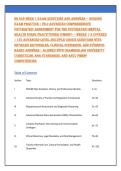
NR 548 Week 1 exam QuestioNs aNd aNsWeRs — NuRsiNg
exam PRactice | V2.0 adVaNced comPReheNsiVe
PsychiatRic assessmeNt foR the PsychiatRic-meNtal
health NuRse PRactitioNeR (PmhNP) — Weeks 1-2 coVeRed
| 150 adVaNced-leVel multiPle-choice QuestioNs With
detailed RatioNales, cliNical sceNaRios, aNd eVideNce-
Based aNsWeRs | aligNed With chamBeRlaiN uNiVeRsity
cuRRiculum, aNa staNdaRds, aNd aNcc PmhNP
comPeteNcies
Table of Contents
Section Topic Questions
I PMHNP Role Evolution, History, and Professional Identity 1–15
II Advanced Scope of Practice and Regulatory Frameworks 16–30
III Biopsychosocial Assessment and Diagnostic Reasoning 31–45
IV Advanced Mental Status Examination (MSE) Interpretation 46–60
Complex Psychiatric Interviewing and Communication
V 61–75
Strategies
VI Ethical Dilemmas, Legal Mandates, and Risk Management 76–90
Trauma-Informed Care, Cultural Formulation, and Health
VII 91–105
Disparities
,Section Topic Questions
VIII Developmental Psychopathology and Lifespan Considerations 106–120
IX Differential Diagnosis, Comorbidity, and Diagnostic Uncertainty 121–135
Advanced Practice Competencies, Leadership, and Integrated
X 136–150
Care
SECTION I: PMHNP ROLE EVOLUTION, HISTORY, AND PROFESSIONAL
IDENTITY
1. Dr. Edward Cowles created the first organized training school
within a hospital for the insane in 1882 at which institution?
• A) Johns Hopkins Hospital
• B) McLean Hospital
• C) Bellevue Hospital
• D) Pennsylvania Hospital
Rationale: Dr. Edward Cowles established the first organized training school for psychiatric
nurses at McLean Hospital in 1882. This represented a pivotal shift from custodial care to
treatment-focused psychiatric nursing education.
2. Who developed the first nurse-organized training course for
psychiatric nursing at Johns Hopkins Hospital in 1913?
• A) Hildegarde Peplau
• B) Effie Jane Taylor (Effie Jones)
• C) Dorothea Dix
• D) Laura Fitzsimmons
,Rationale: Effie Jane Taylor, often referred to as Effie Jones, established the first nurse-
organized training course at Johns Hopkins Hospital in 1913. Previously, psychiatric nurses were
primarily trained by physicians rather than nursing educators.
3. Following World War I, what did the National League for Nursing
Education add to nursing curricula?
• A) Advanced practice nursing courses
• B) "Nursing in nervous and mental diseases"
• C) Community mental health content
• D) Psychopharmacology training
Rationale: After WWI, the National League for Nursing Education added "nursing in nervous
and mental diseases" to curriculum guides, formally integrating psychiatric nursing content into
nursing education.
4. Laura Fitzsimmons is historically recognized for recommending
which advancement in psychiatric nursing during World War II?
• A) The first graduate program in psychiatric nursing
• B) Standards of training for psychiatric nurses, leading to improved education and
standards of care
• C) The creation of the nurse practitioner role
• D) Deinstitutionalization of mental health care
Rationale: During WWII, Laura Fitzsimmons recommended standards of training for
psychiatric nurses, which led to improved education and standards of care. This professionalized
psychiatric nursing and ensured consistent training across programs.
5. Which university awarded the first graduate degree in
psychiatric-mental health nursing in the 1950s?
, • A) Johns Hopkins University
• B) University of Pennsylvania
• C) Rutgers University
• D) Columbia University
Rationale: In the 1950s, Rutgers University awarded the first graduate degree in psychiatric-
mental health nursing, establishing the educational foundation for what would become the
PMHNP role.
6. The shift toward deinstitutionalization in mental health care was
primarily driven by which combination of factors?
• A) Decreased need for psychiatric services and improved cure rates
• B) Medicare, Medicaid, the Community Mental Health Centers Act of 1963, and
new antipsychotic medications
• C) Increased funding for state psychiatric hospitals
• D) Mandatory community treatment laws
Rationale: The transition to community-based care was driven by multiple factors: Medicare
and Medicaid provided funding for community services, the Community Mental Health Centers
Act of 1963 established community centers, and new antipsychotic medications made
outpatient treatment feasible. There was also growing recognition that large institutions were
harmful to patients.
7. The PMHNP role was originally developed to address which
specific healthcare need?
• A) The need for more physicians in psychiatry
• B) The need for advanced practice nurses to provide psychiatric care in
underserved areas
• C) The need for hospital administrators
exam PRactice | V2.0 adVaNced comPReheNsiVe
PsychiatRic assessmeNt foR the PsychiatRic-meNtal
health NuRse PRactitioNeR (PmhNP) — Weeks 1-2 coVeRed
| 150 adVaNced-leVel multiPle-choice QuestioNs With
detailed RatioNales, cliNical sceNaRios, aNd eVideNce-
Based aNsWeRs | aligNed With chamBeRlaiN uNiVeRsity
cuRRiculum, aNa staNdaRds, aNd aNcc PmhNP
comPeteNcies
Table of Contents
Section Topic Questions
I PMHNP Role Evolution, History, and Professional Identity 1–15
II Advanced Scope of Practice and Regulatory Frameworks 16–30
III Biopsychosocial Assessment and Diagnostic Reasoning 31–45
IV Advanced Mental Status Examination (MSE) Interpretation 46–60
Complex Psychiatric Interviewing and Communication
V 61–75
Strategies
VI Ethical Dilemmas, Legal Mandates, and Risk Management 76–90
Trauma-Informed Care, Cultural Formulation, and Health
VII 91–105
Disparities
,Section Topic Questions
VIII Developmental Psychopathology and Lifespan Considerations 106–120
IX Differential Diagnosis, Comorbidity, and Diagnostic Uncertainty 121–135
Advanced Practice Competencies, Leadership, and Integrated
X 136–150
Care
SECTION I: PMHNP ROLE EVOLUTION, HISTORY, AND PROFESSIONAL
IDENTITY
1. Dr. Edward Cowles created the first organized training school
within a hospital for the insane in 1882 at which institution?
• A) Johns Hopkins Hospital
• B) McLean Hospital
• C) Bellevue Hospital
• D) Pennsylvania Hospital
Rationale: Dr. Edward Cowles established the first organized training school for psychiatric
nurses at McLean Hospital in 1882. This represented a pivotal shift from custodial care to
treatment-focused psychiatric nursing education.
2. Who developed the first nurse-organized training course for
psychiatric nursing at Johns Hopkins Hospital in 1913?
• A) Hildegarde Peplau
• B) Effie Jane Taylor (Effie Jones)
• C) Dorothea Dix
• D) Laura Fitzsimmons
,Rationale: Effie Jane Taylor, often referred to as Effie Jones, established the first nurse-
organized training course at Johns Hopkins Hospital in 1913. Previously, psychiatric nurses were
primarily trained by physicians rather than nursing educators.
3. Following World War I, what did the National League for Nursing
Education add to nursing curricula?
• A) Advanced practice nursing courses
• B) "Nursing in nervous and mental diseases"
• C) Community mental health content
• D) Psychopharmacology training
Rationale: After WWI, the National League for Nursing Education added "nursing in nervous
and mental diseases" to curriculum guides, formally integrating psychiatric nursing content into
nursing education.
4. Laura Fitzsimmons is historically recognized for recommending
which advancement in psychiatric nursing during World War II?
• A) The first graduate program in psychiatric nursing
• B) Standards of training for psychiatric nurses, leading to improved education and
standards of care
• C) The creation of the nurse practitioner role
• D) Deinstitutionalization of mental health care
Rationale: During WWII, Laura Fitzsimmons recommended standards of training for
psychiatric nurses, which led to improved education and standards of care. This professionalized
psychiatric nursing and ensured consistent training across programs.
5. Which university awarded the first graduate degree in
psychiatric-mental health nursing in the 1950s?
, • A) Johns Hopkins University
• B) University of Pennsylvania
• C) Rutgers University
• D) Columbia University
Rationale: In the 1950s, Rutgers University awarded the first graduate degree in psychiatric-
mental health nursing, establishing the educational foundation for what would become the
PMHNP role.
6. The shift toward deinstitutionalization in mental health care was
primarily driven by which combination of factors?
• A) Decreased need for psychiatric services and improved cure rates
• B) Medicare, Medicaid, the Community Mental Health Centers Act of 1963, and
new antipsychotic medications
• C) Increased funding for state psychiatric hospitals
• D) Mandatory community treatment laws
Rationale: The transition to community-based care was driven by multiple factors: Medicare
and Medicaid provided funding for community services, the Community Mental Health Centers
Act of 1963 established community centers, and new antipsychotic medications made
outpatient treatment feasible. There was also growing recognition that large institutions were
harmful to patients.
7. The PMHNP role was originally developed to address which
specific healthcare need?
• A) The need for more physicians in psychiatry
• B) The need for advanced practice nurses to provide psychiatric care in
underserved areas
• C) The need for hospital administrators


