
HESI PN MENTAL HEALTH NURSING ACCURATE
PRACTICE EXAM WITH ALL POSSIBLE APPROVED
WELL ELABORATED PRACTICE QUESTIONS AND
100% CORRECT VERIFIED ANSWERS WITH
DETAILED RATIONALES PLUS EXPERT ANSWER
KEY (100% CORRECT VERIFIED SOLUTIONS) 2026-
2027 CURRENTLY UPDATED VERSION Q&A
GUARANTEED PASS A+ INSTANT DOWNLOAD PDF
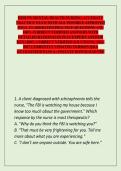
1. A client diagnosed with schizophrenia tells the
nurse, "The FBI is watching my house because I
know too much about the government." Which
response by the nurse is most therapeutic?
A. "Why do you think the FBI is watching you?"
B. "That must be very frightening for you. Tell me
more about what you are experiencing."
C. "I don't see anyone outside. You are safe here."
,D. "Let's focus on something else, like what you
want for lunch."
Correct Answer: B
Rationale: Option B uses therapeutic
communication by acknowledging the client's
feelings and encouraging them to elaborate without
validating the delusion. Option A asks "why," which
can be confrontational and put the client on the
defensive. Option C challenges the delusion directly,
which is not therapeutic. Option D dismisses the
client's concerns and avoids addressing their
emotional state.
2. A client with major depressive disorder is started
on phenelzine (Nardil), a monoamine oxidase
inhibitor (MAOI). Which dietary instruction is most
important for the nurse to provide?
A. "Avoid foods high in tyramine, such as aged
cheeses and cured meats."
B. "Increase your intake of green leafy vegetables to
prevent anemia."
,C. "Limit your caffeine intake to one cup of coffee
per day."
D. "Eat small, frequent meals to prevent
hypoglycemia."
Correct Answer: A
Rationale: MAOIs like phenelzine can cause a
hypertensive crisis when combined with tyramine-
rich foods. Tyramine is found in aged cheeses, cured
meats, fermented products, and certain wines.
Option B is not specific to MAOIs. Option C is a
general health recommendation. Option D is not
related to MAOI therapy.
3. A nurse is caring for a client with bipolar disorder
who is experiencing a manic episode. Which nursing
intervention is most appropriate for managing the
client's high activity level?
A. Encourage participation in competitive group
games.
B. Provide a structured environment with simple,
concrete activities.
, C. Allow the client to make all decisions regarding
their daily schedule.
D. Restrict the client to their room to minimize
stimulation.
Correct Answer: B
Rationale: A structured environment with simple,
non-competitive activities helps reduce stimulation
and provides a sense of control for clients
experiencing mania. Option A can increase agitation
and frustration. Option C is not appropriate because
the client's judgment is impaired. Option D can lead
to isolation and increased agitation; seclusion
should only be used as a last resort.
4. A client with post-traumatic stress disorder
(PTSD) reports recurring nightmares about a
traumatic event. Which intervention should the
nurse implement first?
A. Encourage the client to avoid discussing the
nightmares.
B. Teach the client about sleep hygiene and
PRACTICE EXAM WITH ALL POSSIBLE APPROVED
WELL ELABORATED PRACTICE QUESTIONS AND
100% CORRECT VERIFIED ANSWERS WITH
DETAILED RATIONALES PLUS EXPERT ANSWER
KEY (100% CORRECT VERIFIED SOLUTIONS) 2026-
2027 CURRENTLY UPDATED VERSION Q&A
GUARANTEED PASS A+ INSTANT DOWNLOAD PDF
1. A client diagnosed with schizophrenia tells the
nurse, "The FBI is watching my house because I
know too much about the government." Which
response by the nurse is most therapeutic?
A. "Why do you think the FBI is watching you?"
B. "That must be very frightening for you. Tell me
more about what you are experiencing."
C. "I don't see anyone outside. You are safe here."
,D. "Let's focus on something else, like what you
want for lunch."
Correct Answer: B
Rationale: Option B uses therapeutic
communication by acknowledging the client's
feelings and encouraging them to elaborate without
validating the delusion. Option A asks "why," which
can be confrontational and put the client on the
defensive. Option C challenges the delusion directly,
which is not therapeutic. Option D dismisses the
client's concerns and avoids addressing their
emotional state.
2. A client with major depressive disorder is started
on phenelzine (Nardil), a monoamine oxidase
inhibitor (MAOI). Which dietary instruction is most
important for the nurse to provide?
A. "Avoid foods high in tyramine, such as aged
cheeses and cured meats."
B. "Increase your intake of green leafy vegetables to
prevent anemia."
,C. "Limit your caffeine intake to one cup of coffee
per day."
D. "Eat small, frequent meals to prevent
hypoglycemia."
Correct Answer: A
Rationale: MAOIs like phenelzine can cause a
hypertensive crisis when combined with tyramine-
rich foods. Tyramine is found in aged cheeses, cured
meats, fermented products, and certain wines.
Option B is not specific to MAOIs. Option C is a
general health recommendation. Option D is not
related to MAOI therapy.
3. A nurse is caring for a client with bipolar disorder
who is experiencing a manic episode. Which nursing
intervention is most appropriate for managing the
client's high activity level?
A. Encourage participation in competitive group
games.
B. Provide a structured environment with simple,
concrete activities.
, C. Allow the client to make all decisions regarding
their daily schedule.
D. Restrict the client to their room to minimize
stimulation.
Correct Answer: B
Rationale: A structured environment with simple,
non-competitive activities helps reduce stimulation
and provides a sense of control for clients
experiencing mania. Option A can increase agitation
and frustration. Option C is not appropriate because
the client's judgment is impaired. Option D can lead
to isolation and increased agitation; seclusion
should only be used as a last resort.
4. A client with post-traumatic stress disorder
(PTSD) reports recurring nightmares about a
traumatic event. Which intervention should the
nurse implement first?
A. Encourage the client to avoid discussing the
nightmares.
B. Teach the client about sleep hygiene and


