
Page 1 of 54
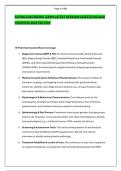
EATING DISORDERS EXAM LATEST VERSION QUESTIONS AND
ANSWERS 2026 EDITION
10-Point Summarized Exam Coverage
1. Diagnostic Criteria (DSM-5-TR): For Anorexia Nervosa (AN), Bulimia Nervosa
(BN), Binge-Eating Disorder (BED), Avoidant/Restrictive Food Intake Disorder
(ARFID), and Other Specified/Unspecified Feeding or Eating Disorders
(OSFED/UFED). Includes specific weight thresholds, binge/purge frequencies,
and duration requirements.
2. Medical Complications & Physical Manifestations: The systemic effects of
starvation, purging, and bingeing on the cardiovascular, gastrointestinal,
endocrine, skeletal, and integumentary systems (e.g., lanugo, Russell's sign,
electrolyte imbalances, cardiac arrhythmias).
3. Psychological & Behavioral Characteristics: Core features such as the
overvaluation of weight and shape, body image disturbance, fear of fatness,
perfectionism, and ritualistic behaviors related to food and eating.
4. Epidemiology & Risk Factors: Prevalence rates across genders and age groups,
and the role of genetic, sociocultural (media, thin-ideal internalization), familial,
and psychological (e.g., childhood trauma, OCD, anxiety) risk factors.
5. Screening & Assessment Tools: The use and interpretation of standardized
instruments like the EDE-Q, SCOFF questionnaire, EAT-26, and clinical
interviews to identify eating disorder pathology.
6. Treatment Modalities & Levels of Care: The continuum of care from outpatient
to inpatient/residential, including the roles of Family-Based Treatment (FBT),
, Page 2 of 54
Enhanced Cognitive Behavioral Therapy (CBT-E), Interpersonal Psychotherapy
(IPT), and Dialectical Behavior Therapy (DBT).
7. Refeeding Syndrome: The pathophysiology, risk factors (e.g., low BMI, rapid
weight loss), and management of dangerous metabolic shifts
(hypophosphatemia, hypokalemia, hypomagnesemia) during nutritional
rehabilitation.
8. Nutritional Assessment & Rehabilitative Goals: The process of nutritional
assessment (resting energy expenditure), the concept of mechanical eating,
establishing a normalized eating pattern, and the gradual achievement of target
weight/restoration of menses.
9. Comorbid Psychiatric Conditions: The common co-occurrence of eating
disorders with depression, anxiety disorders (especially social anxiety and
generalized anxiety), obsessive-compulsive disorder (OCD), and substance use
disorders.
10. Special Populations & Considerations: The unique presentation and
challenges in males, athletes, children/adolescents, pregnant women, and
individuals with type 1 diabetes (diabulimia).
Section 1: Diagnostic Criteria & Classification (Questions 1-50)
1. According to the DSM-5-TR, which of the following is a core diagnostic
criterion for Anorexia Nervosa that differentiates it from other restrictive
eating disorders?
Rationale: The intense fear of gaining weight or becoming fat, even when
significantly underweight, is a hallmark psychological feature that is
fundamental to the diagnosis of Anorexia Nervosa and distinguishes it from
conditions like ARFID.
2. A 16-year-old female has a BMI that is below the 5th percentile for her age
and sex, yet she expresses an intense fear of weight gain and denies the
severity of her low weight. Based on these findings, which diagnosis is the
, Page 3 of 54
most likely?
Rationale: The combination of a significantly low body weight, fear of weight
gain, and a disturbance in how one's body weight is experienced points directly
to the diagnostic criteria for Anorexia Nervosa.
3. The DSM-5-TR specifies that for a diagnosis of Bulimia Nervosa, episodes of
binge eating and compensatory behaviors must occur, on average, at least
how frequently for a duration of three months?
Rationale: The diagnostic criteria for Bulimia Nervosa require that both binge
eating and inappropriate compensatory behaviors occur at least once a week for
a period of three months to establish a persistent pattern.
4. Which of the following describes a key distinction between the diagnostic
criteria for Bulimia Nervosa and Binge-Eating Disorder, as defined by the
DSM-5-TR?
Rationale: A defining feature of Binge-Eating Disorder is the absence of regular
compensatory behaviors like purging or excessive exercise, which are a core
component of Bulimia Nervosa, differentiating the two in terms of behavioral
presentation.
5. In the context of Avoidant/Restrictive Food Intake Disorder (ARFID), what is
the primary underlying motivation for the restrictive eating behavior that is
not present in Anorexia Nervosa?
Rationale: ARFID is characterized by eating or feeding disturbances driven by
sensory sensitivities, fear of aversive consequences like choking, or a general
lack of interest in food, without any associated fear of weight gain or body image
distortion.
6. A patient presents with recurrent episodes of binge eating but does not
engage in compensatory behaviors. However, they experience significant
distress regarding their eating. According to the DSM-5-TR, which diagnosis
is most appropriate?
Rationale: Binge-Eating Disorder is specifically characterized by recurrent
, Page 4 of 54
episodes of binge eating that are not followed by the regular use of inappropriate
compensatory behaviors, and these episodes cause marked distress.
7. Which of the following best describes the DSM-5-TR criteria for specifying a
case as 'Atypical Anorexia Nervosa' under the category of Other Specified
Feeding or Eating Disorder (OSFED)?
Rationale: The diagnosis of Atypical Anorexia Nervosa is given when an individual
meets all criteria for Anorexia Nervosa except that, despite significant weight
loss, their body weight remains within or above the normal range for their age
and height.
8. A patient who purges by self-induced vomiting after eating small amounts of
food, but does not engage in true binge episodes, would likely be diagnosed
with which condition?
Rationale: Purging Disorder is a type of OSFED characterized by recurrent purging
behavior to influence weight or shape in the absence of binge eating, which
differentiates it from Bulimia Nervosa.
9. For a diagnosis of Bulimia Nervosa, the inappropriate compensatory
behaviors, such as self-induced vomiting or laxative misuse, must occur in
conjunction with which primary behavioral feature of the disorder?
Rationale: The diagnosis of Bulimia Nervosa is fundamentally predicated on
recurrent episodes of binge eating, which are discrete periods of consuming an
objectively large amount of food with a sense of loss of control, that are then
followed by compensatory behaviors.
10. Which of the following symptoms is explicitly required for a diagnosis of
Anorexia Nervosa, but is not a necessary criterion for the diagnosis of
Avoidant/Restrictive Food Intake Disorder (ARFID)?
Rationale: Anorexia Nervosa requires a disturbance in the way one's body weight
or shape is experienced, or a persistent lack of recognition of the seriousness of
the low body weight, a cognitive feature not present in ARFID.
11. A clinician is evaluating an adolescent who has lost a significant amount of
weight due to a persistent lack of interest in eating and fear of choking. The
EATING DISORDERS EXAM LATEST VERSION QUESTIONS AND
ANSWERS 2026 EDITION
10-Point Summarized Exam Coverage
1. Diagnostic Criteria (DSM-5-TR): For Anorexia Nervosa (AN), Bulimia Nervosa
(BN), Binge-Eating Disorder (BED), Avoidant/Restrictive Food Intake Disorder
(ARFID), and Other Specified/Unspecified Feeding or Eating Disorders
(OSFED/UFED). Includes specific weight thresholds, binge/purge frequencies,
and duration requirements.
2. Medical Complications & Physical Manifestations: The systemic effects of
starvation, purging, and bingeing on the cardiovascular, gastrointestinal,
endocrine, skeletal, and integumentary systems (e.g., lanugo, Russell's sign,
electrolyte imbalances, cardiac arrhythmias).
3. Psychological & Behavioral Characteristics: Core features such as the
overvaluation of weight and shape, body image disturbance, fear of fatness,
perfectionism, and ritualistic behaviors related to food and eating.
4. Epidemiology & Risk Factors: Prevalence rates across genders and age groups,
and the role of genetic, sociocultural (media, thin-ideal internalization), familial,
and psychological (e.g., childhood trauma, OCD, anxiety) risk factors.
5. Screening & Assessment Tools: The use and interpretation of standardized
instruments like the EDE-Q, SCOFF questionnaire, EAT-26, and clinical
interviews to identify eating disorder pathology.
6. Treatment Modalities & Levels of Care: The continuum of care from outpatient
to inpatient/residential, including the roles of Family-Based Treatment (FBT),
, Page 2 of 54
Enhanced Cognitive Behavioral Therapy (CBT-E), Interpersonal Psychotherapy
(IPT), and Dialectical Behavior Therapy (DBT).
7. Refeeding Syndrome: The pathophysiology, risk factors (e.g., low BMI, rapid
weight loss), and management of dangerous metabolic shifts
(hypophosphatemia, hypokalemia, hypomagnesemia) during nutritional
rehabilitation.
8. Nutritional Assessment & Rehabilitative Goals: The process of nutritional
assessment (resting energy expenditure), the concept of mechanical eating,
establishing a normalized eating pattern, and the gradual achievement of target
weight/restoration of menses.
9. Comorbid Psychiatric Conditions: The common co-occurrence of eating
disorders with depression, anxiety disorders (especially social anxiety and
generalized anxiety), obsessive-compulsive disorder (OCD), and substance use
disorders.
10. Special Populations & Considerations: The unique presentation and
challenges in males, athletes, children/adolescents, pregnant women, and
individuals with type 1 diabetes (diabulimia).
Section 1: Diagnostic Criteria & Classification (Questions 1-50)
1. According to the DSM-5-TR, which of the following is a core diagnostic
criterion for Anorexia Nervosa that differentiates it from other restrictive
eating disorders?
Rationale: The intense fear of gaining weight or becoming fat, even when
significantly underweight, is a hallmark psychological feature that is
fundamental to the diagnosis of Anorexia Nervosa and distinguishes it from
conditions like ARFID.
2. A 16-year-old female has a BMI that is below the 5th percentile for her age
and sex, yet she expresses an intense fear of weight gain and denies the
severity of her low weight. Based on these findings, which diagnosis is the
, Page 3 of 54
most likely?
Rationale: The combination of a significantly low body weight, fear of weight
gain, and a disturbance in how one's body weight is experienced points directly
to the diagnostic criteria for Anorexia Nervosa.
3. The DSM-5-TR specifies that for a diagnosis of Bulimia Nervosa, episodes of
binge eating and compensatory behaviors must occur, on average, at least
how frequently for a duration of three months?
Rationale: The diagnostic criteria for Bulimia Nervosa require that both binge
eating and inappropriate compensatory behaviors occur at least once a week for
a period of three months to establish a persistent pattern.
4. Which of the following describes a key distinction between the diagnostic
criteria for Bulimia Nervosa and Binge-Eating Disorder, as defined by the
DSM-5-TR?
Rationale: A defining feature of Binge-Eating Disorder is the absence of regular
compensatory behaviors like purging or excessive exercise, which are a core
component of Bulimia Nervosa, differentiating the two in terms of behavioral
presentation.
5. In the context of Avoidant/Restrictive Food Intake Disorder (ARFID), what is
the primary underlying motivation for the restrictive eating behavior that is
not present in Anorexia Nervosa?
Rationale: ARFID is characterized by eating or feeding disturbances driven by
sensory sensitivities, fear of aversive consequences like choking, or a general
lack of interest in food, without any associated fear of weight gain or body image
distortion.
6. A patient presents with recurrent episodes of binge eating but does not
engage in compensatory behaviors. However, they experience significant
distress regarding their eating. According to the DSM-5-TR, which diagnosis
is most appropriate?
Rationale: Binge-Eating Disorder is specifically characterized by recurrent
, Page 4 of 54
episodes of binge eating that are not followed by the regular use of inappropriate
compensatory behaviors, and these episodes cause marked distress.
7. Which of the following best describes the DSM-5-TR criteria for specifying a
case as 'Atypical Anorexia Nervosa' under the category of Other Specified
Feeding or Eating Disorder (OSFED)?
Rationale: The diagnosis of Atypical Anorexia Nervosa is given when an individual
meets all criteria for Anorexia Nervosa except that, despite significant weight
loss, their body weight remains within or above the normal range for their age
and height.
8. A patient who purges by self-induced vomiting after eating small amounts of
food, but does not engage in true binge episodes, would likely be diagnosed
with which condition?
Rationale: Purging Disorder is a type of OSFED characterized by recurrent purging
behavior to influence weight or shape in the absence of binge eating, which
differentiates it from Bulimia Nervosa.
9. For a diagnosis of Bulimia Nervosa, the inappropriate compensatory
behaviors, such as self-induced vomiting or laxative misuse, must occur in
conjunction with which primary behavioral feature of the disorder?
Rationale: The diagnosis of Bulimia Nervosa is fundamentally predicated on
recurrent episodes of binge eating, which are discrete periods of consuming an
objectively large amount of food with a sense of loss of control, that are then
followed by compensatory behaviors.
10. Which of the following symptoms is explicitly required for a diagnosis of
Anorexia Nervosa, but is not a necessary criterion for the diagnosis of
Avoidant/Restrictive Food Intake Disorder (ARFID)?
Rationale: Anorexia Nervosa requires a disturbance in the way one's body weight
or shape is experienced, or a persistent lack of recognition of the seriousness of
the low body weight, a cognitive feature not present in ARFID.
11. A clinician is evaluating an adolescent who has lost a significant amount of
weight due to a persistent lack of interest in eating and fear of choking. The


