

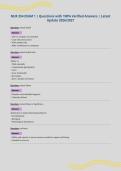
NUR 354 EXAM 1 | Questions with 100% Verified Answers | Latest
Update 2026/2027
Question: mental health
Answer:
- Able to recognize own potential
- Cope with normal stress
- Work productively
- Make contribution to community
Question: mental health traits
Answer:
Ability to:
- Think rationally
- Communicate appropriately
- Learn
- Grow emotionally
- Be resilient
- Have a healthy self-esteem
Question: mental illness
Answer:
- Disorders with definable diagnosis
- Culturally defined
Question: mental illness is Significant...
Answer:
dysfunction in mental functioning related to
- Developmental
- Biological
- Physiological disturbances
Question: resilience
Answer:
- Ability and capacity to secure resources needed to support well-being
- Essential to recovery
,Question: what is resilience characterized by
Answer:
Optimism
Sense of mastery
Competence
Question: Diathesis-Stress Model
Answer:
- Most accepted explanation for mental illness
- Combination of genetic vulnerability and negative environmental stressors
Question: Diathesis
Answer:
Biological predisposition
Question: Stress
Answer:
environmental stress of trauma
Question: social influences on mental health
Answer:
- Consumer/recovery movement
- National Alliance on Mental Illness (NAMI)
- Decade of the brain
- New Freedom Commission on Mental Health
- Mental Health Parity Act
Question: Epidemiology of Mental Disorders
Answer:
Study distribution of mental disorders Identify high-risk groups Identify high-risk factors
- Incidence
- Prevalence
Question: Incidence vs. Prevalence
Answer:
Incidence → New cases of a disease in a population over a specific period of time.
Prevalence → All cases of a disease (both new and existing) at a given point in time.
, Question: clinical epidemiology
Answer:
Groups treated for specific mental disorders studied for
- Natural history of illness
- Diagnostic screening tests
- Interventions
Question: clinical epidemiology results used to describe frequency of
Answer:
- Mental disorders
- Symptoms appearing together
Question: what does the DSM- 5 stand for
Answer:
The Diagnostic and Statistical Manual of Mental Disorders, 5th edition
Question: DSM- 5
Answer:
Official medical guidelines of the American Psychiatric Association for diagnosing
psychiatric disorders
Question: what does the ICD-9-CM stand for
Answer:
International Classification of Diseases
Question: ICD-9-CM
Answer:
Clinical descriptions of mental and behavior disorders
- 2 broad classifications
- Subclassifications
Question: psychiatric mental health nurses
Answer:
- Employ purposeful use of self
- Use nursing, psychosocial, neurobiological theories and research
- Work with people throughout the life span
- Employed in a variety of settings
Update 2026/2027
Question: mental health
Answer:
- Able to recognize own potential
- Cope with normal stress
- Work productively
- Make contribution to community
Question: mental health traits
Answer:
Ability to:
- Think rationally
- Communicate appropriately
- Learn
- Grow emotionally
- Be resilient
- Have a healthy self-esteem
Question: mental illness
Answer:
- Disorders with definable diagnosis
- Culturally defined
Question: mental illness is Significant...
Answer:
dysfunction in mental functioning related to
- Developmental
- Biological
- Physiological disturbances
Question: resilience
Answer:
- Ability and capacity to secure resources needed to support well-being
- Essential to recovery
,Question: what is resilience characterized by
Answer:
Optimism
Sense of mastery
Competence
Question: Diathesis-Stress Model
Answer:
- Most accepted explanation for mental illness
- Combination of genetic vulnerability and negative environmental stressors
Question: Diathesis
Answer:
Biological predisposition
Question: Stress
Answer:
environmental stress of trauma
Question: social influences on mental health
Answer:
- Consumer/recovery movement
- National Alliance on Mental Illness (NAMI)
- Decade of the brain
- New Freedom Commission on Mental Health
- Mental Health Parity Act
Question: Epidemiology of Mental Disorders
Answer:
Study distribution of mental disorders Identify high-risk groups Identify high-risk factors
- Incidence
- Prevalence
Question: Incidence vs. Prevalence
Answer:
Incidence → New cases of a disease in a population over a specific period of time.
Prevalence → All cases of a disease (both new and existing) at a given point in time.
, Question: clinical epidemiology
Answer:
Groups treated for specific mental disorders studied for
- Natural history of illness
- Diagnostic screening tests
- Interventions
Question: clinical epidemiology results used to describe frequency of
Answer:
- Mental disorders
- Symptoms appearing together
Question: what does the DSM- 5 stand for
Answer:
The Diagnostic and Statistical Manual of Mental Disorders, 5th edition
Question: DSM- 5
Answer:
Official medical guidelines of the American Psychiatric Association for diagnosing
psychiatric disorders
Question: what does the ICD-9-CM stand for
Answer:
International Classification of Diseases
Question: ICD-9-CM
Answer:
Clinical descriptions of mental and behavior disorders
- 2 broad classifications
- Subclassifications
Question: psychiatric mental health nurses
Answer:
- Employ purposeful use of self
- Use nursing, psychosocial, neurobiological theories and research
- Work with people throughout the life span
- Employed in a variety of settings


