

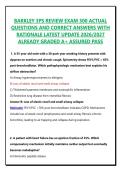
BARKLEY 3PS REVIEW EXAM 300 ACTUAL
QUESTIONS AND CORRECT ANSWERS WITH
RATIONALE LATEST UPDATE 2026/2027
ALREADY GRADED A+ ASSURED PASS
1. A 55-year-old male with a 30-pack-year smoking history presents with
dyspnea on exertion and chronic cough. Spirometry shows FEV1/FVC = 65%
post-bronchodilator. Which pathophysiologic mechanism best explains his
airflow obstruction?
A) Airway hyperresponsiveness to allergens
B) Loss of elastic recoil and small airway collapse
C) Thickened basement membrane and eosinophilic inflammation
D) Restrictive lung disease from interstitial fibrosis
Answer B: Loss of elastic recoil and small airway collapse
Rationale: FEV1/FVC <70% post-bronchodilator indicates COPD. Mechanisms
include loss of elastic recoil (emphysema) and small airway fibrosis (chronic
bronchitis), leading to air trapping and collapse during expiration.
2. A patient with heart failure has an ejection fraction of 35%. Which
compensatory mechanism initially maintains cardiac output but eventually
becomes maladaptive?
A) Natriuretic peptide release
,B) Activation of the renin-angiotensin-aldosterone system (RAAS)
C) Increased vagal tone
D) Decreased afterload
Answer B: Activation of the renin-angiotensin-aldosterone system (RAAS)
Rationale: RAAS increases preload and afterload via sodium/water retention and
vasoconstriction. Initially compensatory, chronic activation leads to ventricular
remodeling, fibrosis, and worsening failure.
3. A 45-year-old woman presents with fatigue, weight gain, cold intolerance,
and constipation. TSH is 12.5 mIU/mL, free T4 0.6 ng/dL. Which
pathophysiologic process is most likely?
A) Central hypothyroidism from pituitary failure
B) Primary hypothyroidism with elevated TSH and low T4
C) Euthyroid sick syndrome
D) Subclinical hyperthyroidism
Answer B: Primary hypothyroidism with elevated TSH and low T4
Rationale: Elevated TSH with low free T4 indicates primary hypothyroidism
(thyroid gland failure). Central hypothyroidism would show low or inappropriately
normal TSH.
4. A patient with cirrhosis develops ascites and esophageal varices. Which
hemodynamic abnormality is the primary driver of these complications?
A) Increased systemic vascular resistance
,B) Portal hypertension
C) Decreased cardiac output
D) Renal artery vasodilation
Answer B: Portal hypertension
Rationale: Portal hypertension increases hydrostatic pressure in splanchnic
circulation, leading to ascites (fluid extravasation) and varices (portosystemic
collateral formation).
5. A 68-year-old man with hypertension presents with sudden tearing chest
pain radiating to the back. BP is 180/100 in the right arm and 100/60 in the
left arm. Which diagnosis is most likely?
A) Acute coronary syndrome
B) Aortic dissection extending to the subclavian artery
C) Pulmonary embolism
D) Pericarditis
Answer B: Aortic dissection extending to the subclavian artery
Rationale: Tearing chest pain radiating to back with unequal BP in arms is classic
for aortic dissection. Differential BP indicates involvement of the subclavian artery.
6. A patient with type 1 diabetes develops nausea, vomiting, abdominal pain,
and Kussmaul breathing. ABG: pH 7.20, HCO3 10, PCO2 25. Which
compensatory mechanism is intact?
A) Metabolic alkalosis from vomiting
, B) Respiratory alkalosis as primary disorder
C) Respiratory compensation via hyperventilation
D) Renal compensation (immediate)
Answer C: Respiratory compensation via hyperventilation
Rationale: Metabolic acidosis (low pH, low HCO3) with low PCO2 indicates
appropriate respiratory compensation (Kussmaul breathing). Renal compensation
takes days.
7. A patient with chronic kidney disease has a GFR of 25 mL/min. Which
electrolyte abnormality is most expected?
A) Hypokalemia
B) Hyperphosphatemia
C) Hypocalcemia
D) Hyponatremia
Answer B: Hyperphosphatemia
Rationale: As GFR declines, phosphate excretion decreases, leading to
hyperphosphatemia. This contributes to secondary hyperparathyroidism and bone
disease.
8. Which pathophysiologic process is responsible for the majority of type 2
diabetes cases?
A) Autoimmune destruction of pancreatic beta cells
B) Insulin resistance with relative insulin deficiency
QUESTIONS AND CORRECT ANSWERS WITH
RATIONALE LATEST UPDATE 2026/2027
ALREADY GRADED A+ ASSURED PASS
1. A 55-year-old male with a 30-pack-year smoking history presents with
dyspnea on exertion and chronic cough. Spirometry shows FEV1/FVC = 65%
post-bronchodilator. Which pathophysiologic mechanism best explains his
airflow obstruction?
A) Airway hyperresponsiveness to allergens
B) Loss of elastic recoil and small airway collapse
C) Thickened basement membrane and eosinophilic inflammation
D) Restrictive lung disease from interstitial fibrosis
Answer B: Loss of elastic recoil and small airway collapse
Rationale: FEV1/FVC <70% post-bronchodilator indicates COPD. Mechanisms
include loss of elastic recoil (emphysema) and small airway fibrosis (chronic
bronchitis), leading to air trapping and collapse during expiration.
2. A patient with heart failure has an ejection fraction of 35%. Which
compensatory mechanism initially maintains cardiac output but eventually
becomes maladaptive?
A) Natriuretic peptide release
,B) Activation of the renin-angiotensin-aldosterone system (RAAS)
C) Increased vagal tone
D) Decreased afterload
Answer B: Activation of the renin-angiotensin-aldosterone system (RAAS)
Rationale: RAAS increases preload and afterload via sodium/water retention and
vasoconstriction. Initially compensatory, chronic activation leads to ventricular
remodeling, fibrosis, and worsening failure.
3. A 45-year-old woman presents with fatigue, weight gain, cold intolerance,
and constipation. TSH is 12.5 mIU/mL, free T4 0.6 ng/dL. Which
pathophysiologic process is most likely?
A) Central hypothyroidism from pituitary failure
B) Primary hypothyroidism with elevated TSH and low T4
C) Euthyroid sick syndrome
D) Subclinical hyperthyroidism
Answer B: Primary hypothyroidism with elevated TSH and low T4
Rationale: Elevated TSH with low free T4 indicates primary hypothyroidism
(thyroid gland failure). Central hypothyroidism would show low or inappropriately
normal TSH.
4. A patient with cirrhosis develops ascites and esophageal varices. Which
hemodynamic abnormality is the primary driver of these complications?
A) Increased systemic vascular resistance
,B) Portal hypertension
C) Decreased cardiac output
D) Renal artery vasodilation
Answer B: Portal hypertension
Rationale: Portal hypertension increases hydrostatic pressure in splanchnic
circulation, leading to ascites (fluid extravasation) and varices (portosystemic
collateral formation).
5. A 68-year-old man with hypertension presents with sudden tearing chest
pain radiating to the back. BP is 180/100 in the right arm and 100/60 in the
left arm. Which diagnosis is most likely?
A) Acute coronary syndrome
B) Aortic dissection extending to the subclavian artery
C) Pulmonary embolism
D) Pericarditis
Answer B: Aortic dissection extending to the subclavian artery
Rationale: Tearing chest pain radiating to back with unequal BP in arms is classic
for aortic dissection. Differential BP indicates involvement of the subclavian artery.
6. A patient with type 1 diabetes develops nausea, vomiting, abdominal pain,
and Kussmaul breathing. ABG: pH 7.20, HCO3 10, PCO2 25. Which
compensatory mechanism is intact?
A) Metabolic alkalosis from vomiting
, B) Respiratory alkalosis as primary disorder
C) Respiratory compensation via hyperventilation
D) Renal compensation (immediate)
Answer C: Respiratory compensation via hyperventilation
Rationale: Metabolic acidosis (low pH, low HCO3) with low PCO2 indicates
appropriate respiratory compensation (Kussmaul breathing). Renal compensation
takes days.
7. A patient with chronic kidney disease has a GFR of 25 mL/min. Which
electrolyte abnormality is most expected?
A) Hypokalemia
B) Hyperphosphatemia
C) Hypocalcemia
D) Hyponatremia
Answer B: Hyperphosphatemia
Rationale: As GFR declines, phosphate excretion decreases, leading to
hyperphosphatemia. This contributes to secondary hyperparathyroidism and bone
disease.
8. Which pathophysiologic process is responsible for the majority of type 2
diabetes cases?
A) Autoimmune destruction of pancreatic beta cells
B) Insulin resistance with relative insulin deficiency


