

NUR 172 med surge exam 3
Study online at https://quizlet.com/_j8h2da
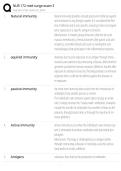
1. Natural immunity Natural immunity provides a broad spectrum of defense against
and resistance to any foreign invader. It is considered the first
line of defense and is non-specific, meaning it does not require
prior exposure to a specific antigen to function.
Mechanisms: It involves physical barriers (like the skin and
mucous membranes), chemical barriers (like gastric acid and
enzymes), and white blood cells (such as neutrophils and
macrophages) that participate in the inflammatory response.
2. aquired immunity develops due to prior exposure to an antigen through immu-
nization (vaccination) or by contracting a disease, both of which
generate a protective immune response. Weeks or months after
exposure to a disease or vaccine, the body produces an immune
response that is sufficient to defend against the disease on
re-exposure.
3. passive immunity the short-term immunity that results from the introduction of
antibodies from another person or animal.
The individual's own immune system does not play an active
role; it simply receives the "ready-made" antibodies. Examples
include the transfer of antibodies from mother to fetus via the
placenta, through breast milk, or through the injection of im-
mune globulins.
4. Active immunity Active immunity occurs when the individual's own immune sys-
tem is stimulated to produce antibodies and specialized lym-
phocytes.
Mechanism: The body is challenged by an antigen (either
through contracting a disease or receiving a vaccine) and ac-
tively works to create a defense.
5. Antigens substance that induces the production of antibodies
, NUR 172 med surge exam 3
Study online at https://quizlet.com/_j8h2da
6. Antibodies a protein substance developed by the body in response to and
interacting with a specific antigen
7. 4 stages of immune re- Recognition stage
sponse Proliferation stage
Response stage
Effector stage
8. Recognition stage Recognition of antigens as foreign, or non-self, by the immune
system is the initiating event in any immune response. Recog-
nition involves the use of lymph nodes and lymphocytes for
surveillance.
9. Proliferation stage The circulating lymphocytes containing the antigenic message
return to the nearest lymph node. Once in the node, these
sensitized lymphocytes stimulate some of the resident T and B
lymphocytes to enlarge, divide, and proliferate.
10. Response Stage The differentiated lymphocytes function in either a humoral or
a cellular capacity. This stage begins with the production of an-
tibodies by the B lymphocytes in response to a specific antigen.
The cellular response stimulates the resident lymphocytes to
become cells that attack microbes directly rather than through
the action of antibodies.
11. Effector stage In the effector stage, either the antibody of the humoral re-
sponse or the cytotoxic (killer) T cell of the cellular response
reaches and connects with the antigen on the surface of the for-
eign invader. This action initiates activities involving an interplay
of antibodies (humoral immunity), complement, and action by
the cytotoxic T cells (cellular immunity).
12. Humoral immune response
, NUR 172 med surge exam 3
Study online at https://quizlet.com/_j8h2da
The humoral response is characterized by the production of
antibodies by B lymphocytes (B cells) in response to a specific
antigen. This response primarily targets pathogens that are
circulating freely in body fluids, such as bacteria and viruses,
before they enter the cells.
13. B cells cells that are important for producing a humoral immune re-
sponse
14. Cellular Immune Response The T lymphocytes are primarily responsible for cellular immu-
nity. Several types of T cells exist, each with designated roles
in the defense against bacteria, viruses, fungi, parasites, and
malignant cells. T cells attack foreign invaders directly rather
than by producing antibodies.
15. T cells cells that are important for producing a cellular immune re-
sponse.
Types of T cells:
memory cells: cells that are responsible for recognizing antigens
from previous exposure and mounting an immune response.
helper T cells: lymphocytes that attack foreign invaders (anti-
gens) directly.
cytotoxic T cells (killer T cells): lymphocytes that lyse cells infected
with virus; also play a role in graft rejection.
suppressor T cells: lymphocytes that decrease B-cell activity to a
level at which the immune system is compatible with life
16. Histamine Histamine is a chemical released by the immune system, pri-
marily from mast cells, that triggers immediate inflammation to
fight threats like allergens. It acts as a signaling molecule.
Causes symptoms such as increased mucus production, itchy
skin, and dilated blood vessels to allow immune cells to reach
the site of irritation
, NUR 172 med surge exam 3
Study online at https://quizlet.com/_j8h2da
17. Cytokines generic term for nonantibody proteins that act as intercellular
mediators, as in the generation of immune response
18. Geriatric population differ- Decreased immune response, slower healing, increased sus-
ences when it comes to fight- ceptibility to infection, reduced vaccine response
ing diseases
19. How does the complement The complement system consists of circulating plasma proteins
system affect chronic inflam- that, when activated, "complement" or enhance the ability of
matory disease? antibodies and phagocytic cells to clear pathogens.
In chronic inflammatory diseases (such as rheumatoid arthri-
tis or systemic lupus erythematosus), the complement system
can become inappropriately or perpetually activated. Instead of
clearing a temporary infection, it begins to target the body's own
tissues.
20. neutrophils The major function of neutrophils is phagocytosis. Neutrophils
arrive at a given site within 1 hour after the onset of an inflam-
matory reaction and initiate phagocytosis
An elevated number of neutrophils can indicate an infection.
normal range: 50-70%
21. Stem cells unique, unspecialized cells capable of self-renewal and differ-
entiation into specialized cell types. (e.g., muscle, nerve, blood
cells). They act as the body's repair system, maintaining tissues
and offering significant potential in regenerative medicine to
treat diseases.
22. Assessment of the immune Health history: nutrition, infections, immunizations, allergies,
system and chronic illnesses.
Physical assessment: lymph node assessment and other body
systems.
Study online at https://quizlet.com/_j8h2da
1. Natural immunity Natural immunity provides a broad spectrum of defense against
and resistance to any foreign invader. It is considered the first
line of defense and is non-specific, meaning it does not require
prior exposure to a specific antigen to function.
Mechanisms: It involves physical barriers (like the skin and
mucous membranes), chemical barriers (like gastric acid and
enzymes), and white blood cells (such as neutrophils and
macrophages) that participate in the inflammatory response.
2. aquired immunity develops due to prior exposure to an antigen through immu-
nization (vaccination) or by contracting a disease, both of which
generate a protective immune response. Weeks or months after
exposure to a disease or vaccine, the body produces an immune
response that is sufficient to defend against the disease on
re-exposure.
3. passive immunity the short-term immunity that results from the introduction of
antibodies from another person or animal.
The individual's own immune system does not play an active
role; it simply receives the "ready-made" antibodies. Examples
include the transfer of antibodies from mother to fetus via the
placenta, through breast milk, or through the injection of im-
mune globulins.
4. Active immunity Active immunity occurs when the individual's own immune sys-
tem is stimulated to produce antibodies and specialized lym-
phocytes.
Mechanism: The body is challenged by an antigen (either
through contracting a disease or receiving a vaccine) and ac-
tively works to create a defense.
5. Antigens substance that induces the production of antibodies
, NUR 172 med surge exam 3
Study online at https://quizlet.com/_j8h2da
6. Antibodies a protein substance developed by the body in response to and
interacting with a specific antigen
7. 4 stages of immune re- Recognition stage
sponse Proliferation stage
Response stage
Effector stage
8. Recognition stage Recognition of antigens as foreign, or non-self, by the immune
system is the initiating event in any immune response. Recog-
nition involves the use of lymph nodes and lymphocytes for
surveillance.
9. Proliferation stage The circulating lymphocytes containing the antigenic message
return to the nearest lymph node. Once in the node, these
sensitized lymphocytes stimulate some of the resident T and B
lymphocytes to enlarge, divide, and proliferate.
10. Response Stage The differentiated lymphocytes function in either a humoral or
a cellular capacity. This stage begins with the production of an-
tibodies by the B lymphocytes in response to a specific antigen.
The cellular response stimulates the resident lymphocytes to
become cells that attack microbes directly rather than through
the action of antibodies.
11. Effector stage In the effector stage, either the antibody of the humoral re-
sponse or the cytotoxic (killer) T cell of the cellular response
reaches and connects with the antigen on the surface of the for-
eign invader. This action initiates activities involving an interplay
of antibodies (humoral immunity), complement, and action by
the cytotoxic T cells (cellular immunity).
12. Humoral immune response
, NUR 172 med surge exam 3
Study online at https://quizlet.com/_j8h2da
The humoral response is characterized by the production of
antibodies by B lymphocytes (B cells) in response to a specific
antigen. This response primarily targets pathogens that are
circulating freely in body fluids, such as bacteria and viruses,
before they enter the cells.
13. B cells cells that are important for producing a humoral immune re-
sponse
14. Cellular Immune Response The T lymphocytes are primarily responsible for cellular immu-
nity. Several types of T cells exist, each with designated roles
in the defense against bacteria, viruses, fungi, parasites, and
malignant cells. T cells attack foreign invaders directly rather
than by producing antibodies.
15. T cells cells that are important for producing a cellular immune re-
sponse.
Types of T cells:
memory cells: cells that are responsible for recognizing antigens
from previous exposure and mounting an immune response.
helper T cells: lymphocytes that attack foreign invaders (anti-
gens) directly.
cytotoxic T cells (killer T cells): lymphocytes that lyse cells infected
with virus; also play a role in graft rejection.
suppressor T cells: lymphocytes that decrease B-cell activity to a
level at which the immune system is compatible with life
16. Histamine Histamine is a chemical released by the immune system, pri-
marily from mast cells, that triggers immediate inflammation to
fight threats like allergens. It acts as a signaling molecule.
Causes symptoms such as increased mucus production, itchy
skin, and dilated blood vessels to allow immune cells to reach
the site of irritation
, NUR 172 med surge exam 3
Study online at https://quizlet.com/_j8h2da
17. Cytokines generic term for nonantibody proteins that act as intercellular
mediators, as in the generation of immune response
18. Geriatric population differ- Decreased immune response, slower healing, increased sus-
ences when it comes to fight- ceptibility to infection, reduced vaccine response
ing diseases
19. How does the complement The complement system consists of circulating plasma proteins
system affect chronic inflam- that, when activated, "complement" or enhance the ability of
matory disease? antibodies and phagocytic cells to clear pathogens.
In chronic inflammatory diseases (such as rheumatoid arthri-
tis or systemic lupus erythematosus), the complement system
can become inappropriately or perpetually activated. Instead of
clearing a temporary infection, it begins to target the body's own
tissues.
20. neutrophils The major function of neutrophils is phagocytosis. Neutrophils
arrive at a given site within 1 hour after the onset of an inflam-
matory reaction and initiate phagocytosis
An elevated number of neutrophils can indicate an infection.
normal range: 50-70%
21. Stem cells unique, unspecialized cells capable of self-renewal and differ-
entiation into specialized cell types. (e.g., muscle, nerve, blood
cells). They act as the body's repair system, maintaining tissues
and offering significant potential in regenerative medicine to
treat diseases.
22. Assessment of the immune Health history: nutrition, infections, immunizations, allergies,
system and chronic illnesses.
Physical assessment: lymph node assessment and other body
systems.


