

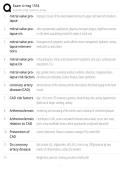
Exam 4 rnsg 1533
Study online at https://quizlet.com/_be74wp
1. mitral valve pro- Improper closure of the valve between the heart's upper and lower left chambers.
lapse
2. mitral valve pro- often asymptomatic, palpitations, dyspnea, chest pain, fatigue, might hear murmur
lapse s/s or click when auscultating heart(click makes it stand out)
3. mitral valve pro- Management of symptoms, avoid caffeine, stress management, hydration, activity,
lapse interven- medication as prescribed
tions
4. mitral valve pro- echocardiogram, history and assessment of symptoms, vital signs, cardiovascular
lapse Dx assessment, ECG
5. mitral valve pro- Age, gender (men), coexisting medical condition, infections, congenital disor-
lapse risk factors ders(muscular dystrophy, Graves' disease, Down syndrome)
6. coronary artery atherosclerosis of the coronary arteries that reduces the blood supply to the heart
disease (CAD) muscle
7. CAD risk factors Age > 45 in men >55 in women, genetics, family history, diet, activity, hypertension,
lipids out of range, smoking, obesity
8. Artherosclerosis Hardening and narrowing of the arteries due to buildup of cholesterol plaques
9. Artherosclerosis Contributor to CAD, causes narrowed thickened arterial walls, occurs over many
relation to CAD years, many modifiable factors, when symptomatic usually well-advanced
10. Prevention of control cholesterol, Tobacco cessation, manage HTN, control DM
CAD
11. Dx coronary labs include LDL, triglycerides, HDL; ECG, chest x-ray, CRP(produced by liver,
artery disease marker of inflammation), cardiac bio markers
12. Weight loss, exercise, smoking cessation, healthy diet
1/6
, Exam 4 rnsg 1533
Study online at https://quizlet.com/_be74wp
coronary artery
disease primary
prevention
13. coronary artery Meds, manage stress, more exercise, cholesterol medications(educate about pos-
disease sec- sible myopathy-sore muscles), anti hypertension meds
ondary preven-
tion
14. coronary artery Minimize deterioration and improving quality of life
disease tertiary
prevention
15. coronary artery Chest pain(PRIORITY PATIENT), cardiac ischemia, angina pectoris
disease S/s
16. angina pectoris chest pain that occurs when the heart's supply of blood carrying oxygen is insuffi-
cient to meet the demands of the heart, usually associated with obstruction of at
least one coronary artery
17. angina pectoris Subsides with rest or after administration of nitroglycerin
18. coronary artery Reduce symptoms, emphasize change in symptoms, IF PAIN DOESN'T SUBSIDE AT
disease Pt teach- REST OR BECOMES SEVER CONTACT PHYSICIAN
ing
19. hypertension Impaired vision, myocardial infarction, heart failure, chronic kidney disease,
(HTN) strokes, impaired vision- affects the eyes, heart, kidneys, brain
complications
20. primary hyper- High blood pressure, the cause of which is unknown; also known as essential
tension hypertension
21. high blood pressure caused by the effects of another disease
2/6
Study online at https://quizlet.com/_be74wp
1. mitral valve pro- Improper closure of the valve between the heart's upper and lower left chambers.
lapse
2. mitral valve pro- often asymptomatic, palpitations, dyspnea, chest pain, fatigue, might hear murmur
lapse s/s or click when auscultating heart(click makes it stand out)
3. mitral valve pro- Management of symptoms, avoid caffeine, stress management, hydration, activity,
lapse interven- medication as prescribed
tions
4. mitral valve pro- echocardiogram, history and assessment of symptoms, vital signs, cardiovascular
lapse Dx assessment, ECG
5. mitral valve pro- Age, gender (men), coexisting medical condition, infections, congenital disor-
lapse risk factors ders(muscular dystrophy, Graves' disease, Down syndrome)
6. coronary artery atherosclerosis of the coronary arteries that reduces the blood supply to the heart
disease (CAD) muscle
7. CAD risk factors Age > 45 in men >55 in women, genetics, family history, diet, activity, hypertension,
lipids out of range, smoking, obesity
8. Artherosclerosis Hardening and narrowing of the arteries due to buildup of cholesterol plaques
9. Artherosclerosis Contributor to CAD, causes narrowed thickened arterial walls, occurs over many
relation to CAD years, many modifiable factors, when symptomatic usually well-advanced
10. Prevention of control cholesterol, Tobacco cessation, manage HTN, control DM
CAD
11. Dx coronary labs include LDL, triglycerides, HDL; ECG, chest x-ray, CRP(produced by liver,
artery disease marker of inflammation), cardiac bio markers
12. Weight loss, exercise, smoking cessation, healthy diet
1/6
, Exam 4 rnsg 1533
Study online at https://quizlet.com/_be74wp
coronary artery
disease primary
prevention
13. coronary artery Meds, manage stress, more exercise, cholesterol medications(educate about pos-
disease sec- sible myopathy-sore muscles), anti hypertension meds
ondary preven-
tion
14. coronary artery Minimize deterioration and improving quality of life
disease tertiary
prevention
15. coronary artery Chest pain(PRIORITY PATIENT), cardiac ischemia, angina pectoris
disease S/s
16. angina pectoris chest pain that occurs when the heart's supply of blood carrying oxygen is insuffi-
cient to meet the demands of the heart, usually associated with obstruction of at
least one coronary artery
17. angina pectoris Subsides with rest or after administration of nitroglycerin
18. coronary artery Reduce symptoms, emphasize change in symptoms, IF PAIN DOESN'T SUBSIDE AT
disease Pt teach- REST OR BECOMES SEVER CONTACT PHYSICIAN
ing
19. hypertension Impaired vision, myocardial infarction, heart failure, chronic kidney disease,
(HTN) strokes, impaired vision- affects the eyes, heart, kidneys, brain
complications
20. primary hyper- High blood pressure, the cause of which is unknown; also known as essential
tension hypertension
21. high blood pressure caused by the effects of another disease
2/6


