Question: 1 of 74 Time remaining: --:--
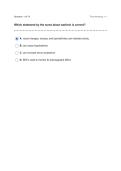
Which statement by the nurse about warfarin is correct?
A. visual changes, nausea, and dysrhythmias can indicate toxicity.
B. can cause hypokalemia.
C. can increase serum potassium.
D. INR is used to monitor its anticoagulant effect.
,Question: 2 of 74 Time remaining: --:--
A client is receiving unfractionated heparin. Which information should
the nurse include in teaching?
A. can cause hypokalemia.
B. can increase serum potassium.
C. aPTT is commonly used to monitor therapy.
D. can cause cough and angioedema.
,Question: 3 of 74 Time remaining: --:--
Which finding is most consistent with the expected pharmacologic effect
of digoxin?
A. can increase serum potassium.
B. visual changes, nausea, and dysrhythmias can indicate toxicity.
C. can cause cough and angioedema.
D. can lower heart rate and blood pressure.
, Question: 4 of 74 Time remaining: --:--
A nurse is reviewing medications with a client who takes furosemide.
Which statement is accurate?
A. can cause hypokalemia.
B. can cause cough and angioedema.
C. can lower heart rate and blood pressure.
D. can cause peripheral edema.
Which statement by the nurse about warfarin is correct?
A. visual changes, nausea, and dysrhythmias can indicate toxicity.
B. can cause hypokalemia.
C. can increase serum potassium.
D. INR is used to monitor its anticoagulant effect.
,Question: 2 of 74 Time remaining: --:--
A client is receiving unfractionated heparin. Which information should
the nurse include in teaching?
A. can cause hypokalemia.
B. can increase serum potassium.
C. aPTT is commonly used to monitor therapy.
D. can cause cough and angioedema.
,Question: 3 of 74 Time remaining: --:--
Which finding is most consistent with the expected pharmacologic effect
of digoxin?
A. can increase serum potassium.
B. visual changes, nausea, and dysrhythmias can indicate toxicity.
C. can cause cough and angioedema.
D. can lower heart rate and blood pressure.
, Question: 4 of 74 Time remaining: --:--
A nurse is reviewing medications with a client who takes furosemide.
Which statement is accurate?
A. can cause hypokalemia.
B. can cause cough and angioedema.
C. can lower heart rate and blood pressure.
D. can cause peripheral edema.