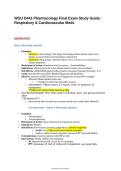
WGU D441 Pharmacology Final Exam Study Guide:
Respiratory & Cardiovascular Meds
RESPIRATORY
Beta2 Adrenergic Agonists
• Examples:
• Albuterol (short-acting)- first drug used during asthma attacks, only rescue
inhaler, and used before steroid inhaler (salmeterol)
• Salmeterol (long-acting)- should be taken every 12 hours, even in absence of
asthma symptoms
• Mechanism of Action: Stimulates beta2 receptors → bronchodilation
• Indications: Albuterol used for acute asthma attacks, before steroid inhalers
• Side Effects: (ALBUTEROL)Tachycardia, tremors, insomnia (Tossing S Turning) 4 T’s
• Avoid: Beta blockers (Atenolol), NSAIDs (Naproxen and Ibuprofen)
• Effective: Decrease in RR (34 down to 24) S Oxygen Sat. at least 90% or higher
• Albuterol: Shake inhaler before use
• ^^^Notify provider if no relief after 3 doses
• Salmeterol: Taken every 12 hours, even in absence of
symptoms
**take no more than twice a day
• Use Bronchodilator first, then wait 5 minutes, then use glucocorticoid
after
**B before G**
• Rinse mouth after steroid use to prevent thrush (not needed after albuterol)
Decongestants / Alpha-1 Adrenergic Agonists
• Examples:
• Phenylephrine
• Pseudoephedrine
• Mechanism of Action: Vasoconstriction of respiratory mucosa
• Indications: Rhinitis
• Side Effects: Nervousness, insomnia, palpitations, rebound congestion
• Avoid: Use >3 days to prevent rebound congestion
• Leads to reduced nasal congestion, increased BP, and pupil dilation
• Contradictions: Avoid in patients with HTN or CAD
• Interactions: AVOID: caffeine and stimulants
• NC: Monitor BP and HR- access for CV conditions
• PT: because of risk of rebound congestion use sparingly
messages.downloaded_
, Antihistamines
• Examples: ---
• 1st generation (diphenhydramine)
• 2nd generation (loratadine, cetirizine)
• Mechanism of Action: Blocks action of histamines
• Indications: Allergies, motion sickness, urticaria(hives)
• Side Effects: Sedation (1st gen) sedation, and anticholinergic effects( cant see, cant pee,
cant spit, cant poop)
• Contradictions: use cautiously in patients with glaucoma
• NC: Implement fall precautions due to possible sedation
• PT: Avoid driving or operating heavy machinery with 1st gen antihistamines
CARDIOVASCULAR
ACE Inhibitors (Lowers BP only) 1st choice medicine
• Examples: end in “pril”
• Lisinopril
• Captopril
• Enalapril
• Ramipril
• Mechanism of Action: Inhibit RAAS system, block angiotensin I to II → vasodilation
• Causes Na+ and H2O to not be retained, thus sodium and BP will decrease
• Indications: HTN, HF, MI, diabetic nephropathy
• Contradictions: ACE1/ARBs: renal artery stenosis, HF, salt or volume depletion,
bilateral stenosis, angioedema, fetal toxicity in 2nd/3rd trimester can cause neonatal death
• Side Effects: ACE: Angioedema, Cough, Elevated potassium levels dizziness, hypotension,
and real impairment
• Interactions: NSAIDS (reduced hypotensive effects), Rifampin (decreased ace1 effects,
Allopurinol (increased risk of hypersensitivity, Digoxin (decreased dig levels), Loop
Diuretics (decrease diuretic levels), Lithium (lithium toxicity), Hypoglycemia
(increased risk of hypoglycemia, Potassium sparing diuretics (elevated potassium
levels)
• NC: Monitor BP, potassium, creatinine
• Avoid potassium supplements
• Assess pt for angioedema (immediately stop if symptoms develop)
• HF: monitor weight and assess pt for fluid overload, weight gain, edema
• Instruct client to get up slowly and avoid salt substitutes
• Pt: Report facial swelling, persistent cough, or lightheadedness
• Change positions slowly
• Take med at same time everyday
• Stay hydrated but avoid excessive potassium intake
messages.downloaded_
, Angiotensin II Blockers (ARBs) (lowers BP only) 2nd choice
• Examples: all ARBs end in “TAN” replace ACE in African American pop. and when SE of ACE
become to much for patient
• Losartan
• Valsartan
• Irbesartan
• Mechanism of Action: Inhibit/Block RAAS system; Block binding of angiotensin II at
various sites on smooth muscle, blocking vasoconstriction effects of RAAS; causes
decrease in BP
• Indications: HTN, diabetic nephropathy
• Contradictions: ACE1/ARBS: HF, salt or volume depletion, bilateral stenosis,
angioedema, fetal toxicity in 2nd/3rd trimester due to neonatal death
• Side Effects: Hypotension, cough, hyperkalemia, renal impairment, fatigue, dizziness
• Interactions: NSAIDS (reduced hypotensive effects), Rifampin (decreased ace1 effects,
Allopurinol (increased risk of hypersensitivity, Digoxin (decreased dig levels), Loop
Diuretics (decrease diuretic levels), Lithium (lithium toxicity), Hypoglycemia
(increased risk of hypoglycemia, Potassium sparing diuretics (elevated potassium
levels)
• NC: Monitor BP and pulse
• Assess patient for signs of angioedema
• HF: monitor weight and assess pt for fluid overload, weight gain, edema
• Instruct client to get up slowly and avoid salt substitutes
• May cause hyperkalemia
• Pt: change positions slowly to avoid orthostatic hypotension
• Avoid potassium-rich foods unless advised
• Alternate to ACE inhibitors
• Take at same time every day, with or without food
• Stay hydrated
messages.downloaded_
Respiratory & Cardiovascular Meds
RESPIRATORY
Beta2 Adrenergic Agonists
• Examples:
• Albuterol (short-acting)- first drug used during asthma attacks, only rescue
inhaler, and used before steroid inhaler (salmeterol)
• Salmeterol (long-acting)- should be taken every 12 hours, even in absence of
asthma symptoms
• Mechanism of Action: Stimulates beta2 receptors → bronchodilation
• Indications: Albuterol used for acute asthma attacks, before steroid inhalers
• Side Effects: (ALBUTEROL)Tachycardia, tremors, insomnia (Tossing S Turning) 4 T’s
• Avoid: Beta blockers (Atenolol), NSAIDs (Naproxen and Ibuprofen)
• Effective: Decrease in RR (34 down to 24) S Oxygen Sat. at least 90% or higher
• Albuterol: Shake inhaler before use
• ^^^Notify provider if no relief after 3 doses
• Salmeterol: Taken every 12 hours, even in absence of
symptoms
**take no more than twice a day
• Use Bronchodilator first, then wait 5 minutes, then use glucocorticoid
after
**B before G**
• Rinse mouth after steroid use to prevent thrush (not needed after albuterol)
Decongestants / Alpha-1 Adrenergic Agonists
• Examples:
• Phenylephrine
• Pseudoephedrine
• Mechanism of Action: Vasoconstriction of respiratory mucosa
• Indications: Rhinitis
• Side Effects: Nervousness, insomnia, palpitations, rebound congestion
• Avoid: Use >3 days to prevent rebound congestion
• Leads to reduced nasal congestion, increased BP, and pupil dilation
• Contradictions: Avoid in patients with HTN or CAD
• Interactions: AVOID: caffeine and stimulants
• NC: Monitor BP and HR- access for CV conditions
• PT: because of risk of rebound congestion use sparingly
messages.downloaded_
, Antihistamines
• Examples: ---
• 1st generation (diphenhydramine)
• 2nd generation (loratadine, cetirizine)
• Mechanism of Action: Blocks action of histamines
• Indications: Allergies, motion sickness, urticaria(hives)
• Side Effects: Sedation (1st gen) sedation, and anticholinergic effects( cant see, cant pee,
cant spit, cant poop)
• Contradictions: use cautiously in patients with glaucoma
• NC: Implement fall precautions due to possible sedation
• PT: Avoid driving or operating heavy machinery with 1st gen antihistamines
CARDIOVASCULAR
ACE Inhibitors (Lowers BP only) 1st choice medicine
• Examples: end in “pril”
• Lisinopril
• Captopril
• Enalapril
• Ramipril
• Mechanism of Action: Inhibit RAAS system, block angiotensin I to II → vasodilation
• Causes Na+ and H2O to not be retained, thus sodium and BP will decrease
• Indications: HTN, HF, MI, diabetic nephropathy
• Contradictions: ACE1/ARBs: renal artery stenosis, HF, salt or volume depletion,
bilateral stenosis, angioedema, fetal toxicity in 2nd/3rd trimester can cause neonatal death
• Side Effects: ACE: Angioedema, Cough, Elevated potassium levels dizziness, hypotension,
and real impairment
• Interactions: NSAIDS (reduced hypotensive effects), Rifampin (decreased ace1 effects,
Allopurinol (increased risk of hypersensitivity, Digoxin (decreased dig levels), Loop
Diuretics (decrease diuretic levels), Lithium (lithium toxicity), Hypoglycemia
(increased risk of hypoglycemia, Potassium sparing diuretics (elevated potassium
levels)
• NC: Monitor BP, potassium, creatinine
• Avoid potassium supplements
• Assess pt for angioedema (immediately stop if symptoms develop)
• HF: monitor weight and assess pt for fluid overload, weight gain, edema
• Instruct client to get up slowly and avoid salt substitutes
• Pt: Report facial swelling, persistent cough, or lightheadedness
• Change positions slowly
• Take med at same time everyday
• Stay hydrated but avoid excessive potassium intake
messages.downloaded_
, Angiotensin II Blockers (ARBs) (lowers BP only) 2nd choice
• Examples: all ARBs end in “TAN” replace ACE in African American pop. and when SE of ACE
become to much for patient
• Losartan
• Valsartan
• Irbesartan
• Mechanism of Action: Inhibit/Block RAAS system; Block binding of angiotensin II at
various sites on smooth muscle, blocking vasoconstriction effects of RAAS; causes
decrease in BP
• Indications: HTN, diabetic nephropathy
• Contradictions: ACE1/ARBS: HF, salt or volume depletion, bilateral stenosis,
angioedema, fetal toxicity in 2nd/3rd trimester due to neonatal death
• Side Effects: Hypotension, cough, hyperkalemia, renal impairment, fatigue, dizziness
• Interactions: NSAIDS (reduced hypotensive effects), Rifampin (decreased ace1 effects,
Allopurinol (increased risk of hypersensitivity, Digoxin (decreased dig levels), Loop
Diuretics (decrease diuretic levels), Lithium (lithium toxicity), Hypoglycemia
(increased risk of hypoglycemia, Potassium sparing diuretics (elevated potassium
levels)
• NC: Monitor BP and pulse
• Assess patient for signs of angioedema
• HF: monitor weight and assess pt for fluid overload, weight gain, edema
• Instruct client to get up slowly and avoid salt substitutes
• May cause hyperkalemia
• Pt: change positions slowly to avoid orthostatic hypotension
• Avoid potassium-rich foods unless advised
• Alternate to ACE inhibitors
• Take at same time every day, with or without food
• Stay hydrated
messages.downloaded_