Hematology
● Erythrocytes—Red Blood Cells (RBC)
● RBC
● Male: 4.7-6.1 mm3
● Female: 4.2-5.4 mm3
Hematopoiesis is a two-stage process that involves mitotic division (proliferation) and
maturation (differentiation).
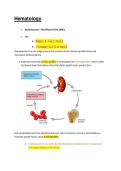
Red cell development from pluripotential stem cells in the bone marrow is stimulated by a
hormone growth factor called erythropoietin.
● Erythropoietin is secreted into the bloodstream by kidney cells in response to
low oxygen tension in the blood.
, ● Red cell production requires adequate amounts of several nutrients, particularly
iron, vitamin B12, and folate.
● Lack of intrinsic factor inhibits absorption of B12 from the small intestine
and is a risk factor for anemia.
In addition to iron, which is required for hemoglobin synthesis, the normal development
of erythrocytes requires adequate supplies of protein, vitamins, and minerals.
● Erythropoiesis cannot proceed in the absence of vitamins, especially B12,
folate, B6, riboflavin, pantothenic acid, niacin, ascorbic acid, and vitamin E.
, Folates and vitamin B12 (cobalamin) are absorbed from food by the ileal
mucosa.
● Folate deficiencies or vitamin B12 deficiencies lead to impaired DNA synthesis
in erythroid cells because the vitamins are coenzymes in a large number of
key reactions in cellular metabolism.
● Absorption of vitamin B12 requires intrinsic factor in the gastric juice. Intrinsic
Large quantities of carbonic anhydrase in RBCs catalyze the reaction between
CO2 (produced by cellular metabolism in the tissues) and water to form carbonic acid,
which dissociates into hydrogen and bicarbonate ions for elimination by the lungs and
kidneys.
Anemia General:
Clinical manifestations of anemia include a reduction in oxygen-carrying capacity, tissue
hypoxia, and compensatory mechanisms to restore tissue oxygenation.
● Increased pulmonary and cardiac function increases the oxygen supply, and
an increase in oxygen extraction occurs to protect tissues.
● Specific adaptations to anemia to increase oxygenated blood flow include an
increase in the heart rate, cardiac output, and circulatory rate and a preferential
increase in blood flow to vital organs.
● The extent of the physiologic adaptations is influenced by
○ (1) the severity of the anemia;
○ (2) the competency of the pulmonary and cardiac systems;
○ (3) the oxygen requirements of the individual, which are dependent on physical
and metabolic activity;
○ (4) the duration of the anemia;
○ (5) the underlying disease or condition; and
○ (6) the presence and severity of coexisting disease.
● Mild anemia is usually associated with no clinical symptoms; however, early symptoms in
patients with mild to moderate anemia include fatigue, generalized weakness, and loss
of stamina, followed by tachycardia and exertional dyspnea.
● Healthy young patients may present with very few symptoms at hemoglobin levels of 7
to 8 g/dL; however, elderly patients and patients with cardiovascular or pulmonary
disease may have symptoms with even modest degrees of anemia and hemoglobin
levels of 9 to 11 g/dL.
● Erythrocytes—Red Blood Cells (RBC)
● RBC
● Male: 4.7-6.1 mm3
● Female: 4.2-5.4 mm3
Hematopoiesis is a two-stage process that involves mitotic division (proliferation) and
maturation (differentiation).
Red cell development from pluripotential stem cells in the bone marrow is stimulated by a
hormone growth factor called erythropoietin.
● Erythropoietin is secreted into the bloodstream by kidney cells in response to
low oxygen tension in the blood.
, ● Red cell production requires adequate amounts of several nutrients, particularly
iron, vitamin B12, and folate.
● Lack of intrinsic factor inhibits absorption of B12 from the small intestine
and is a risk factor for anemia.
In addition to iron, which is required for hemoglobin synthesis, the normal development
of erythrocytes requires adequate supplies of protein, vitamins, and minerals.
● Erythropoiesis cannot proceed in the absence of vitamins, especially B12,
folate, B6, riboflavin, pantothenic acid, niacin, ascorbic acid, and vitamin E.
, Folates and vitamin B12 (cobalamin) are absorbed from food by the ileal
mucosa.
● Folate deficiencies or vitamin B12 deficiencies lead to impaired DNA synthesis
in erythroid cells because the vitamins are coenzymes in a large number of
key reactions in cellular metabolism.
● Absorption of vitamin B12 requires intrinsic factor in the gastric juice. Intrinsic
Large quantities of carbonic anhydrase in RBCs catalyze the reaction between
CO2 (produced by cellular metabolism in the tissues) and water to form carbonic acid,
which dissociates into hydrogen and bicarbonate ions for elimination by the lungs and
kidneys.
Anemia General:
Clinical manifestations of anemia include a reduction in oxygen-carrying capacity, tissue
hypoxia, and compensatory mechanisms to restore tissue oxygenation.
● Increased pulmonary and cardiac function increases the oxygen supply, and
an increase in oxygen extraction occurs to protect tissues.
● Specific adaptations to anemia to increase oxygenated blood flow include an
increase in the heart rate, cardiac output, and circulatory rate and a preferential
increase in blood flow to vital organs.
● The extent of the physiologic adaptations is influenced by
○ (1) the severity of the anemia;
○ (2) the competency of the pulmonary and cardiac systems;
○ (3) the oxygen requirements of the individual, which are dependent on physical
and metabolic activity;
○ (4) the duration of the anemia;
○ (5) the underlying disease or condition; and
○ (6) the presence and severity of coexisting disease.
● Mild anemia is usually associated with no clinical symptoms; however, early symptoms in
patients with mild to moderate anemia include fatigue, generalized weakness, and loss
of stamina, followed by tachycardia and exertional dyspnea.
● Healthy young patients may present with very few symptoms at hemoglobin levels of 7
to 8 g/dL; however, elderly patients and patients with cardiovascular or pulmonary
disease may have symptoms with even modest degrees of anemia and hemoglobin
levels of 9 to 11 g/dL.