

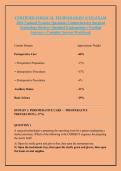
CERTIFIED SURGICAL TECHNOLOGIST (CST) EXAM
2026 Updated Practice Questions Comprehensive Surgical
Technology Review • Detailed Explanations • Verified
Answers • Complete Success Workbook
Content Domain Approximate Weight
Perioperative Care ~60%
─ Preoperative Preparation ~17%
─ Intraoperative Procedures ~37%
─ Postoperative Procedures ~6%
Ancillary Duties ~11%
Basic Science ~29%
DOMAIN 1: PERIOPERATIVE CARE — PREOPERATIVE
PREPARATION (~17%)
QUESTION 1
A surgical technologist is preparing the operating room for a patient undergoing a
cholecystectomy. Which of the following is the CORRECT sequence for preparing
the sterile field?
A) Open the sterile gown and gloves first, then open the instrument tray
B) Open the instrument tray, then open the sterile gown and gloves, then open
the basin set and supplies
,C) Open all items simultaneously to save time
D) Open the basin set first, then the instrument tray, then the gowns
RATIONALE:
Correct Answer: B) Open the instrument tray, then open the sterile gown and
gloves, then open the basin set and supplies
The correct sequence for opening a sterile field is: (1) Open the instrument
tray first (this is the largest sterile field and provides a stable base), (2) Open
the sterile gown and gloves next, and (3) Open the basin set and any remaining
supplies last. This sequence ensures that the sterile field is established in an
organized manner and prevents contamination of the field. Opening all items
simultaneously (Option C) increases the risk of contamination and is not
recommended. The sterile field should be prepared just before the procedure
begins.
Option A: Gowns and gloves should not be opened before the instrument tray; the
tray establishes the sterile field.
Option C: Opening all items simultaneously is unsafe and increases contamination
risk.
Option D: The instrument tray should be opened first, not the basin set.
QUESTION 2
A patient is scheduled for surgery under general anesthesia. Which of the
following is the PRIMARY responsibility of the surgical technologist during the
preoperative phase?
A) Obtaining informed consent from the patient
B) Ensuring that the surgical site is correctly marked and that the "time-out"
procedure is performed
C) Administering preoperative medications
D) Performing the patient's physical examination
RATIONALE:
,Correct Answer: B) Ensuring that the surgical site is correctly marked and
that the "time-out" procedure is performed
The surgical technologist's primary preoperative responsibility is to participate in
the "time-out" procedure and ensure the correct surgical site is marked. The
time-out is a critical patient safety step that occurs immediately before the
procedure and includes: (1) confirming the correct patient identity (using at least
two identifiers), (2) confirming the correct procedure, (3) confirming the correct
surgical site, (4) verifying that all necessary equipment and implants are available,
and (5) ensuring that prophylactic antibiotics have been administered if
indicated. Informed consent (Option A), medication administration (Option C), and
physical examination (Option D) are outside the surgical technologist's scope of
practice.
Option A: Informed consent is obtained by the surgeon or another qualified
provider.
Option C: Preoperative medications are administered by anesthesia or nursing
staff.
Option D: Physical examination is performed by the surgeon or primary care
provider.
QUESTION 3
Which of the following is a CORRECT principle of surgical skin preparation
(prepping)?
A) Prep from the incision site outward in a circular motion
B) Prep from the incision site outward in a concentric circular motion, moving
toward the periphery
C) Prep from the periphery inward toward the incision site
D) Prep using a back-and-forth scrubbing motion
RATIONALE:
Correct Answer: B) Prep from the incision site outward in a concentric
circular motion, moving toward the periphery
, The correct technique for surgical skin preparation (prepping) is to prep from the
incision site outward in a concentric circular motion, moving toward the
periphery. This technique ensures that: (1) the cleanest area (the incision site) is
prepped first, (2) contaminants are moved away from the incision site, and (3) the
prep solution is applied in a systematic manner. The prep should be applied using
sterile prep sponges or applicators, and the area should be allowed to dry
completely before draping.
Option A: Circular motion is correct, but the prep should move outward, not just
"from" the incision.
Option C: Prepping from the periphery inward would move contaminants toward
the incision site.
Option D: Back-and-forth scrubbing is not recommended; circular motion is
preferred.
QUESTION 4
A patient is positioned in the lithotomy position for a gynecological procedure.
Which of the following is a potential complication of this position that the surgical
team should monitor for?
A) Compartment syndrome
B) Brachial plexus injury
C) Pressure injury to the elbows
D) Air embolism
RATIONALE:
Correct Answer: A) Compartment syndrome
The lithotomy position (patient supine with legs elevated and abducted in stirrups)
carries a risk of compartment syndrome due to prolonged elevation of the legs,
which can reduce perfusion to the lower extremities. Other complications of the
lithotomy position include: (1) peroneal nerve injury (from pressure on the lateral
aspect of the knee), (2) lower extremity neuropathy, and (3) venous
thromboembolism. The surgical team should monitor for signs of compartment
syndrome, including pain, swelling, and pallor of the lower extremities.
2026 Updated Practice Questions Comprehensive Surgical
Technology Review • Detailed Explanations • Verified
Answers • Complete Success Workbook
Content Domain Approximate Weight
Perioperative Care ~60%
─ Preoperative Preparation ~17%
─ Intraoperative Procedures ~37%
─ Postoperative Procedures ~6%
Ancillary Duties ~11%
Basic Science ~29%
DOMAIN 1: PERIOPERATIVE CARE — PREOPERATIVE
PREPARATION (~17%)
QUESTION 1
A surgical technologist is preparing the operating room for a patient undergoing a
cholecystectomy. Which of the following is the CORRECT sequence for preparing
the sterile field?
A) Open the sterile gown and gloves first, then open the instrument tray
B) Open the instrument tray, then open the sterile gown and gloves, then open
the basin set and supplies
,C) Open all items simultaneously to save time
D) Open the basin set first, then the instrument tray, then the gowns
RATIONALE:
Correct Answer: B) Open the instrument tray, then open the sterile gown and
gloves, then open the basin set and supplies
The correct sequence for opening a sterile field is: (1) Open the instrument
tray first (this is the largest sterile field and provides a stable base), (2) Open
the sterile gown and gloves next, and (3) Open the basin set and any remaining
supplies last. This sequence ensures that the sterile field is established in an
organized manner and prevents contamination of the field. Opening all items
simultaneously (Option C) increases the risk of contamination and is not
recommended. The sterile field should be prepared just before the procedure
begins.
Option A: Gowns and gloves should not be opened before the instrument tray; the
tray establishes the sterile field.
Option C: Opening all items simultaneously is unsafe and increases contamination
risk.
Option D: The instrument tray should be opened first, not the basin set.
QUESTION 2
A patient is scheduled for surgery under general anesthesia. Which of the
following is the PRIMARY responsibility of the surgical technologist during the
preoperative phase?
A) Obtaining informed consent from the patient
B) Ensuring that the surgical site is correctly marked and that the "time-out"
procedure is performed
C) Administering preoperative medications
D) Performing the patient's physical examination
RATIONALE:
,Correct Answer: B) Ensuring that the surgical site is correctly marked and
that the "time-out" procedure is performed
The surgical technologist's primary preoperative responsibility is to participate in
the "time-out" procedure and ensure the correct surgical site is marked. The
time-out is a critical patient safety step that occurs immediately before the
procedure and includes: (1) confirming the correct patient identity (using at least
two identifiers), (2) confirming the correct procedure, (3) confirming the correct
surgical site, (4) verifying that all necessary equipment and implants are available,
and (5) ensuring that prophylactic antibiotics have been administered if
indicated. Informed consent (Option A), medication administration (Option C), and
physical examination (Option D) are outside the surgical technologist's scope of
practice.
Option A: Informed consent is obtained by the surgeon or another qualified
provider.
Option C: Preoperative medications are administered by anesthesia or nursing
staff.
Option D: Physical examination is performed by the surgeon or primary care
provider.
QUESTION 3
Which of the following is a CORRECT principle of surgical skin preparation
(prepping)?
A) Prep from the incision site outward in a circular motion
B) Prep from the incision site outward in a concentric circular motion, moving
toward the periphery
C) Prep from the periphery inward toward the incision site
D) Prep using a back-and-forth scrubbing motion
RATIONALE:
Correct Answer: B) Prep from the incision site outward in a concentric
circular motion, moving toward the periphery
, The correct technique for surgical skin preparation (prepping) is to prep from the
incision site outward in a concentric circular motion, moving toward the
periphery. This technique ensures that: (1) the cleanest area (the incision site) is
prepped first, (2) contaminants are moved away from the incision site, and (3) the
prep solution is applied in a systematic manner. The prep should be applied using
sterile prep sponges or applicators, and the area should be allowed to dry
completely before draping.
Option A: Circular motion is correct, but the prep should move outward, not just
"from" the incision.
Option C: Prepping from the periphery inward would move contaminants toward
the incision site.
Option D: Back-and-forth scrubbing is not recommended; circular motion is
preferred.
QUESTION 4
A patient is positioned in the lithotomy position for a gynecological procedure.
Which of the following is a potential complication of this position that the surgical
team should monitor for?
A) Compartment syndrome
B) Brachial plexus injury
C) Pressure injury to the elbows
D) Air embolism
RATIONALE:
Correct Answer: A) Compartment syndrome
The lithotomy position (patient supine with legs elevated and abducted in stirrups)
carries a risk of compartment syndrome due to prolonged elevation of the legs,
which can reduce perfusion to the lower extremities. Other complications of the
lithotomy position include: (1) peroneal nerve injury (from pressure on the lateral
aspect of the knee), (2) lower extremity neuropathy, and (3) venous
thromboembolism. The surgical team should monitor for signs of compartment
syndrome, including pain, swelling, and pallor of the lower extremities.


