
ORT Operating Room Technician Exam Prep 2026 Updated
Practice Questions Comprehensive Surgical Technology
Review Detailed Explanations, Verified Answers, Complete
Success Workbook
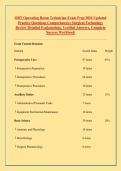
Exam Content Domains
Domain Scored Items Weight
Perioperative Care 97 items 65%
└ Preoperative Preparation 19 items
└ Intraoperative Procedures 68 items
└ Postoperative Procedures 10 items
Ancillary Duties 23 items 15%
└ Administrative/Personnel Tasks 7 items
└ Equipment Sterilization/Maintenance 16 items
Basic Science 30 items 20%
└ Anatomy and Physiology 18 items
└ Microbiology 6 items
└ Surgical Pharmacology 6 items
,DOMAIN 1: PERIOPERATIVE CARE — PREOPERATIVE
PREPARATION (Questions 1-25)
QUESTION 1
An operating room technician is preparing the operating room for a scheduled
surgical procedure. Which of the following is the FIRST step in establishing the
sterile field?
A) Perform a surgical hand scrub
B) Don a sterile gown and gloves
C) Open the sterile back table pack onto the back table
D) Open the sterile gown and gloves onto the field
ANSWER: C) Open the sterile back table pack onto the back table
RATIONALE: The first step in establishing the sterile field is to open the sterile
back table pack onto the back table. The back table serves as the foundation for the
entire sterile field. The pack should be opened away from the body, touching only
the outer wrapper. The surgical hand scrub (A) and gowning/gloving (B, D) occur
after the sterile field has been established.
QUESTION 2
The surgical "Time Out" is performed immediately before incision. Which of the
following is the PRIMARY purpose of this safety check?
A) To allow the surgical team to take a break before the procedure
B) To verify the correct patient, correct procedure, correct site/side, and
availability of implants/special equipment
C) To review the patient's complete medical history
D) To check the sterilization indicators on all instruments
ANSWER: B) To verify the correct patient, correct procedure, correct
site/side, and availability of implants/special equipment
RATIONALE: The "Time Out" is a critical patient safety protocol performed
immediately before incision. It requires the entire surgical team to verbally confirm
the correct patient identity, correct surgical site/side, correct procedure, and the
,availability of any implants or special equipment. This prevents wrong-site, wrong-
patient, and wrong-procedure errors.
QUESTION 3
An operating room technician is preparing a patient for a surgical procedure. The
patient has a documented allergy to latex. Which of the following actions is MOST
appropriate?
A) Use standard latex gloves and instruments
B) Verify that all supplies in the room are latex-free and label the room
appropriately
C) Request that the patient take an antihistamine before surgery
D) Use latex gloves but double-glove for additional protection
ANSWER: B) Verify that all supplies in the room are latex-free and label the
room appropriately
RATIONALE: For a patient with a documented latex allergy, all supplies in the
room must be latex-free, and the room should be appropriately labeled to alert all
team members. This includes latex-free gloves, drapes, catheters, and other
supplies. Using latex products (A, D) could trigger a life-threatening anaphylactic
reaction. Antihistamines (C) are not sufficient to prevent a severe allergic reaction
to latex.
QUESTION 4
An operating room technician is performing a surgical hand scrub. What is the
CORRECT sequence for the scrub procedure?
A) Wash hands only, rinse, then proceed to gowning
B) Clean under fingernails, wash hands to elbows, rinse from fingertips to elbows
C) Wash arms to elbows, clean under fingernails, rinse from elbows to fingertips
D) Wash hands and arms simultaneously, rinse in any direction
ANSWER: B) Clean under fingernails, wash hands to elbows, rinse from
fingertips to elbows
RATIONALE: The correct sequence for a surgical hand scrub is: (1) clean under
the fingernails with a disposable pick, (2) wash hands and arms up to the elbows
, using the prescribed scrub technique (typically 3-5 minutes), and (3) rinse from the
fingertips to the elbows, allowing water to drip off the elbows. This sequence
ensures that the cleanest areas (hands) are not contaminated by water running from
the elbows.
QUESTION 5
An operating room technician is opening a sterile package onto the sterile field.
Which of the following actions would COMPROMISE the sterile field?
A) Opening the inner wrapper away from the body
B) Reaching over the sterile field to place an item
C) Opening the sterile package on a surface at waist level
D) Allowing a 1-inch margin around the sterile field
ANSWER: B) Reaching over the sterile field to place an item
RATIONALE: Reaching over the sterile field contaminates it because the
technician's non-sterile arms pass over the sterile area. Sterile packages should be
opened away from the body (A) and at waist level (C). A 1-inch margin around the
sterile field is considered contaminated (D), but reaching over the field is an active,
immediate break in sterile technique.
QUESTION 6
An operating room technician is preparing the operating room environment. The
room temperature should typically be maintained at which of the following ranges?
A) 60-65°F
B) 68-73°F
C) 75-80°F
D) 85-90°F
ANSWER: B) 68-73°F
RATIONALE: The operating room temperature should be maintained at 68-73°F
(20-23°C). This range balances patient safety (preventing hypothermia) with team
comfort (as the surgical team wears sterile gowns). Temperatures below 68°F (A)
increase the risk of patient hypothermia. Temperatures above 73°F (C, D) increase
the risk of surgeon fatigue and bacterial growth.
Practice Questions Comprehensive Surgical Technology
Review Detailed Explanations, Verified Answers, Complete
Success Workbook
Exam Content Domains
Domain Scored Items Weight
Perioperative Care 97 items 65%
└ Preoperative Preparation 19 items
└ Intraoperative Procedures 68 items
└ Postoperative Procedures 10 items
Ancillary Duties 23 items 15%
└ Administrative/Personnel Tasks 7 items
└ Equipment Sterilization/Maintenance 16 items
Basic Science 30 items 20%
└ Anatomy and Physiology 18 items
└ Microbiology 6 items
└ Surgical Pharmacology 6 items
,DOMAIN 1: PERIOPERATIVE CARE — PREOPERATIVE
PREPARATION (Questions 1-25)
QUESTION 1
An operating room technician is preparing the operating room for a scheduled
surgical procedure. Which of the following is the FIRST step in establishing the
sterile field?
A) Perform a surgical hand scrub
B) Don a sterile gown and gloves
C) Open the sterile back table pack onto the back table
D) Open the sterile gown and gloves onto the field
ANSWER: C) Open the sterile back table pack onto the back table
RATIONALE: The first step in establishing the sterile field is to open the sterile
back table pack onto the back table. The back table serves as the foundation for the
entire sterile field. The pack should be opened away from the body, touching only
the outer wrapper. The surgical hand scrub (A) and gowning/gloving (B, D) occur
after the sterile field has been established.
QUESTION 2
The surgical "Time Out" is performed immediately before incision. Which of the
following is the PRIMARY purpose of this safety check?
A) To allow the surgical team to take a break before the procedure
B) To verify the correct patient, correct procedure, correct site/side, and
availability of implants/special equipment
C) To review the patient's complete medical history
D) To check the sterilization indicators on all instruments
ANSWER: B) To verify the correct patient, correct procedure, correct
site/side, and availability of implants/special equipment
RATIONALE: The "Time Out" is a critical patient safety protocol performed
immediately before incision. It requires the entire surgical team to verbally confirm
the correct patient identity, correct surgical site/side, correct procedure, and the
,availability of any implants or special equipment. This prevents wrong-site, wrong-
patient, and wrong-procedure errors.
QUESTION 3
An operating room technician is preparing a patient for a surgical procedure. The
patient has a documented allergy to latex. Which of the following actions is MOST
appropriate?
A) Use standard latex gloves and instruments
B) Verify that all supplies in the room are latex-free and label the room
appropriately
C) Request that the patient take an antihistamine before surgery
D) Use latex gloves but double-glove for additional protection
ANSWER: B) Verify that all supplies in the room are latex-free and label the
room appropriately
RATIONALE: For a patient with a documented latex allergy, all supplies in the
room must be latex-free, and the room should be appropriately labeled to alert all
team members. This includes latex-free gloves, drapes, catheters, and other
supplies. Using latex products (A, D) could trigger a life-threatening anaphylactic
reaction. Antihistamines (C) are not sufficient to prevent a severe allergic reaction
to latex.
QUESTION 4
An operating room technician is performing a surgical hand scrub. What is the
CORRECT sequence for the scrub procedure?
A) Wash hands only, rinse, then proceed to gowning
B) Clean under fingernails, wash hands to elbows, rinse from fingertips to elbows
C) Wash arms to elbows, clean under fingernails, rinse from elbows to fingertips
D) Wash hands and arms simultaneously, rinse in any direction
ANSWER: B) Clean under fingernails, wash hands to elbows, rinse from
fingertips to elbows
RATIONALE: The correct sequence for a surgical hand scrub is: (1) clean under
the fingernails with a disposable pick, (2) wash hands and arms up to the elbows
, using the prescribed scrub technique (typically 3-5 minutes), and (3) rinse from the
fingertips to the elbows, allowing water to drip off the elbows. This sequence
ensures that the cleanest areas (hands) are not contaminated by water running from
the elbows.
QUESTION 5
An operating room technician is opening a sterile package onto the sterile field.
Which of the following actions would COMPROMISE the sterile field?
A) Opening the inner wrapper away from the body
B) Reaching over the sterile field to place an item
C) Opening the sterile package on a surface at waist level
D) Allowing a 1-inch margin around the sterile field
ANSWER: B) Reaching over the sterile field to place an item
RATIONALE: Reaching over the sterile field contaminates it because the
technician's non-sterile arms pass over the sterile area. Sterile packages should be
opened away from the body (A) and at waist level (C). A 1-inch margin around the
sterile field is considered contaminated (D), but reaching over the field is an active,
immediate break in sterile technique.
QUESTION 6
An operating room technician is preparing the operating room environment. The
room temperature should typically be maintained at which of the following ranges?
A) 60-65°F
B) 68-73°F
C) 75-80°F
D) 85-90°F
ANSWER: B) 68-73°F
RATIONALE: The operating room temperature should be maintained at 68-73°F
(20-23°C). This range balances patient safety (preventing hypothermia) with team
comfort (as the surgical team wears sterile gowns). Temperatures below 68°F (A)
increase the risk of patient hypothermia. Temperatures above 73°F (C, D) increase
the risk of surgeon fatigue and bacterial growth.


