

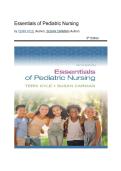
Essentials of Pediatric Nursing
by TERRI KYLE (Author), SUSAN CARMAN (Author)
5th Edition
,TABLE OF CONTENTS
UNIT I Foundations of Pediatric Nursing
Chapter 1: Introduction to Child Health and Pediatric Nursing
Chapter 2: Factors Influencing Child Health
UNIT II Health Promotion of the Growing Child and Family
Chapter 3: Growth and Development of the Newborn and Infant
Chapter 4: Growth and Development of the Toddler
Chapter 5: Growth and Development of the Preschooler
Chapter 6: Growth and Development of the School-Age Child
Chapter 7: Growth and Development of the Adolescent
UNIT III Working With Children and Families
Chapter 8: Atraumatic Care of Children and Families
Chapter 9: Health Supervision
Chapter 10: Health Assessment of Children
Chapter 11: Caring for Children in Diverse Settings
Chapter 12: Caring for the Special Needs Child
Chapter 13: Key Pediatric Nursing Interventions
Chapter 14: Nursing Care of the Child With an Alteration in Comfort–Pain Assessment and Management
UNIT IV Nursing Care of the Child With a Health Disorder
Chapter 15: Nursing Care of the Child With an Infection
Chapter 16: Nursing Care of the Child With an Alteration in Intracranial Regulation/Neurologic Disorder
Chapter 17: Nursing Care of the Child With an Alteration in Sensory Perception/Disorder of the Eyes or
Ears
Chapter 18: Nursing Care of the Child With an Alteration in Gas Exchange/Respiratory Disorder
Chapter 19: Nursing Care of the Child With an Alteration in Perfusion/Cardiovascular Disorder
Chapter 20: Nursing Care of the Child With an Alteration in Bowel Elimination/Gastrointestinal Disorder
Chapter 21: Nursing Care of the Child With an Alteration in Urinary Elimination/Genitourinary Disorder
Chapter 22: Nursing Care of the Child With an Alteration in Mobility/Neuromuscular or Musculoskeletal
Disorder
,Chapter 23: Nursing Care of the Child With an Alteration in Tissue Integrity/Integumentary Disorder
Chapter 24: Nursing Care of the Child With an Alteration in Cellular Regulation/Hematologic or
Neoplastic Disorder
Chapter 25: Nursing Care of the Child With an Alteration in Immunity or Immunologic Disorder
Chapter 26: Nursing Care of the Child With an Alteration in Metabolism/Endocrine DisorderChapter 27:
Nursing Care of the Child With an Alteration in Genetics
Chapter 28: Nursing Care of the Child With an Alteration in Behavior, Cognition, or Development
Chapter 29: Nursing Care During a Pediatric Emergency
, Test Bank: Essentials of Pediatric Nursing, 5th Edition
Kyle (2025) — Chapters 1–29
Multiple Choice Questions and Answers
CHAPTER 1: INTRODUCTION TO CHILD HEALTH AND PEDIATRIC
NURSING
1. The nurse is reviewing statistics on child health. Which factor is MOST important in determining a
child's health status?
A) Genetic predisposition
B) Social determinants of health
C) Access to specialty care
D) Immunization history
Answer: B
Rationale: Social determinants of health—including poverty, education, housing, and environment—
have the greatest overall impact on child health outcomes. While genetics, immunizations, and care
access are important, social factors broadly shape health across populations.
2. The United Nations Convention on the Rights of the Child emphasizes which principle in pediatric
nursing practice?
A) Children should be treated as small adults
B) Parents have absolute authority over children's care decisions
C) Children have the right to participate in decisions affecting their health
D) Medical providers determine all aspects of a child's care
Answer: C
Rationale: The UN Convention on the Rights of the Child recognizes children as rights-holders who
should participate in decisions affecting them, consistent with their evolving capacities.
by TERRI KYLE (Author), SUSAN CARMAN (Author)
5th Edition
,TABLE OF CONTENTS
UNIT I Foundations of Pediatric Nursing
Chapter 1: Introduction to Child Health and Pediatric Nursing
Chapter 2: Factors Influencing Child Health
UNIT II Health Promotion of the Growing Child and Family
Chapter 3: Growth and Development of the Newborn and Infant
Chapter 4: Growth and Development of the Toddler
Chapter 5: Growth and Development of the Preschooler
Chapter 6: Growth and Development of the School-Age Child
Chapter 7: Growth and Development of the Adolescent
UNIT III Working With Children and Families
Chapter 8: Atraumatic Care of Children and Families
Chapter 9: Health Supervision
Chapter 10: Health Assessment of Children
Chapter 11: Caring for Children in Diverse Settings
Chapter 12: Caring for the Special Needs Child
Chapter 13: Key Pediatric Nursing Interventions
Chapter 14: Nursing Care of the Child With an Alteration in Comfort–Pain Assessment and Management
UNIT IV Nursing Care of the Child With a Health Disorder
Chapter 15: Nursing Care of the Child With an Infection
Chapter 16: Nursing Care of the Child With an Alteration in Intracranial Regulation/Neurologic Disorder
Chapter 17: Nursing Care of the Child With an Alteration in Sensory Perception/Disorder of the Eyes or
Ears
Chapter 18: Nursing Care of the Child With an Alteration in Gas Exchange/Respiratory Disorder
Chapter 19: Nursing Care of the Child With an Alteration in Perfusion/Cardiovascular Disorder
Chapter 20: Nursing Care of the Child With an Alteration in Bowel Elimination/Gastrointestinal Disorder
Chapter 21: Nursing Care of the Child With an Alteration in Urinary Elimination/Genitourinary Disorder
Chapter 22: Nursing Care of the Child With an Alteration in Mobility/Neuromuscular or Musculoskeletal
Disorder
,Chapter 23: Nursing Care of the Child With an Alteration in Tissue Integrity/Integumentary Disorder
Chapter 24: Nursing Care of the Child With an Alteration in Cellular Regulation/Hematologic or
Neoplastic Disorder
Chapter 25: Nursing Care of the Child With an Alteration in Immunity or Immunologic Disorder
Chapter 26: Nursing Care of the Child With an Alteration in Metabolism/Endocrine DisorderChapter 27:
Nursing Care of the Child With an Alteration in Genetics
Chapter 28: Nursing Care of the Child With an Alteration in Behavior, Cognition, or Development
Chapter 29: Nursing Care During a Pediatric Emergency
, Test Bank: Essentials of Pediatric Nursing, 5th Edition
Kyle (2025) — Chapters 1–29
Multiple Choice Questions and Answers
CHAPTER 1: INTRODUCTION TO CHILD HEALTH AND PEDIATRIC
NURSING
1. The nurse is reviewing statistics on child health. Which factor is MOST important in determining a
child's health status?
A) Genetic predisposition
B) Social determinants of health
C) Access to specialty care
D) Immunization history
Answer: B
Rationale: Social determinants of health—including poverty, education, housing, and environment—
have the greatest overall impact on child health outcomes. While genetics, immunizations, and care
access are important, social factors broadly shape health across populations.
2. The United Nations Convention on the Rights of the Child emphasizes which principle in pediatric
nursing practice?
A) Children should be treated as small adults
B) Parents have absolute authority over children's care decisions
C) Children have the right to participate in decisions affecting their health
D) Medical providers determine all aspects of a child's care
Answer: C
Rationale: The UN Convention on the Rights of the Child recognizes children as rights-holders who
should participate in decisions affecting them, consistent with their evolving capacities.


