
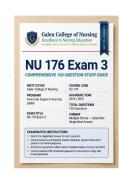
,NU 176/NU176 Exam 3 – Geriatric Nursing –
Actual Q&A (GCN) (Updated PDF)
1. Which of the following is a normal age-related change in the cardiovascular
system of an older adult?
A) Decreased cardiac output and increased systolic blood pressure
B) Increased cardiac output and decreased blood pressure
C) Decreased peripheral vascular resistance and increased maximum heart rate
D) Increased arterial elasticity and reduced systolic pressure
Correct Answer: A) Decreased cardiac output and increased systolic blood
pressure
Rationale: Normal cardiovascular aging includes decreased cardiac output,
increased peripheral vascular resistance, and increased systolic blood pressure
from reduced arterial elasticity. Maximum heart rate decreases rather than
increases. These changes raise the risk for hypertension and heart failure,
making option A the only accurate description.
2. A nurse is teaching about age-related respiratory changes. Which finding is
expected in an older adult?
A) Increased vital capacity
B) Increased residual volume
C) Decreased residual volume
D) Increased lung elasticity
Correct Answer: B) Increased residual volume
,Rationale: Aging causes decreased lung elasticity, decreased vital capacity,
increased residual volume, and weakened respiratory muscles. These changes
reduce gas exchange efficiency and raise infection risk. Increased vital capacity
and lung elasticity do not occur with normal aging, so option B is correct.
3. An older adult asks why reaction time slows with age. Which explanation is
accurate?
A) Increased nerve cell mass
B) Increased brain weight
C) Loss of nerve cell mass and demyelination
D) Faster synaptic transmission
Correct Answer: C) Loss of nerve cell mass and demyelination
Rationale: Neurological aging includes loss of nerve cell mass, brain atrophy,
decreased brain weight, and demyelination. These changes slow nerve
conduction and reaction time. Nerve cell mass and brain weight decrease rather
than increase, making option C the correct explanation.
4. Which sensory change is most directly related to presbycusis?
A) Difficulty reading fine print
B) Decreased ability to taste sweet
C) Cloudy lens
D) Difficulty discriminating speech in noisy environments
, Correct Answer: D) Difficulty discriminating speech in noisy environments
Rationale: Presbycusis is age-related sensorineural hearing loss, often causing
difficulty understanding speech when background noise is present. Difficulty
reading fine print is presbyopia, decreased taste is a gustatory change, and a
cloudy lens suggests cataracts. Therefore option D is correct.
5. What should the nurse assess before recommending a walking program for an
older adult?
A) Ability to run on a treadmill
B) Ability to walk and well-fitting shoes
C) Previous weight-lifting experience
D) Recent caloric intake
Correct Answer: B) Ability to walk and well-fitting shoes
Rationale: A safe walking program requires confirming the older adult has the
physical ability to walk and shoes that fit well to prevent falls and foot injuries.
Running ability, weight-lifting history, and caloric intake are not primary
requirements for initiating a walking program.
6. Which statement by an older adult indicates a need for further teaching
about endurance exercise?
A) Endurance activities can improve my heart function
B) Brisk walking helps my breathing
C) Weight lifting is not helpful because it only builds muscle
D) I should choose activities I enjoy
Actual Q&A (GCN) (Updated PDF)
1. Which of the following is a normal age-related change in the cardiovascular
system of an older adult?
A) Decreased cardiac output and increased systolic blood pressure
B) Increased cardiac output and decreased blood pressure
C) Decreased peripheral vascular resistance and increased maximum heart rate
D) Increased arterial elasticity and reduced systolic pressure
Correct Answer: A) Decreased cardiac output and increased systolic blood
pressure
Rationale: Normal cardiovascular aging includes decreased cardiac output,
increased peripheral vascular resistance, and increased systolic blood pressure
from reduced arterial elasticity. Maximum heart rate decreases rather than
increases. These changes raise the risk for hypertension and heart failure,
making option A the only accurate description.
2. A nurse is teaching about age-related respiratory changes. Which finding is
expected in an older adult?
A) Increased vital capacity
B) Increased residual volume
C) Decreased residual volume
D) Increased lung elasticity
Correct Answer: B) Increased residual volume
,Rationale: Aging causes decreased lung elasticity, decreased vital capacity,
increased residual volume, and weakened respiratory muscles. These changes
reduce gas exchange efficiency and raise infection risk. Increased vital capacity
and lung elasticity do not occur with normal aging, so option B is correct.
3. An older adult asks why reaction time slows with age. Which explanation is
accurate?
A) Increased nerve cell mass
B) Increased brain weight
C) Loss of nerve cell mass and demyelination
D) Faster synaptic transmission
Correct Answer: C) Loss of nerve cell mass and demyelination
Rationale: Neurological aging includes loss of nerve cell mass, brain atrophy,
decreased brain weight, and demyelination. These changes slow nerve
conduction and reaction time. Nerve cell mass and brain weight decrease rather
than increase, making option C the correct explanation.
4. Which sensory change is most directly related to presbycusis?
A) Difficulty reading fine print
B) Decreased ability to taste sweet
C) Cloudy lens
D) Difficulty discriminating speech in noisy environments
, Correct Answer: D) Difficulty discriminating speech in noisy environments
Rationale: Presbycusis is age-related sensorineural hearing loss, often causing
difficulty understanding speech when background noise is present. Difficulty
reading fine print is presbyopia, decreased taste is a gustatory change, and a
cloudy lens suggests cataracts. Therefore option D is correct.
5. What should the nurse assess before recommending a walking program for an
older adult?
A) Ability to run on a treadmill
B) Ability to walk and well-fitting shoes
C) Previous weight-lifting experience
D) Recent caloric intake
Correct Answer: B) Ability to walk and well-fitting shoes
Rationale: A safe walking program requires confirming the older adult has the
physical ability to walk and shoes that fit well to prevent falls and foot injuries.
Running ability, weight-lifting history, and caloric intake are not primary
requirements for initiating a walking program.
6. Which statement by an older adult indicates a need for further teaching
about endurance exercise?
A) Endurance activities can improve my heart function
B) Brisk walking helps my breathing
C) Weight lifting is not helpful because it only builds muscle
D) I should choose activities I enjoy


