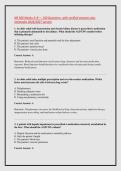
NR 568 Weeks 4–8 — 100 Questions with verified answers plus
rationales 2026/2027 version
1. An older adult with hypertension and chronic kidney disease is prescribed a medication
that is primarily eliminated by the kidneys. What should the AGPCNP consider before
initiating therapy?
A. The patient's renal function and potential need for dose adjustment
B. The patient's hair color
C. The patient's preferred meal
D. The patient's visual acuity alone
Correct Answer: A
Rationale: Reduced renal function can decrease drug clearance and increase medication
exposure. Renal function should therefore be considered when selecting and dosing renally
eliminated medications.
2. An older adult takes multiple prescription and over-the-counter medications. Which
factor most increases the risk of adverse drug events?
A. Polypharmacy
B. Drinking adequate water
C. Maintaining a medication list
D. Using one pharmacy consistently
Correct Answer: A
Rationale: Polypharmacy increases the likelihood of drug–drug interactions, duplicate therapy,
inappropriate prescribing, and medication-related adverse events.
3. A patient with hepatic impairment is prescribed a medication extensively metabolized by
the liver. What should the AGPCNP evaluate?
A. Hepatic function and the medication's metabolic pathway
B. Only the patient's height
C. The patient's blood type
D. The patient's exercise preference
Correct Answer: A
,Rationale: Hepatic impairment can reduce metabolism and increase drug exposure. The
medication's metabolism and the severity of liver dysfunction should be considered.
4. A patient taking warfarin begins a medication known to interact with warfarin. What is
the most appropriate approach?
A. Assess the interaction and monitor anticoagulation appropriately
B. Tell the patient to double the warfarin dose
C. Stop warfarin without assessment
D. Ignore the interaction
Correct Answer: A
Rationale: Warfarin has numerous clinically significant interactions. Changes in interacting
medications can alter anticoagulant effect and bleeding or thrombotic risk.
5. A patient taking an ACE inhibitor develops facial and tongue swelling. What adverse
reaction should be suspected?
A. Angioedema
B. Constipation
C. Hypoglycemia
D. Ototoxicity
Correct Answer: A
Rationale: ACE inhibitors can cause angioedema, which may involve the tongue and upper
airway and can become life-threatening.
6. A patient taking an ACE inhibitor develops a persistent dry cough. What is a likely
explanation?
A. Increased bradykinin activity
B. Increased insulin secretion
C. Excess gastric acid
D. Increased platelet production
Correct Answer: A
,Rationale: ACE inhibition decreases bradykinin breakdown. Accumulation of bradykinin is
associated with the characteristic persistent dry cough seen with ACE inhibitors.
7. A patient taking spironolactone has a potassium level of 6.1 mEq/L. What medication-
related problem should be suspected?
A. Hyperkalemia related to potassium-sparing therapy
B. Hypokalemia
C. Hypocalcemia
D. Hypernatremia
Correct Answer: A
Rationale: Spironolactone antagonizes aldosterone and reduces potassium excretion, increasing
the risk of hyperkalemia.
8. A patient taking a loop diuretic develops weakness and muscle cramps. Which
laboratory abnormality should be evaluated?
A. Hypokalemia
B. Hyperkalemia only
C. Hypernatremia only
D. Increased hemoglobin
Correct Answer: A
Rationale: Loop diuretics increase renal sodium and water excretion and can also increase
potassium loss, potentially causing hypokalemia.
9. A patient taking a statin reports severe unexplained muscle pain and weakness. Which
laboratory test may be appropriate when significant muscle injury is suspected?
A. Creatine kinase
B. Hemoglobin A1c only
C. Serum sodium only
D. Thyroid antibody only
Correct Answer: A
, Rationale: Significant muscle symptoms during statin therapy can indicate myopathy or, rarely,
rhabdomyolysis. Creatine kinase can help evaluate muscle injury when clinically indicated.
10. A patient taking digoxin develops nausea, confusion, and visual disturbances. What
should the AGPCNP consider?
A. Possible digoxin toxicity
B. Improved cardiac function
C. Iron deficiency
D. Seasonal allergies
Correct Answer: A
Rationale: Gastrointestinal, neurologic, and visual symptoms can occur with digoxin toxicity.
Medication review, renal function, electrolytes, and an appropriately timed drug level may be
considered.
11. Why is renal function particularly important when prescribing digoxin?
A. Digoxin is substantially eliminated through the kidneys
B. Digoxin is eliminated exclusively through the lungs
C. Renal function has no effect on digoxin
D. Digoxin is converted entirely into insulin
Correct Answer: A
Rationale: Reduced renal clearance can increase digoxin concentrations and toxicity risk,
making renal function an important dosing consideration.
12. A patient taking a beta blocker has a heart rate of 48/min with dizziness. What should
the clinician consider?
A. Symptomatic bradycardia related to excessive beta blockade
B. Therapeutic success in every case
C. Hyperthyroidism
D. Increased sympathetic stimulation
Correct Answer: A
rationales 2026/2027 version
1. An older adult with hypertension and chronic kidney disease is prescribed a medication
that is primarily eliminated by the kidneys. What should the AGPCNP consider before
initiating therapy?
A. The patient's renal function and potential need for dose adjustment
B. The patient's hair color
C. The patient's preferred meal
D. The patient's visual acuity alone
Correct Answer: A
Rationale: Reduced renal function can decrease drug clearance and increase medication
exposure. Renal function should therefore be considered when selecting and dosing renally
eliminated medications.
2. An older adult takes multiple prescription and over-the-counter medications. Which
factor most increases the risk of adverse drug events?
A. Polypharmacy
B. Drinking adequate water
C. Maintaining a medication list
D. Using one pharmacy consistently
Correct Answer: A
Rationale: Polypharmacy increases the likelihood of drug–drug interactions, duplicate therapy,
inappropriate prescribing, and medication-related adverse events.
3. A patient with hepatic impairment is prescribed a medication extensively metabolized by
the liver. What should the AGPCNP evaluate?
A. Hepatic function and the medication's metabolic pathway
B. Only the patient's height
C. The patient's blood type
D. The patient's exercise preference
Correct Answer: A
,Rationale: Hepatic impairment can reduce metabolism and increase drug exposure. The
medication's metabolism and the severity of liver dysfunction should be considered.
4. A patient taking warfarin begins a medication known to interact with warfarin. What is
the most appropriate approach?
A. Assess the interaction and monitor anticoagulation appropriately
B. Tell the patient to double the warfarin dose
C. Stop warfarin without assessment
D. Ignore the interaction
Correct Answer: A
Rationale: Warfarin has numerous clinically significant interactions. Changes in interacting
medications can alter anticoagulant effect and bleeding or thrombotic risk.
5. A patient taking an ACE inhibitor develops facial and tongue swelling. What adverse
reaction should be suspected?
A. Angioedema
B. Constipation
C. Hypoglycemia
D. Ototoxicity
Correct Answer: A
Rationale: ACE inhibitors can cause angioedema, which may involve the tongue and upper
airway and can become life-threatening.
6. A patient taking an ACE inhibitor develops a persistent dry cough. What is a likely
explanation?
A. Increased bradykinin activity
B. Increased insulin secretion
C. Excess gastric acid
D. Increased platelet production
Correct Answer: A
,Rationale: ACE inhibition decreases bradykinin breakdown. Accumulation of bradykinin is
associated with the characteristic persistent dry cough seen with ACE inhibitors.
7. A patient taking spironolactone has a potassium level of 6.1 mEq/L. What medication-
related problem should be suspected?
A. Hyperkalemia related to potassium-sparing therapy
B. Hypokalemia
C. Hypocalcemia
D. Hypernatremia
Correct Answer: A
Rationale: Spironolactone antagonizes aldosterone and reduces potassium excretion, increasing
the risk of hyperkalemia.
8. A patient taking a loop diuretic develops weakness and muscle cramps. Which
laboratory abnormality should be evaluated?
A. Hypokalemia
B. Hyperkalemia only
C. Hypernatremia only
D. Increased hemoglobin
Correct Answer: A
Rationale: Loop diuretics increase renal sodium and water excretion and can also increase
potassium loss, potentially causing hypokalemia.
9. A patient taking a statin reports severe unexplained muscle pain and weakness. Which
laboratory test may be appropriate when significant muscle injury is suspected?
A. Creatine kinase
B. Hemoglobin A1c only
C. Serum sodium only
D. Thyroid antibody only
Correct Answer: A
, Rationale: Significant muscle symptoms during statin therapy can indicate myopathy or, rarely,
rhabdomyolysis. Creatine kinase can help evaluate muscle injury when clinically indicated.
10. A patient taking digoxin develops nausea, confusion, and visual disturbances. What
should the AGPCNP consider?
A. Possible digoxin toxicity
B. Improved cardiac function
C. Iron deficiency
D. Seasonal allergies
Correct Answer: A
Rationale: Gastrointestinal, neurologic, and visual symptoms can occur with digoxin toxicity.
Medication review, renal function, electrolytes, and an appropriately timed drug level may be
considered.
11. Why is renal function particularly important when prescribing digoxin?
A. Digoxin is substantially eliminated through the kidneys
B. Digoxin is eliminated exclusively through the lungs
C. Renal function has no effect on digoxin
D. Digoxin is converted entirely into insulin
Correct Answer: A
Rationale: Reduced renal clearance can increase digoxin concentrations and toxicity risk,
making renal function an important dosing consideration.
12. A patient taking a beta blocker has a heart rate of 48/min with dizziness. What should
the clinician consider?
A. Symptomatic bradycardia related to excessive beta blockade
B. Therapeutic success in every case
C. Hyperthyroidism
D. Increased sympathetic stimulation
Correct Answer: A