

IAED EMD Course
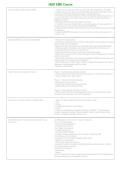
Common Misconceptions About EMDs 1. Callers are too upset to provide accurate and useful responses to the EMD
2. Callers would not be able to provide the EMD with required information that is
necessary to effectively dispatch emergency medical resources
3. The medical expertise required for effective emergency medical dispatch is not
important, therefore public safety officials should use non-EMD dispatchers to
dispatch resources
4. All EMS calls will be answered "lights and sirens"
5. The EMD is too busy dispatching to worry about asking all those questions, to
provide instructions or use their protocol cards (EMDPRS)
6. Medical advice (provided over the phone) cannot help patients and could actually
be dangerous
7. Using the EMDPRS increases the amount of time and resources required to
process a call
Attributes/Behaviors of the Successful EMD - Helpful and compassionate
- Handles the emotional stress involved in caller/patient crisis situations and clearly
guides callers in these situations
- Masters the skills, philosophy and knowledge of Emergency Medical Dispatch
- Effectively gathers information from callers, prioritizes that information and
consolidates that information in a useful format
- Assists other EMD personnel in reaching the patient's location
- Determines the nature of the medical emergency without diagnosing the medical
problem or condition
- Assists EMS personnel on the scene as requested by EMS personnel and avoid
making patient care decisions by long distance
- Reacts passively to hostile callers, making no judgements based on the caller's
demeanor or past experience with the caller
- Maintains confidentiality
Three Phases of the Dispatch Function Phase 1 - Call-Receiving Activities (Collect)
- an E.M.D takes an incoming call and goes through an "initial survey" sequence
- Where? What? How? Who? When?
Phase 2 - Dispatch Activities (Dispatch)
- EMD goes to proper protocol
- Protocols give appropriate response mode
- Established by local medical authority
Phase 3 - Post-Dispatch Activities ( Provide)
- EMD prepares caller for responding personnel and can be providing medical
instructions as indicated by the E.M.D Guidecards
Resources Commonly Found in an EMS System 1. Basic Life Support (BLS)/ Advanced Life Support (ALS)
2. Fire
3. Police
4. Hospitals/Emergency Care Facilities
5. Other
- These include hazardous materials units (aka "HAZMAT" ), Sexual AssauIt
Centers, Hyperbaric Centers, Trauma Centers, Poison Control Centers, Burn
Centers, Language Translator Services, etc.
Tiered EMS System Structures (Not all systems have An EMS system with more than 1 level of response
these tiers) Tier 1 (First Responders)
- Police and fire departments
- Normally trained in BLS
Tier 2 (Basic Life Support)
- Transport ambulance
- Normally staffed by EMTs
- Trained in Patient Assessment, Minor Injuries, Performing CPR
Tier 3 (Advanced Life Support)
- Ambulance or non-transport capable chase vehicle
- Staffed by 2 paramedics
- Work under a physician's license
- Capable of cardiac monitoring, drug therapy, and breathing support methods
Tier 4 (Aeromedical services)
-Advanced Life Support
- Paramedics
- Nurses
Used to transport most severe cases where transport time to the hospital may be
the determining factor in the patient's survival
, IAED EMD Course
Response Modes "Cold" responses
- No lights, no sirens
- Responders are a part of normal traffic flow
"Hot" responses
- Lights and sirens
- Emergency vehicle traffic laws still apply
- May be permitted to exceed the speed limit
Liability You are ultimately responsible for your actions/lack of action
Negligence - Failure to act or perform in a particular situation as any other reasonable, prudent
dispatcher (with the same or similar training) would under the same or similar
circumstances
- Failure to meet standard of care
Proving Negligence To prove negligence, the court must determine 4 things:
1. Duty
2. Breach of Duty
3. Injury/Damage
4. Proximate Cause/Causation
- All 4 components must be proven beyond a reasonable doubt
Two Types of Negligence - Simple negligence - negligent conduct that was not purposeful or due to "malicious
intent"
- Gross negligence - a negligent action that was undertaken with malicious intent
and with willful disregard for the safety of persons and/or property
Standard of Care and Establishing it The court generally uses four measures of conduct to determine the local "standard
of care". These four measures are:
1. The EMD's behavior and conduct is judged in comparison to others with similar
training and experience
2. The EMD's behavior and conduct is judged in comparison to locally approved
protocols and guidelines
3. The EMD's behavior and conduct is judged in comparison to local or state
statutes, local ordinances, case law or administrative orders that address the
standard of care
4) The EMD's behavior and conduct is judged in comparison to professional
standards published by organizations involved in the development of emergency
medical service standards such as the National Academy of Emergency Medical
Service Physicians (NAEMSP) and the American Society for Testing and Materials
(ASTM)
Abandonment Leaving a patient after care has been initiated and before the patient has been
transferred to someone with equal or greater medical training.
Foreseeability You must solely rely on the information you get from callers (you can't actually see
what is happening at the scene)
Detrimental Reliance A person expects that a certain action will be taken based on the fact that it has
been reported in the media ("it was done before for other people"), public education
or through simple reasonable expectation. If this action does not occur then the
person can claim that they "relied" on the system to act in a certain way, and by
doing so it ended up hurting them.
Consent Refers to permission to treat the sick or injured
Two Types of Consent - Implied consent - refers to situations where if patients are unconscious and can't
respond, it is safe for us to assume that they would want to be helped
- Actual Consent is direct verbal or non-verbal communication to someone giving
aid.
Common Misconceptions About EMDs 1. Callers are too upset to provide accurate and useful responses to the EMD
2. Callers would not be able to provide the EMD with required information that is
necessary to effectively dispatch emergency medical resources
3. The medical expertise required for effective emergency medical dispatch is not
important, therefore public safety officials should use non-EMD dispatchers to
dispatch resources
4. All EMS calls will be answered "lights and sirens"
5. The EMD is too busy dispatching to worry about asking all those questions, to
provide instructions or use their protocol cards (EMDPRS)
6. Medical advice (provided over the phone) cannot help patients and could actually
be dangerous
7. Using the EMDPRS increases the amount of time and resources required to
process a call
Attributes/Behaviors of the Successful EMD - Helpful and compassionate
- Handles the emotional stress involved in caller/patient crisis situations and clearly
guides callers in these situations
- Masters the skills, philosophy and knowledge of Emergency Medical Dispatch
- Effectively gathers information from callers, prioritizes that information and
consolidates that information in a useful format
- Assists other EMD personnel in reaching the patient's location
- Determines the nature of the medical emergency without diagnosing the medical
problem or condition
- Assists EMS personnel on the scene as requested by EMS personnel and avoid
making patient care decisions by long distance
- Reacts passively to hostile callers, making no judgements based on the caller's
demeanor or past experience with the caller
- Maintains confidentiality
Three Phases of the Dispatch Function Phase 1 - Call-Receiving Activities (Collect)
- an E.M.D takes an incoming call and goes through an "initial survey" sequence
- Where? What? How? Who? When?
Phase 2 - Dispatch Activities (Dispatch)
- EMD goes to proper protocol
- Protocols give appropriate response mode
- Established by local medical authority
Phase 3 - Post-Dispatch Activities ( Provide)
- EMD prepares caller for responding personnel and can be providing medical
instructions as indicated by the E.M.D Guidecards
Resources Commonly Found in an EMS System 1. Basic Life Support (BLS)/ Advanced Life Support (ALS)
2. Fire
3. Police
4. Hospitals/Emergency Care Facilities
5. Other
- These include hazardous materials units (aka "HAZMAT" ), Sexual AssauIt
Centers, Hyperbaric Centers, Trauma Centers, Poison Control Centers, Burn
Centers, Language Translator Services, etc.
Tiered EMS System Structures (Not all systems have An EMS system with more than 1 level of response
these tiers) Tier 1 (First Responders)
- Police and fire departments
- Normally trained in BLS
Tier 2 (Basic Life Support)
- Transport ambulance
- Normally staffed by EMTs
- Trained in Patient Assessment, Minor Injuries, Performing CPR
Tier 3 (Advanced Life Support)
- Ambulance or non-transport capable chase vehicle
- Staffed by 2 paramedics
- Work under a physician's license
- Capable of cardiac monitoring, drug therapy, and breathing support methods
Tier 4 (Aeromedical services)
-Advanced Life Support
- Paramedics
- Nurses
Used to transport most severe cases where transport time to the hospital may be
the determining factor in the patient's survival
, IAED EMD Course
Response Modes "Cold" responses
- No lights, no sirens
- Responders are a part of normal traffic flow
"Hot" responses
- Lights and sirens
- Emergency vehicle traffic laws still apply
- May be permitted to exceed the speed limit
Liability You are ultimately responsible for your actions/lack of action
Negligence - Failure to act or perform in a particular situation as any other reasonable, prudent
dispatcher (with the same or similar training) would under the same or similar
circumstances
- Failure to meet standard of care
Proving Negligence To prove negligence, the court must determine 4 things:
1. Duty
2. Breach of Duty
3. Injury/Damage
4. Proximate Cause/Causation
- All 4 components must be proven beyond a reasonable doubt
Two Types of Negligence - Simple negligence - negligent conduct that was not purposeful or due to "malicious
intent"
- Gross negligence - a negligent action that was undertaken with malicious intent
and with willful disregard for the safety of persons and/or property
Standard of Care and Establishing it The court generally uses four measures of conduct to determine the local "standard
of care". These four measures are:
1. The EMD's behavior and conduct is judged in comparison to others with similar
training and experience
2. The EMD's behavior and conduct is judged in comparison to locally approved
protocols and guidelines
3. The EMD's behavior and conduct is judged in comparison to local or state
statutes, local ordinances, case law or administrative orders that address the
standard of care
4) The EMD's behavior and conduct is judged in comparison to professional
standards published by organizations involved in the development of emergency
medical service standards such as the National Academy of Emergency Medical
Service Physicians (NAEMSP) and the American Society for Testing and Materials
(ASTM)
Abandonment Leaving a patient after care has been initiated and before the patient has been
transferred to someone with equal or greater medical training.
Foreseeability You must solely rely on the information you get from callers (you can't actually see
what is happening at the scene)
Detrimental Reliance A person expects that a certain action will be taken based on the fact that it has
been reported in the media ("it was done before for other people"), public education
or through simple reasonable expectation. If this action does not occur then the
person can claim that they "relied" on the system to act in a certain way, and by
doing so it ended up hurting them.
Consent Refers to permission to treat the sick or injured
Two Types of Consent - Implied consent - refers to situations where if patients are unconscious and can't
respond, it is safe for us to assume that they would want to be helped
- Actual Consent is direct verbal or non-verbal communication to someone giving
aid.


