

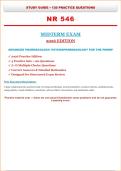
STUDY GUIDE • 120 PRACTICE QUESTIONS
NR 546
MIDTERM EXAM
2026 EDITION
ADVANCED PHARMACOLOGY: PSYCHOPHARMACOLOGY FOR THE PMHNP
✓ 2026 Practice Edition
✓ 4 Practice Sets • 120 Questions
✓ A–D Multiple-Choice Questions
✓ Correct Answers & Detailed Rationales
✓ Designed for Structured Exam Review
This Document Description:
A large original practice question bank covering neurobiology, neurotransmitters, receptor systems, antidepressants,
antipsychotics, mood stabilizers, anxiolytics, adverse effects, interactions, and medication safety.
Practice material only — these are not actual Chamberlain exam questions and do not guarantee
a passing score.
, NR 546 • PMHNP PSYCHOPHARMACOLOGY • 2026 • SET 1
SET 1 — PART 1
1. Which neurotransmitter is the primary inhibitory neurotransmitter in the central nervous system?
A. GABA
B. Glutamate
C. Dopamine
D. Acetylcholine
Correct Answer: A. GABA
Explanation:
GABA is the major inhibitory neurotransmitter in the CNS, while glutamate is the major excitatory
neurotransmitter.
2. Which neurotransmitter is the major excitatory neurotransmitter in the central nervous system?
A. GABA
B. Glutamate
C. Glycine
D. Serotonin
Correct Answer: B. Glutamate
Explanation:
Glutamate is the principal excitatory neurotransmitter in the CNS and acts through several receptor families.
3. Which receptor is the primary target of benzodiazepines?
A. GABA-A receptor
B. NMDA receptor
C. D2 receptor
D. 5-HT2A receptor
Correct Answer: A. GABA-A receptor
Explanation:
Benzodiazepines enhance GABA-A receptor activity, increasing inhibitory neurotransmission.
4. Which dopamine pathway is most associated with positive symptoms of schizophrenia?
A. Mesolimbic
B. Nigrostriatal
C. Tuberoinfundibular
D. Spinothalamic
Correct Answer: A. Mesolimbic
Explanation:
Increased dopamine activity in the mesolimbic pathway is associated with positive symptoms such as
hallucinations and delusions.
,5. Which dopamine pathway is most associated with extrapyramidal symptoms caused by antipsychotics?
A. Nigrostriatal
B. Mesolimbic
C. Tuberoinfundibular
D. Mesocortical
Correct Answer: A. Nigrostriatal
Explanation:
Dopamine blockade in the nigrostriatal pathway can cause dystonia, akathisia, parkinsonism, and tardive
dyskinesia.
6. Which dopamine pathway is associated with antipsychotic-induced hyperprolactinemia?
A. Tuberoinfundibular
B. Mesolimbic
C. Nigrostriatal
D. Mesocortical
Correct Answer: A. Tuberoinfundibular
Explanation:
Dopamine normally inhibits prolactin release through the tuberoinfundibular pathway; D2 blockade can therefore
increase prolactin.
7. Which receptor is strongly associated with the effects of many second-generation antipsychotics?
A. 5-HT2A
B. GABA-B
C. M1 only
D. H1 only
Correct Answer: A. 5-HT2A
Explanation:
Many atypical antipsychotics combine dopamine D2 antagonism or partial agonism with serotonin 5-HT2A
effects.
8. Which adverse effect is most associated with strong anticholinergic activity?
A. Dry mouth
B. Diarrhea
C. Excess salivation
D. Bradycardia in every patient
Correct Answer: A. Dry mouth
Explanation:
Anticholinergic effects include dry mouth, blurred vision, constipation, urinary retention, and tachycardia.
, 9. Which medication is an SSRI?
A. Sertraline
B. Venlafaxine
C. Duloxetine
D. Mirtazapine
Correct Answer: A. Sertraline
Explanation:
Sertraline is a selective serotonin reuptake inhibitor.
10. Which medication is an SNRI?
A. Venlafaxine
B. Fluoxetine
C. Sertraline
D. Escitalopram
Correct Answer: A. Venlafaxine
Explanation:
Venlafaxine inhibits serotonin and norepinephrine reuptake and is classified as an SNRI.
11. Which antidepressant is classified as a norepinephrine-dopamine reuptake inhibitor?
A. Bupropion
B. Paroxetine
C. Sertraline
D. Fluvoxamine
Correct Answer: A. Bupropion
Explanation:
Bupropion primarily affects norepinephrine and dopamine reuptake and has little direct serotonergic activity.
12. Which antidepressant is commonly associated with increased appetite and sedation because of histamine
receptor antagonism?
A. Mirtazapine
B. Bupropion
C. Fluoxetine
D. Venlafaxine
Correct Answer: A. Mirtazapine
Explanation:
Mirtazapine has strong antihistaminic activity, which can contribute to sedation and increased appetite.
NR 546
MIDTERM EXAM
2026 EDITION
ADVANCED PHARMACOLOGY: PSYCHOPHARMACOLOGY FOR THE PMHNP
✓ 2026 Practice Edition
✓ 4 Practice Sets • 120 Questions
✓ A–D Multiple-Choice Questions
✓ Correct Answers & Detailed Rationales
✓ Designed for Structured Exam Review
This Document Description:
A large original practice question bank covering neurobiology, neurotransmitters, receptor systems, antidepressants,
antipsychotics, mood stabilizers, anxiolytics, adverse effects, interactions, and medication safety.
Practice material only — these are not actual Chamberlain exam questions and do not guarantee
a passing score.
, NR 546 • PMHNP PSYCHOPHARMACOLOGY • 2026 • SET 1
SET 1 — PART 1
1. Which neurotransmitter is the primary inhibitory neurotransmitter in the central nervous system?
A. GABA
B. Glutamate
C. Dopamine
D. Acetylcholine
Correct Answer: A. GABA
Explanation:
GABA is the major inhibitory neurotransmitter in the CNS, while glutamate is the major excitatory
neurotransmitter.
2. Which neurotransmitter is the major excitatory neurotransmitter in the central nervous system?
A. GABA
B. Glutamate
C. Glycine
D. Serotonin
Correct Answer: B. Glutamate
Explanation:
Glutamate is the principal excitatory neurotransmitter in the CNS and acts through several receptor families.
3. Which receptor is the primary target of benzodiazepines?
A. GABA-A receptor
B. NMDA receptor
C. D2 receptor
D. 5-HT2A receptor
Correct Answer: A. GABA-A receptor
Explanation:
Benzodiazepines enhance GABA-A receptor activity, increasing inhibitory neurotransmission.
4. Which dopamine pathway is most associated with positive symptoms of schizophrenia?
A. Mesolimbic
B. Nigrostriatal
C. Tuberoinfundibular
D. Spinothalamic
Correct Answer: A. Mesolimbic
Explanation:
Increased dopamine activity in the mesolimbic pathway is associated with positive symptoms such as
hallucinations and delusions.
,5. Which dopamine pathway is most associated with extrapyramidal symptoms caused by antipsychotics?
A. Nigrostriatal
B. Mesolimbic
C. Tuberoinfundibular
D. Mesocortical
Correct Answer: A. Nigrostriatal
Explanation:
Dopamine blockade in the nigrostriatal pathway can cause dystonia, akathisia, parkinsonism, and tardive
dyskinesia.
6. Which dopamine pathway is associated with antipsychotic-induced hyperprolactinemia?
A. Tuberoinfundibular
B. Mesolimbic
C. Nigrostriatal
D. Mesocortical
Correct Answer: A. Tuberoinfundibular
Explanation:
Dopamine normally inhibits prolactin release through the tuberoinfundibular pathway; D2 blockade can therefore
increase prolactin.
7. Which receptor is strongly associated with the effects of many second-generation antipsychotics?
A. 5-HT2A
B. GABA-B
C. M1 only
D. H1 only
Correct Answer: A. 5-HT2A
Explanation:
Many atypical antipsychotics combine dopamine D2 antagonism or partial agonism with serotonin 5-HT2A
effects.
8. Which adverse effect is most associated with strong anticholinergic activity?
A. Dry mouth
B. Diarrhea
C. Excess salivation
D. Bradycardia in every patient
Correct Answer: A. Dry mouth
Explanation:
Anticholinergic effects include dry mouth, blurred vision, constipation, urinary retention, and tachycardia.
, 9. Which medication is an SSRI?
A. Sertraline
B. Venlafaxine
C. Duloxetine
D. Mirtazapine
Correct Answer: A. Sertraline
Explanation:
Sertraline is a selective serotonin reuptake inhibitor.
10. Which medication is an SNRI?
A. Venlafaxine
B. Fluoxetine
C. Sertraline
D. Escitalopram
Correct Answer: A. Venlafaxine
Explanation:
Venlafaxine inhibits serotonin and norepinephrine reuptake and is classified as an SNRI.
11. Which antidepressant is classified as a norepinephrine-dopamine reuptake inhibitor?
A. Bupropion
B. Paroxetine
C. Sertraline
D. Fluvoxamine
Correct Answer: A. Bupropion
Explanation:
Bupropion primarily affects norepinephrine and dopamine reuptake and has little direct serotonergic activity.
12. Which antidepressant is commonly associated with increased appetite and sedation because of histamine
receptor antagonism?
A. Mirtazapine
B. Bupropion
C. Fluoxetine
D. Venlafaxine
Correct Answer: A. Mirtazapine
Explanation:
Mirtazapine has strong antihistaminic activity, which can contribute to sedation and increased appetite.


