Milestone Certified Integration Technician (MCIT) Practice
Exam
250-question practice bank • Original questions aligned to publicly available exam scope, syllabus, classification or certification information. These are not
leaked or reproduced actual exam questions.
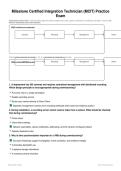
VMS architecture schematic
Cameras Recording Management Clients
Original technical schematic for orientation. It is not a reproduction of a proprietary exam image.
Cameras
VMS architecture schematic Recording Management Clients
1. A deployment has 300 cameras and requires centralized management with distributed recording.
Which design principle is most appropriate during commissioning?
• Put every role on a single workstation
• Disable recording servers
• Route every camera directly to Smart Client
■ Separate management functions from recording workloads when scale and resilience justify it
2. During installation, a recording server cannot receive video from a camera. What should be checked
first during commissioning?
• Printer driver
• Client theme settings
■ Network reachability, camera credentials, addressing, and the camera's configured stream
• Operator bookmark color
3. Why is time synchronization important in a VMS during commissioning?
■ Accurate timestamps support investigation, event correlation, and evidence integrity
• It eliminates bandwidth use
• It replaces storage calculations
• It increases camera resolution
Practice bank • Page 1 Correct choice marked ✓
, 4. A technician is adding many identical cameras. Which practice reduces configuration errors during
commissioning?
• Configure each device with random settings
• Change settings while recording
• Disable documentation
■ Use a controlled naming and configuration standard and verify representative devices before scaling
5. A Smart Client workstation shows poor live-view performance while recordings remain healthy. The
most likely area to investigate is: on a commercial site?
• Boiler feedwater
■ Client display workload, decoding capability, network path, and view composition
• Concrete curing
• Fence post spacing
6. Which principle best supports least-privilege administration?
• Disable audit logging
• Share one administrator account
• Give all operators full administrator rights
■ Give users only the permissions required for their role
7. Before changing a production VMS configuration, a technician should first: during commissioning?
■ Confirm the change scope, dependencies, maintenance window, and rollback plan
• Delete the existing configuration
• Unplug recording storage
• Disable all users
8. When troubleshooting intermittent camera connectivity, useful evidence includes: during
commissioning?
■ Network errors, switch-port status, camera logs, packet loss indicators, and timestamps
• Only the operator's wallpaper
• Only the printer queue
• Only the monitor brightness
9. A system has unexpectedly high storage consumption. The first design variable to review is: in a
typical CCTA workflow?
• Monitor stand height
• Keyboard layout
• Operator language only
■ Bit rate, frame rate, resolution, retention, motion settings, and recording rules
Practice bank • Page 2 Correct choice marked ✓
, 10. A technician needs to verify that an event rule is actually triggering. The best approach is to: in a
typical CCTA workflow?
• Disable the event source
• Restart every workstation repeatedly
• Change unrelated camera names
■ Test the event source, rule condition, action, and resulting log/notification path
11. A deployment has 300 cameras and requires centralized management with distributed recording.
Which design principle is most appropriate in a 200-camera system?
• Route every camera directly to Smart Client
• Put every role on a single workstation
■ Separate management functions from recording workloads when scale and resilience justify it
• Disable recording servers
12. During installation, a recording server cannot receive video from a camera. What should be checked
first in a 200-camera system?
• Printer driver
• Client theme settings
■ Network reachability, camera credentials, addressing, and the camera's configured stream
• Operator bookmark color
13. Why is time synchronization important in a VMS in a 200-camera system?
• It eliminates bandwidth use
• It increases camera resolution
■ Accurate timestamps support investigation, event correlation, and evidence integrity
• It replaces storage calculations
14. A technician is adding many identical cameras. Which practice reduces configuration errors in a
200-camera system?
■ Use a controlled naming and configuration standard and verify representative devices before scaling
• Disable documentation
• Change settings while recording
• Configure each device with random settings
15. A Smart Client workstation shows poor live-view performance while recordings remain healthy. The
most likely area to investigate is: during layout?
■ Client display workload, decoding capability, network path, and view composition
• Concrete curing
• Fence post spacing
• Boiler feedwater
Practice bank • Page 3 Correct choice marked ✓
, 16. Which principle best supports least-privilege administration?
■ Give users only the permissions required for their role
• Give all operators full administrator rights
• Disable audit logging
• Share one administrator account
17. Before changing a production VMS configuration, a technician should first: in a 200-camera system?
• Delete the existing configuration
• Disable all users
• Unplug recording storage
■ Confirm the change scope, dependencies, maintenance window, and rollback plan
Focus: Verify the governing edition, project specification and AHJ requirements before applying this concept.
18. When troubleshooting intermittent camera connectivity, useful evidence includes: in a 200-camera
system?
• Only the monitor brightness
• Only the operator's wallpaper
■ Network errors, switch-port status, camera logs, packet loss indicators, and timestamps
• Only the printer queue
19. A system has unexpectedly high storage consumption. The first design variable to review is: when
image quality is limited?
• Operator language only
■ Bit rate, frame rate, resolution, retention, motion settings, and recording rules
• Monitor stand height
• Keyboard layout
20. A technician needs to verify that an event rule is actually triggering. The best approach is to: when
image quality is limited?
■ Test the event source, rule condition, action, and resulting log/notification path
• Disable the event source
• Change unrelated camera names
• Restart every workstation repeatedly
21. A deployment has 300 cameras and requires centralized management with distributed recording.
Which design principle is most appropriate after a configuration change?
■ Separate management functions from recording workloads when scale and resilience justify it
• Put every role on a single workstation
• Route every camera directly to Smart Client
• Disable recording servers
Practice bank • Page 4 Correct choice marked ✓
Exam
250-question practice bank • Original questions aligned to publicly available exam scope, syllabus, classification or certification information. These are not
leaked or reproduced actual exam questions.
VMS architecture schematic
Cameras Recording Management Clients
Original technical schematic for orientation. It is not a reproduction of a proprietary exam image.
Cameras
VMS architecture schematic Recording Management Clients
1. A deployment has 300 cameras and requires centralized management with distributed recording.
Which design principle is most appropriate during commissioning?
• Put every role on a single workstation
• Disable recording servers
• Route every camera directly to Smart Client
■ Separate management functions from recording workloads when scale and resilience justify it
2. During installation, a recording server cannot receive video from a camera. What should be checked
first during commissioning?
• Printer driver
• Client theme settings
■ Network reachability, camera credentials, addressing, and the camera's configured stream
• Operator bookmark color
3. Why is time synchronization important in a VMS during commissioning?
■ Accurate timestamps support investigation, event correlation, and evidence integrity
• It eliminates bandwidth use
• It replaces storage calculations
• It increases camera resolution
Practice bank • Page 1 Correct choice marked ✓
, 4. A technician is adding many identical cameras. Which practice reduces configuration errors during
commissioning?
• Configure each device with random settings
• Change settings while recording
• Disable documentation
■ Use a controlled naming and configuration standard and verify representative devices before scaling
5. A Smart Client workstation shows poor live-view performance while recordings remain healthy. The
most likely area to investigate is: on a commercial site?
• Boiler feedwater
■ Client display workload, decoding capability, network path, and view composition
• Concrete curing
• Fence post spacing
6. Which principle best supports least-privilege administration?
• Disable audit logging
• Share one administrator account
• Give all operators full administrator rights
■ Give users only the permissions required for their role
7. Before changing a production VMS configuration, a technician should first: during commissioning?
■ Confirm the change scope, dependencies, maintenance window, and rollback plan
• Delete the existing configuration
• Unplug recording storage
• Disable all users
8. When troubleshooting intermittent camera connectivity, useful evidence includes: during
commissioning?
■ Network errors, switch-port status, camera logs, packet loss indicators, and timestamps
• Only the operator's wallpaper
• Only the printer queue
• Only the monitor brightness
9. A system has unexpectedly high storage consumption. The first design variable to review is: in a
typical CCTA workflow?
• Monitor stand height
• Keyboard layout
• Operator language only
■ Bit rate, frame rate, resolution, retention, motion settings, and recording rules
Practice bank • Page 2 Correct choice marked ✓
, 10. A technician needs to verify that an event rule is actually triggering. The best approach is to: in a
typical CCTA workflow?
• Disable the event source
• Restart every workstation repeatedly
• Change unrelated camera names
■ Test the event source, rule condition, action, and resulting log/notification path
11. A deployment has 300 cameras and requires centralized management with distributed recording.
Which design principle is most appropriate in a 200-camera system?
• Route every camera directly to Smart Client
• Put every role on a single workstation
■ Separate management functions from recording workloads when scale and resilience justify it
• Disable recording servers
12. During installation, a recording server cannot receive video from a camera. What should be checked
first in a 200-camera system?
• Printer driver
• Client theme settings
■ Network reachability, camera credentials, addressing, and the camera's configured stream
• Operator bookmark color
13. Why is time synchronization important in a VMS in a 200-camera system?
• It eliminates bandwidth use
• It increases camera resolution
■ Accurate timestamps support investigation, event correlation, and evidence integrity
• It replaces storage calculations
14. A technician is adding many identical cameras. Which practice reduces configuration errors in a
200-camera system?
■ Use a controlled naming and configuration standard and verify representative devices before scaling
• Disable documentation
• Change settings while recording
• Configure each device with random settings
15. A Smart Client workstation shows poor live-view performance while recordings remain healthy. The
most likely area to investigate is: during layout?
■ Client display workload, decoding capability, network path, and view composition
• Concrete curing
• Fence post spacing
• Boiler feedwater
Practice bank • Page 3 Correct choice marked ✓
, 16. Which principle best supports least-privilege administration?
■ Give users only the permissions required for their role
• Give all operators full administrator rights
• Disable audit logging
• Share one administrator account
17. Before changing a production VMS configuration, a technician should first: in a 200-camera system?
• Delete the existing configuration
• Disable all users
• Unplug recording storage
■ Confirm the change scope, dependencies, maintenance window, and rollback plan
Focus: Verify the governing edition, project specification and AHJ requirements before applying this concept.
18. When troubleshooting intermittent camera connectivity, useful evidence includes: in a 200-camera
system?
• Only the monitor brightness
• Only the operator's wallpaper
■ Network errors, switch-port status, camera logs, packet loss indicators, and timestamps
• Only the printer queue
19. A system has unexpectedly high storage consumption. The first design variable to review is: when
image quality is limited?
• Operator language only
■ Bit rate, frame rate, resolution, retention, motion settings, and recording rules
• Monitor stand height
• Keyboard layout
20. A technician needs to verify that an event rule is actually triggering. The best approach is to: when
image quality is limited?
■ Test the event source, rule condition, action, and resulting log/notification path
• Disable the event source
• Change unrelated camera names
• Restart every workstation repeatedly
21. A deployment has 300 cameras and requires centralized management with distributed recording.
Which design principle is most appropriate after a configuration change?
■ Separate management functions from recording workloads when scale and resilience justify it
• Put every role on a single workstation
• Route every camera directly to Smart Client
• Disable recording servers
Practice bank • Page 4 Correct choice marked ✓