

Written by students who passed Immediately available after payment Read online or as PDF Wrong document? Swap it for free 4.6 TrustPilot
logo-home
Document preview thumbnail
Preview 3 out of 25 pages
Exam (elaborations)

BSN 445 Week 12 Sherpath 2026/2027 – 70+ Questions & Answers | DKA, Diabetes, SIADH, DI, Thyroid & Adrenal Disorders

Document preview thumbnail
Preview 3 out of 25 pages

This BSN 445 Week 12 Sherpath 2026/2027 exam preparation resource contains 70+ questions with correct answers across 25 pages, providing a comprehensive review of endocrine assessment, diabetes mellitus, hyperglycemia, hypoglycemia, diabetic ketoacidosis (DKA), hyperglycemic hyperosmolar state, insulin therapy, diabetes insipidus (DI), SIADH, thyroid disorders, Cushing syndrome, Addison disease, and endocrine emergencies. The opening questions examine clinical manifestations of hyperglycemia and ketoacidosis, including dehydration, tachycardia, syncope, and deep rapid respirations, while also reviewing fasting glucose testing and the systemic effects of abnormal glucose regulation on renal, neurologic, gastrointestinal, ocular, and vascular function. A major section covers endocrine assessment and hormone physiology. Students review antidiuretic hormone, the posterior pituitary, thyroid assessment, hypothyroidism, thyroid bruits, adrenal medulla function, adrenal cortex function, cortisol, aldosterone, adrenaline, and ACTH. Cushing syndrome is examined through characteristic findings including rounded facial features, impaired wound healing, excess hair growth, abdominal weight gain, and the dorsocervical fat pad. Addison disease content includes cortisol evaluation, ACTH testing, and the endocrine consequences of deficient cortisol and aldosterone. The diabetes mellitus and insulin-management section examines stress-related glucose regulation, cortisol and insulin physiology, glucose-monitoring methods, factors influencing insulin requirements, and management of severe hypoglycemia. Students distinguish basal, prandial, corrective, and sliding-scale insulin approaches and compare rapid- and long-acting insulin preparations, including glulisine, glargine, degludec, and detemir. Type 2 diabetes questions address impaired fasting glucose, diagnostic glucose values, insulin resistance, thiazolidinediones, lifestyle modification, weight management, dietary changes, and metformin. A particularly important portion concentrates on diabetic ketoacidosis (DKA). Questions review potassium replacement, pulmonary elimination of acetone, infection as a common precipitating factor, polyuria and osmotic fluid loss, substantial fluid-replacement requirements, continuous insulin administration, potassium therapy, bicarbonate use, infection prevention, and sick-day education. Students are expected to understand the relationship between severe insulin deficiency, hyperglycemia, osmotic diuresis, dehydration, ketone production, metabolic acidosis, electrolyte disturbances, and Kussmaul-type respiratory compensation. The document also addresses hyperglycemic hyperosmolar state (HHS) and long-term diabetes management. Discharge education includes medication adherence, self-monitoring of blood glucose, foot care, recognition of early hyperglycemia, and prevention of recurrence. Glycated hemoglobin is discussed as an indicator of longer-term glycemic control. These questions connect management of acute hyperglycemic crises with the broader objective of reducing recurrent emergencies and chronic microvascular and macrovascular complications. Another substantial section compares diabetes insipidus and syndrome of inappropriate antidiuretic hormone secretion (SIADH). Students review arginine vasopressin, sodium abnormalities, fluid-volume status, intake and output, dipsogenic DI, hyponatremia, neurological manifestations of severe sodium reduction, fluid restriction, and discharge education. The material reinforces the contrasting physiology of insufficient versus excessive antidiuretic hormone activity and the importance of monitoring serum sodium, neurological status, urine output, and fluid balance in critically ill endocrine patients. The final portion provides focused preparation on thyroid storm, Graves disease, myxedema coma, hyperthyroidism, Cushing syndrome, and Addison disease. Thyroid storm questions address tachycardia, gastrointestinal symptoms, thermoregulatory abnormalities, neuropsychiatric manifestations, hyperthermia management, medication-related safety, and clinical scoring considerations. Myxedema coma is examined as a multisystem emergency involving integumentary, gastrointestinal, cardiovascular, pulmonary, and renal function. Hyperthyroidism questions reinforce heat intolerance, sweating, unintentional weight loss, and metabolic changes, while adrenal content distinguishes exogenous steroid-associated Cushing syndrome from adrenal insufficiency involving cortisol and aldosterone deficiency. For authoritative academic reinforcement, the diabetes material should be compared with the current American Diabetes Association (ADA) Standards of Care in Diabetes, particularly recommendations concerning diagnostic criteria, inpatient glycemic targets, insulin regimens, hypoglycemia, DKA, HHS, and long-term glycemic goals. Endocrine emergencies and adrenal disorders can also be reinforced using contemporary Endocrine Society clinical practice guidance and standard references such as Lewis’s Medical-Surgical Nursing: Assessment and Management of Clinical Problems. This is especially important because several numeric targets and treatment recommendations in question banks can become outdated; current evidence-based guidelines and institutional protocols should take precedence in clinical practice. Relevant Students: This document is particularly relevant for BSN 445 students, Sherpath nursing students, BSN and RN students, critical-care and ICU nursing students, adult health and medical-surgical nursing students, endocrine nursing students, and learners preparing for examinations on diabetes and endocrine emergencies. It can also support ATI Adult Medical-Surgical, HESI, NCLEX-RN, and critical-care review involving DKA, HHS, insulin therapy, hyperglycemia, hypoglycemia, DI, SIADH, thyroid storm, myxedema coma, Graves disease, Cushing syndrome, and Addison disease. Keywords: BSN 445 Week 12, BSN 445 Sherpath, BSN 445 Week 12 exam, Sherpath Week 12 questions and answers, endocrine nursing exam, diabetes mellitus nursing, hyperglycemia nursing, hypoglycemia nursing, diabetic ketoacidosis nursing, DKA questions and answers, DKA treatment nursing, Kussmaul respirations, DKA fluid replacement, DKA potassium replacement, hyperglycemic hyperosmolar state, HHS nursing, insulin therapy nursing, insulin administration nursing, glulisine insulin, glargine insulin, degludec insulin, detemir insulin, metformin nursing, type 1 diabetes nursing, type 2 diabetes nursing, diabetes sick day management, endocrine assessment nursing, antidiuretic hormone nursing, diabetes insipidus nursing, DI nursing, SIADH nursing, hyponatremia SIADH, fluid restriction SIADH, Graves disease nursing, thyroid storm nursing, myxedema coma nursing, hyperthyroidism nursing, hypothyroidism nursing, Cushing syndrome nursing, Addison disease nursing, cortisol nursing, aldosterone nursing, ACTH nursing, adrenal insufficiency nursing, critical care endocrine nursing, ICU endocrine nursing, ATI endocrine nursing, HESI endocrine nursing, NCLEX endocrine questions

Content preview

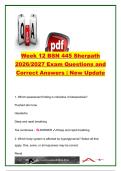
Week 12 BSN 445 Sherpath
2026/2027 Exam Questions and
Correct Answers | New Update


1. Which assessment finding is indicative of ketoacidosis?

Flushed skin tone

Headache

Deep and rapid breathing


Toe numbness - ANSWER ✔✔Deep and rapid breathing


2. Which body system is affected by hyperglycemia? Select all that

apply. One, some, or all responses may be correct.

Renal

,Neurologic

Gastrointestinal

Ocular


Vascular - ANSWER ✔✔Renal


Neurologic

Gastrointestinal

Ocular

Vascular

3. Which condition is associated with hyperglycemia? Select all that

apply. One, some, or all responses may be correct.

Dehydration

Tachycardia

Bradycardia

Dependent edema


Syncope - ANSWER ✔✔Dehydration


Tachycardia

Syncope

, 4. Which blood glucose value represents the highest level considered

normal?

100 mg/dL

200 mg/dL

125 mg/dL


225 mg/dL - ANSWER ✔✔200 mg/dL


5. Which range of blood glucose level is considered optimal for a patient

with type 1 diabetes?

100 to 125 mg/dL

50 to 70 mg/dL

150 to 199 mg/dL


70 to 100 mg/dL - ANSWER ✔✔70 to 100 mg/dL


6. Which period of time must have elapsed for a fasting blood glucose to

be measured?

8 hours

12 hours

4 hours


2 hours - ANSWER ✔✔8 hours

COPYRIGHT©PROFFKERRYMARTIN 2025/2026. YEAR PUBLISHED 2026. COMPANY REGISTRATION NUMBER: 619652435. TERMS OF USE.
PRIVACY STATEMENT. ALL RIGHTS RESERVED


Document information

Uploaded on
August 14, 2026
Number of pages
25
Written in
2026/2027
Type
Exam (elaborations)
Contains
Questions & answers
$18.99

Wrong document? Swap it for free Within 14 days of purchase and before downloading, you can choose a different document. You can simply spend the amount again.
Written by students who passed
Immediately available after payment
Read online or as PDF

Seller avatar
Reputation scores are based on the amount of documents a seller has sold for a fee and the reviews they have received for those documents. There are three levels: Bronze, Silver and Gold. The better the reputation, the more your can rely on the quality of the sellers work.
PROFFKERRYMARTIN
3.3
(55)
Sold
286
Followers
9
Items
11175
Last sold
9 hours ago


Why students choose Stuvia

Created by fellow students, verified by reviews

Quality you can trust: written by students who passed their tests and reviewed by others who've used these notes.

Didn't get what you expected? Choose another document

No worries! You can instantly pick a different document that better fits what you're looking for.

Pay as you like, start learning right away

No subscription, no commitments. Pay the way you're used to via credit card and download your PDF document instantly.

Student with book image

“Bought, downloaded, and aced it. It really can be that simple.”

Alisha Student

Working on your references?

Create accurate citations in APA, MLA and Harvard with our free citation generator.

Working on your references?

Frequently asked questions
