

BCPS Certification Exam Prep 2026 Updated Practice
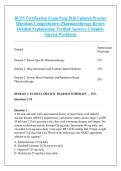
Questions Comprehensive Pharmacotherapy Review
Detailed Explanations, Verified Answers, Complete
Success Workbook
Approximate
Domain
Percentage
Domain 1: Patient-Specific Pharmacotherapy 55%
Domain 2: Drug Information and Evidence-Based Medicine 25%
Domain 3: System-Based Standards and Population-Based
20%
Pharmacotherapy
DOMAIN 1: PATIENT-SPECIFIC PHARMACOTHERAPY — 55%
Questions 1–55
Question 1
A 68-year-old male with a past medical history of heart failure with reduced
ejection fraction (HFrEF), hypertension, and chronic kidney disease stage 3 (eGFR
45 mL/min/1.73m²) presents to the clinic with worsening dyspnea and fatigue. His
current medications include lisinopril 20 mg daily, furosemide 40 mg daily, and
carvedilol 6.25 mg twice daily. Vital signs: BP 142/88 mmHg, HR 78 bpm, weight
increased 5 kg since last visit. Which of the following is the MOST appropriate
addition to his regimen?
A. Spironolactone 25 mg daily
B. Sacubitril/valsartan 24/26 mg twice daily
C. Digoxin 0.125 mg daily
D. Hydralazine 25 mg three times daily
,Answer: B. Sacubitril/valsartan 24/26 mg twice daily
Rationale: Sacubitril/valsartan is recommended for patients with HFrEF (NYHA
class II-III) who remain symptomatic despite optimal therapy with an ACE
inhibitor (or ARB), beta-blocker, and diuretic. It has been shown to reduce
cardiovascular death and heart failure hospitalizations compared to enalapril. The
PARADIGM-HF trial demonstrated superiority of sacubitril/valsartan over
enalapril. The patient is already on an ACE inhibitor (lisinopril) and beta-blocker
(carvedilol). Before initiating sacubitril/valsartan, the ACE inhibitor must be
discontinued for 36 hours to reduce the risk of angioedema. Spironolactone would
be appropriate but is typically added after optimizing ACE inhibitor and beta-
blocker; however, sacubitril/valsartan provides greater benefit. Digoxin is not first-
line. Hydralazine is indicated primarily in African American patients with HFrEF
already on optimal therapy.
Question 2
A 72-year-old female with atrial fibrillation is started on warfarin for stroke
prevention. Her INR is 2.8 on a stable dose. She is prescribed amiodarone for rate
control. Which of the following is the most appropriate monitoring adjustment?
A. No change in warfarin dose needed
B. Reduce warfarin dose by 30-50% and monitor INR closely
C. Increase warfarin dose by 30-50%
D. Discontinue warfarin and start apixaban
Answer: B. Reduce warfarin dose by 30-50% and monitor INR closely
Rationale: Amiodarone is a potent inhibitor of CYP2C9 and CYP3A4, which
metabolize warfarin. Additionally, amiodarone displaces warfarin from protein-
binding sites, further increasing the anticoagulant effect. The combination
significantly increases INR and bleeding risk. The warfarin dose should typically
be reduced by 30-50% when amiodarone is initiated, with close INR monitoring.
The full interaction may take 1-2 weeks to manifest. Apixaban could be
considered, but the question asks about adjusting the current regimen.
Question 3
A 55-year-old male with Type 2 diabetes mellitus, hypertension, and
,hyperlipidemia presents for follow-up. His HbA1c is 8.2% despite metformin
1,000 mg twice daily. His eGFR is 52 mL/min/1.73m². Which of the following is
the MOST appropriate addition to his regimen?
A. Glipizide 5 mg daily
B. Empagliflozin 10 mg daily
C. Pioglitazone 15 mg daily
D. Sitagliptin 100 mg daily
Answer: B. Empagliflozin 10 mg daily
Rationale: Empagliflozin (an SGLT2 inhibitor) is preferred as add-on therapy to
metformin in patients with Type 2 diabetes and cardiovascular disease or chronic
kidney disease, as it has demonstrated cardiovascular and renal benefits in the
EMPA-REG OUTCOME trial. The patient has hypertension and early CKD
(eGFR 52), making empagliflozin an excellent choice. It provides cardiovascular
mortality benefit, reduces heart failure hospitalizations, and slows progression of
renal disease. Glipizide (sulfonylurea) provides glycemic control but no
cardiovascular benefit and may cause hypoglycemia and weight gain. Pioglitazone
is useful but has fluid retention concerns and is not preferred in patients with heart
failure risk. Sitagliptin is safe but does not offer the cardiovascular and renal
benefits of SGLT2 inhibitors.
Question 4
A 45-year-old female with no significant past medical history presents with a
urinary tract infection. Urine culture grows Escherichia coli susceptible to
nitrofurantoin, trimethoprim-sulfamethoxazole, and ciprofloxacin. Her serum
creatinine is 1.1 mg/dL (eGFR 62 mL/min/1.73m²). Which of the following is the
MOST appropriate antibiotic choice?
A. Nitrofurantoin 100 mg twice daily for 5 days
B. Trimethoprim-sulfamethoxazole DS twice daily for 3 days
C. Ciprofloxacin 500 mg twice daily for 7 days
D. Nitrofurantoin 100 mg four times daily for 7 days
Answer: A. Nitrofurantoin 100 mg twice daily for 5 days
Rationale: For uncomplicated cystitis in a female, nitrofurantoin is a first-line
agent, effective against E. coli. The recommended regimen is 100 mg twice daily
, for 5 days. Nitrofurantoin requires a minimum CrCl > 60 mL/min; this patient's
eGFR is 62 mL/min/1.73m², which is borderline, so it remains appropriate with
monitoring. TMP-SMX is also first-line but resistance rates among E. coli are
increasing (>20% in many regions), making it less reliable without susceptibility
confirmation. Ciprofloxacin is effective but is generally reserved for complicated
UTIs or when other agents cannot be used due to its broader collateral effects and
resistance concerns. Nitrofurantoin is preferred for uncomplicated cystitis due to
minimal systemic side effects and low resistance rates.
Question 5
A 62-year-old male with a history of COPD (GOLD Group D) presents with
increased dyspnea, sputum production, and cough. He is currently on tiotropium 18
mcg daily and albuterol PRN. Which of the following is the MOST appropriate
addition to his maintenance regimen?
A. Fluticasone/salmeterol 250/50 twice daily
B. Theophylline 300 mg twice daily
C. Montelukast 10 mg daily
D. Azithromycin 250 mg daily
Answer: A. Fluticasone/salmeterol 250/50 twice daily
Rationale: For patients with COPD GOLD Group D (high symptom burden and
high exacerbation risk), the GOLD guidelines recommend initiating a
LABA/LAMA combination, and for patients with an eosinophil count ≥ 300
cells/μL, adding an ICS to the LABA/LAMA regimen. Fluticasone/salmeterol is an
ICS/LABA combination that would address both the symptom burden and
exacerbation risk. This patient is already on a LAMA (tiotropium), so adding an
ICS/LABA is appropriate. Theophylline is a third-line agent with significant
toxicity and drug interactions. Montelukast is not indicated for COPD.
Azithromycin may be considered for exacerbation prevention in select patients but
is not first-line and requires QT monitoring.
Question 6
A 70-year-old female with osteoporosis presents with a T-score of -3.2 at the
lumbar spine. She has a history of GERD and takes omeprazole daily. Which of
the following is the MOST appropriate initial pharmacotherapy?
Questions Comprehensive Pharmacotherapy Review
Detailed Explanations, Verified Answers, Complete
Success Workbook
Approximate
Domain
Percentage
Domain 1: Patient-Specific Pharmacotherapy 55%
Domain 2: Drug Information and Evidence-Based Medicine 25%
Domain 3: System-Based Standards and Population-Based
20%
Pharmacotherapy
DOMAIN 1: PATIENT-SPECIFIC PHARMACOTHERAPY — 55%
Questions 1–55
Question 1
A 68-year-old male with a past medical history of heart failure with reduced
ejection fraction (HFrEF), hypertension, and chronic kidney disease stage 3 (eGFR
45 mL/min/1.73m²) presents to the clinic with worsening dyspnea and fatigue. His
current medications include lisinopril 20 mg daily, furosemide 40 mg daily, and
carvedilol 6.25 mg twice daily. Vital signs: BP 142/88 mmHg, HR 78 bpm, weight
increased 5 kg since last visit. Which of the following is the MOST appropriate
addition to his regimen?
A. Spironolactone 25 mg daily
B. Sacubitril/valsartan 24/26 mg twice daily
C. Digoxin 0.125 mg daily
D. Hydralazine 25 mg three times daily
,Answer: B. Sacubitril/valsartan 24/26 mg twice daily
Rationale: Sacubitril/valsartan is recommended for patients with HFrEF (NYHA
class II-III) who remain symptomatic despite optimal therapy with an ACE
inhibitor (or ARB), beta-blocker, and diuretic. It has been shown to reduce
cardiovascular death and heart failure hospitalizations compared to enalapril. The
PARADIGM-HF trial demonstrated superiority of sacubitril/valsartan over
enalapril. The patient is already on an ACE inhibitor (lisinopril) and beta-blocker
(carvedilol). Before initiating sacubitril/valsartan, the ACE inhibitor must be
discontinued for 36 hours to reduce the risk of angioedema. Spironolactone would
be appropriate but is typically added after optimizing ACE inhibitor and beta-
blocker; however, sacubitril/valsartan provides greater benefit. Digoxin is not first-
line. Hydralazine is indicated primarily in African American patients with HFrEF
already on optimal therapy.
Question 2
A 72-year-old female with atrial fibrillation is started on warfarin for stroke
prevention. Her INR is 2.8 on a stable dose. She is prescribed amiodarone for rate
control. Which of the following is the most appropriate monitoring adjustment?
A. No change in warfarin dose needed
B. Reduce warfarin dose by 30-50% and monitor INR closely
C. Increase warfarin dose by 30-50%
D. Discontinue warfarin and start apixaban
Answer: B. Reduce warfarin dose by 30-50% and monitor INR closely
Rationale: Amiodarone is a potent inhibitor of CYP2C9 and CYP3A4, which
metabolize warfarin. Additionally, amiodarone displaces warfarin from protein-
binding sites, further increasing the anticoagulant effect. The combination
significantly increases INR and bleeding risk. The warfarin dose should typically
be reduced by 30-50% when amiodarone is initiated, with close INR monitoring.
The full interaction may take 1-2 weeks to manifest. Apixaban could be
considered, but the question asks about adjusting the current regimen.
Question 3
A 55-year-old male with Type 2 diabetes mellitus, hypertension, and
,hyperlipidemia presents for follow-up. His HbA1c is 8.2% despite metformin
1,000 mg twice daily. His eGFR is 52 mL/min/1.73m². Which of the following is
the MOST appropriate addition to his regimen?
A. Glipizide 5 mg daily
B. Empagliflozin 10 mg daily
C. Pioglitazone 15 mg daily
D. Sitagliptin 100 mg daily
Answer: B. Empagliflozin 10 mg daily
Rationale: Empagliflozin (an SGLT2 inhibitor) is preferred as add-on therapy to
metformin in patients with Type 2 diabetes and cardiovascular disease or chronic
kidney disease, as it has demonstrated cardiovascular and renal benefits in the
EMPA-REG OUTCOME trial. The patient has hypertension and early CKD
(eGFR 52), making empagliflozin an excellent choice. It provides cardiovascular
mortality benefit, reduces heart failure hospitalizations, and slows progression of
renal disease. Glipizide (sulfonylurea) provides glycemic control but no
cardiovascular benefit and may cause hypoglycemia and weight gain. Pioglitazone
is useful but has fluid retention concerns and is not preferred in patients with heart
failure risk. Sitagliptin is safe but does not offer the cardiovascular and renal
benefits of SGLT2 inhibitors.
Question 4
A 45-year-old female with no significant past medical history presents with a
urinary tract infection. Urine culture grows Escherichia coli susceptible to
nitrofurantoin, trimethoprim-sulfamethoxazole, and ciprofloxacin. Her serum
creatinine is 1.1 mg/dL (eGFR 62 mL/min/1.73m²). Which of the following is the
MOST appropriate antibiotic choice?
A. Nitrofurantoin 100 mg twice daily for 5 days
B. Trimethoprim-sulfamethoxazole DS twice daily for 3 days
C. Ciprofloxacin 500 mg twice daily for 7 days
D. Nitrofurantoin 100 mg four times daily for 7 days
Answer: A. Nitrofurantoin 100 mg twice daily for 5 days
Rationale: For uncomplicated cystitis in a female, nitrofurantoin is a first-line
agent, effective against E. coli. The recommended regimen is 100 mg twice daily
, for 5 days. Nitrofurantoin requires a minimum CrCl > 60 mL/min; this patient's
eGFR is 62 mL/min/1.73m², which is borderline, so it remains appropriate with
monitoring. TMP-SMX is also first-line but resistance rates among E. coli are
increasing (>20% in many regions), making it less reliable without susceptibility
confirmation. Ciprofloxacin is effective but is generally reserved for complicated
UTIs or when other agents cannot be used due to its broader collateral effects and
resistance concerns. Nitrofurantoin is preferred for uncomplicated cystitis due to
minimal systemic side effects and low resistance rates.
Question 5
A 62-year-old male with a history of COPD (GOLD Group D) presents with
increased dyspnea, sputum production, and cough. He is currently on tiotropium 18
mcg daily and albuterol PRN. Which of the following is the MOST appropriate
addition to his maintenance regimen?
A. Fluticasone/salmeterol 250/50 twice daily
B. Theophylline 300 mg twice daily
C. Montelukast 10 mg daily
D. Azithromycin 250 mg daily
Answer: A. Fluticasone/salmeterol 250/50 twice daily
Rationale: For patients with COPD GOLD Group D (high symptom burden and
high exacerbation risk), the GOLD guidelines recommend initiating a
LABA/LAMA combination, and for patients with an eosinophil count ≥ 300
cells/μL, adding an ICS to the LABA/LAMA regimen. Fluticasone/salmeterol is an
ICS/LABA combination that would address both the symptom burden and
exacerbation risk. This patient is already on a LAMA (tiotropium), so adding an
ICS/LABA is appropriate. Theophylline is a third-line agent with significant
toxicity and drug interactions. Montelukast is not indicated for COPD.
Azithromycin may be considered for exacerbation prevention in select patients but
is not first-line and requires QT monitoring.
Question 6
A 70-year-old female with osteoporosis presents with a T-score of -3.2 at the
lumbar spine. She has a history of GERD and takes omeprazole daily. Which of
the following is the MOST appropriate initial pharmacotherapy?


